
Most marketing teams still treat SEO like a manual craft. That’s the mistake. SEO automation has quietly become the operating layer that high-performing teams build on. Pair it with AI and the whole workflow changes shape: faster cycles, sharper reads on what’s actually happening, content that finally earns its ranking.
This guide walks through how SEO automation feeds a bigger digital marketing transformation. Keyword research that used to eat entire afternoons. Optimization that never really stops. automated SEO tools handling the repetitive parts while people make the calls that need real judgment. You’ll get concrete examples, the tool categories worth knowing about, and ways to wire automation into the analytics and content systems you already run. If you’ve been trying to scale manual SEO without watching quality quietly slide, keep reading.
Understanding Digital Marketing Transformation with AI
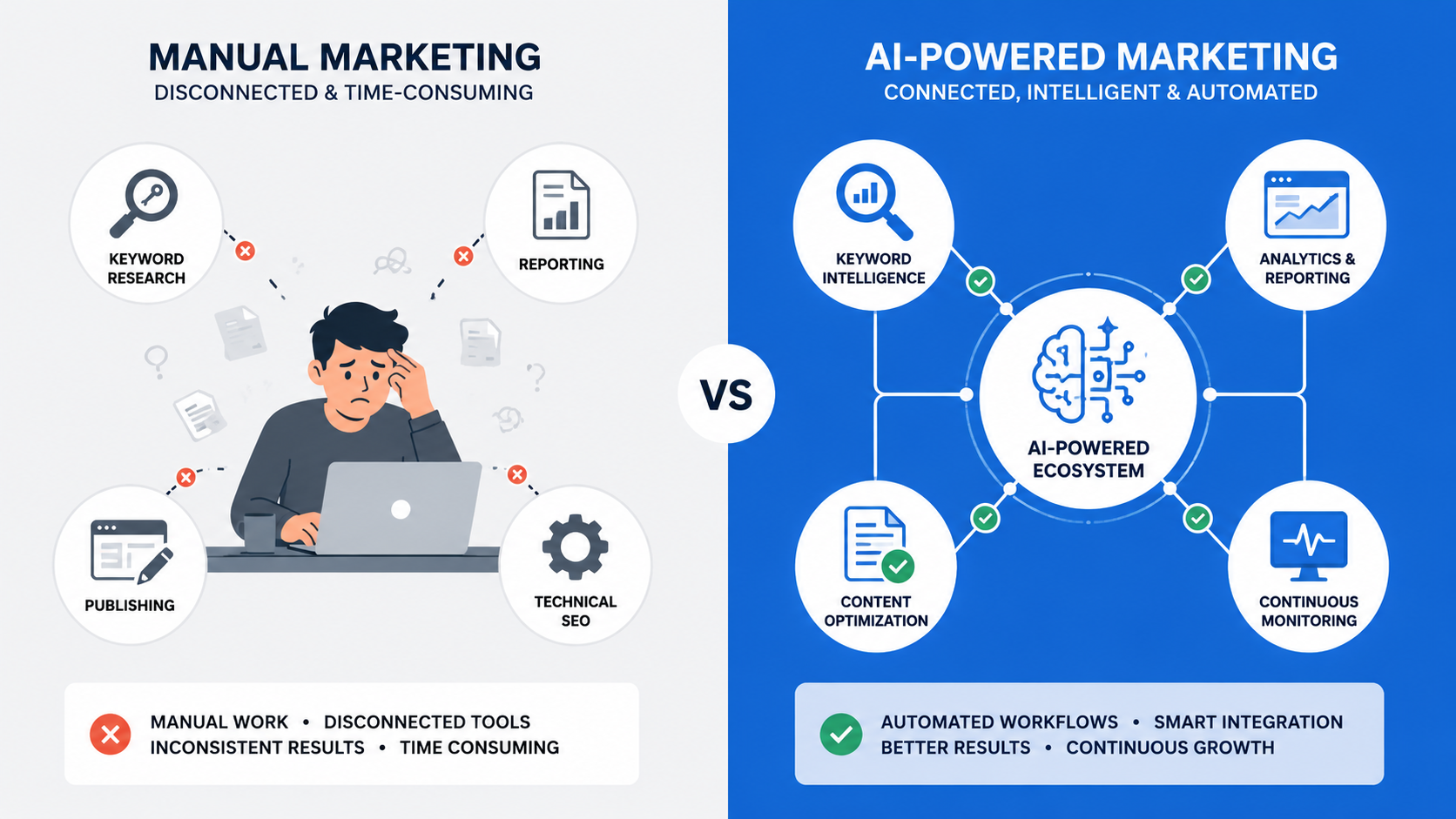
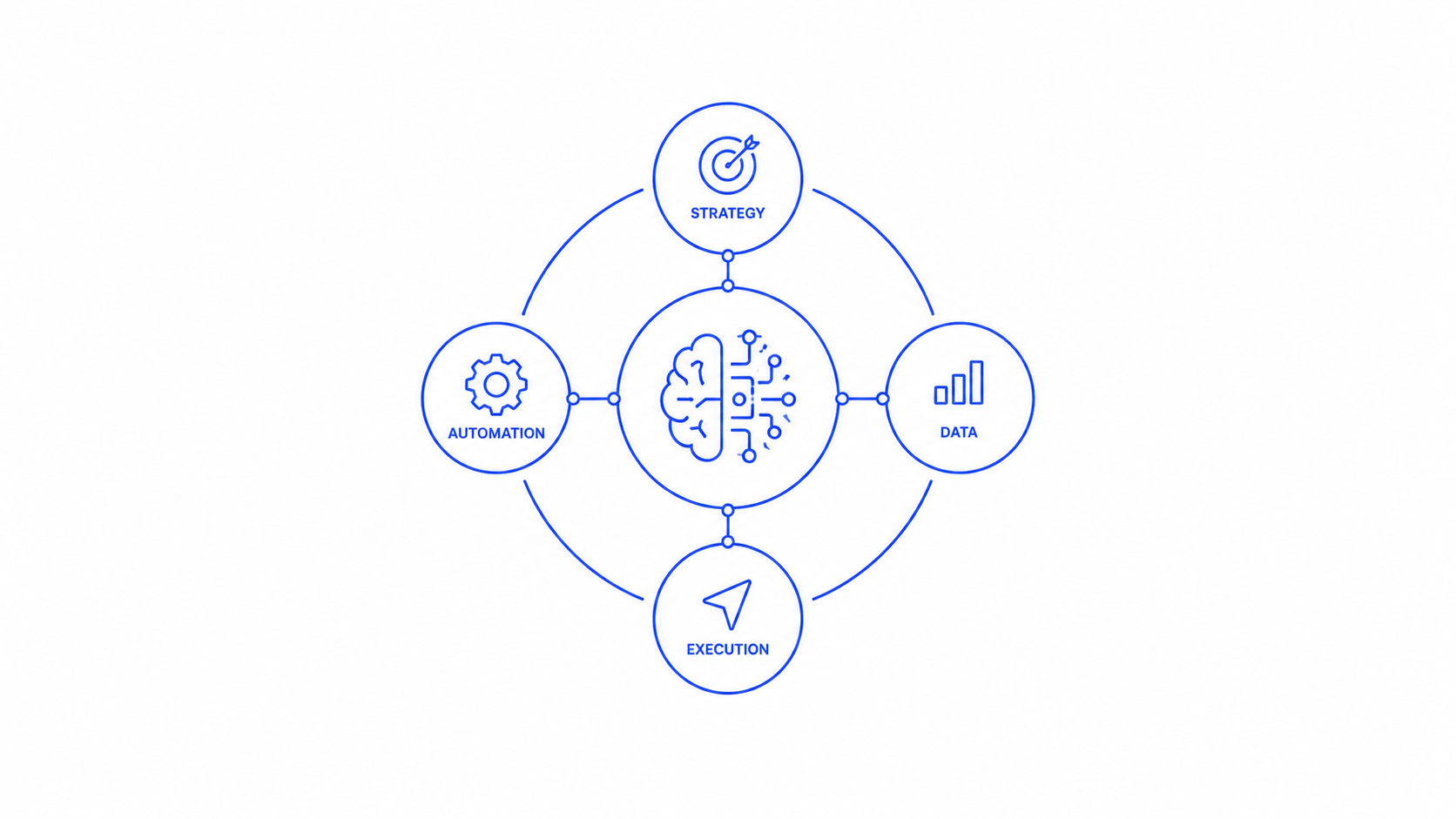
Marketing used to run on gut. Over the past decade that gave way to systems built on data and automation, and the shift has a name: digital marketing transformation. It’s not about buying the newest tool. It’s about how teams actually operate, getting strategy, data, and execution to reinforce each other rather than fight. AI sits in the middle of that, taking scattered data and turning it into patterns you can read and act on quickly.
The practical version is simpler than it sounds. AI models chew through millions of signals, queries, clicks, on-page behavior, whole conversion paths, and surface the handful that actually matter. No more guessing which topics carry intent or which pages are quietly dragging you down. You get evidence: what to update, what to publish next, where a technical issue is choking visibility. That cuts the expensive trial-and-error and shortens the gap between an idea and a result.
How AI Deepens Customer Understanding
Machine learning and natural language processing read the messy stuff, search queries, support chats, email replies, purchase events, and map it back to what people actually need. Say you’re launching a new product line. AI groups search terms into intent tiers, informational, comparative, transactional, and hands you content angles for each. It picks up seasonal spikes too, plus the exact language your audience uses, so you write in their words instead of generic jargon.
- Predictive patterns. Models forecast demand and topic interest, which shapes your editorial calendar.
- Behavior signals. Session data exposes the friction points content or UX can fix.
- Faster iteration. Insights land in hours, not weeks, so teams ship fixes fast.
From Insight to Execution
Insight is only half of it. AI-linked workflows automate real chunks of production: content briefs, internal linking suggestions, schema opportunities, ranked lists of technical fixes. You keep creative control. You just move with a lot more precision. Every campaign ends up teaching the next one, and the system compounds.
AI isn’t a bolt-on. It rewires how you research, plan, create, and optimize. Teams that lean into it build momentum. The ones that don’t spend more to get less, stuck in manual processes that can’t keep pace.
The Role of Automation in Digital Marketing Strategies
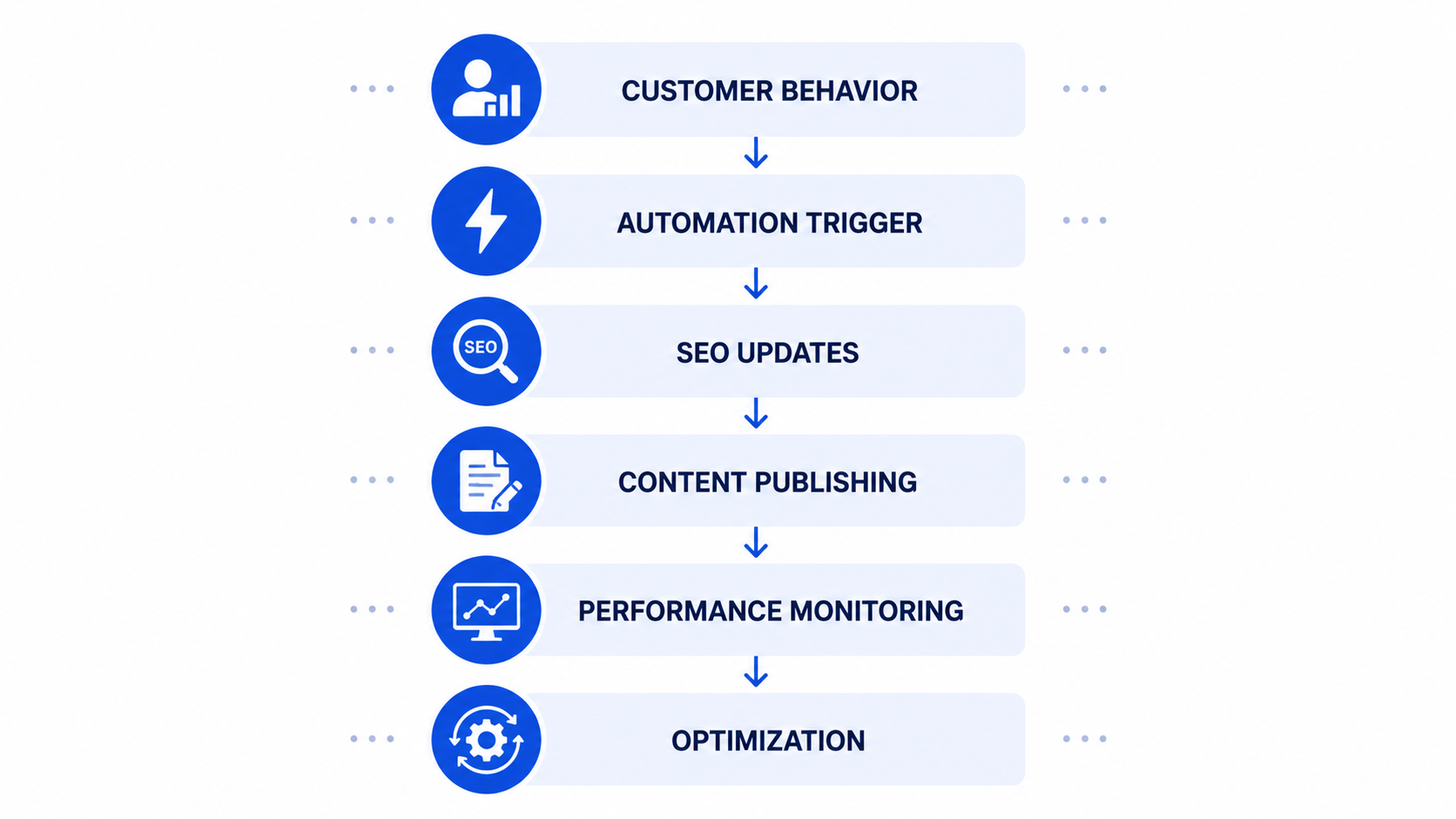
Automation in digital marketing takes the workflows you repeat and turns them into systems you can trust and scale. Call it your execution engine. It carries a campaign from plan to performance without someone babysitting every step. Thread it through email, publishing, reporting, and SEO, and your team claws back hours every week. Those hours move straight into strategy and the creative problems worth solving.
Day to day, what does that look like? Emails fire the moment a user does something specific. Social posts queue themselves and go out during engagement windows. Dashboards refresh on their own. And SEO automation runs technical checks in the background, flags content that’s decaying, and pokes you to refresh a page before its rankings start slipping.
Precision, Personalization, and Speed
Precision is the first win. Batch-and-blast messaging gives way to data-driven triggers that deliver the right content, at the right moment, with the right angle. Because those automations react to behavior as it happens, you hit the speed modern audiences expect. Get granular with your triggers, by segment, by intent, by lifecycle stage, and every message lands more relevant than the last.
- Fewer manual tasks. Scheduling, tagging, and basic QA move into automated workflows.
- Higher consistency. Campaigns ship on time with fewer errors.
- Better analytics. Standardized tracking gives you cleaner data and clearer decisions.
Connecting Automation to Strategy
Automation earns its keep when it backs a real plan. Start with business goals. Map the journeys that matter. Then point automations at the friction along those paths. Use content optimization tools to refresh your top URLs every month. Connect alerts from Google Search Console so coverage issues never sit unnoticed. Wire performance alerts into your analytics platform, and no win or drop slips past you.
Automation doesn’t replace strategy. It accelerates it. Teams that get the right automations running early pull ahead of the ones still doing everything by hand, and the gap widens every quarter.
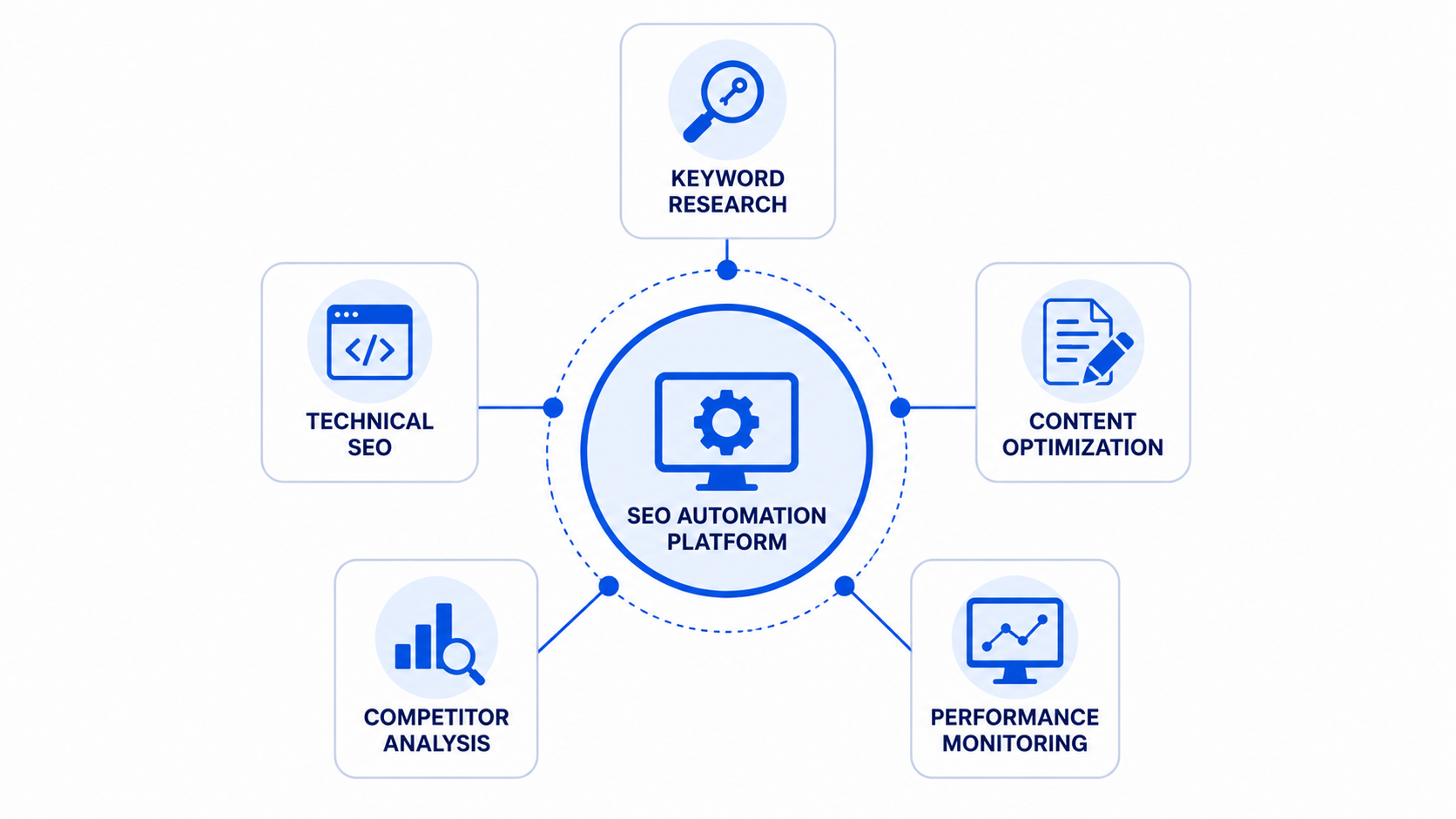
Exploring SEO Automation Tools and Their Benefits
Of everything shifting in marketing right now, SEO automation tools tend to pay off fastest. Search moves quickly. Engines change the rules constantly. Automation is how you keep up, auditing pages, watching rankings, catching problems before they spread across the site. The payoff is plain: more stability, steadier growth, fewer ugly surprises.
So what do they actually do? Plenty. They analyze keywords and competitors, dig out content gaps, and track technical health across thousands of pages at once. Reporting gets tighter too, so you spend your time fixing what matters instead of assembling slides. A lot of platforms now fold AI-assisted briefs together with automated internal link suggestions, which makes content teams both faster and more consistent.
Core Capabilities to Expect
- Keyword research and clustering. Group terms by intent to build topic hubs.
- Technical crawls. Detect broken links, slow pages, and indexation problems.
- Content scoring. Evaluate depth, readability, and search intent coverage.
- Competitor tracking. See where rivals gain or lose ground to guide your roadmap.
- Performance monitoring. Trend rankings and CTR to prioritize updates.
Where to Start
Anchor your stack with Google Search Console for verified click, impression, and coverage data. Add search engine optimization tools for content quality and topic analysis. Layer in SEO automation software to handle scheduled crawls and alerting. Running multiple sites or a big catalog? Look at automated SEO tools built for bulk updates and templated metadata.
There’s a quieter benefit underneath the features: confidence. Automation trims human error, keeps the site aligned with best practices, and gives you a live read on health and growth. Planning gets easier. Results get more predictable.
AI-Powered Marketing: From Data to Insights
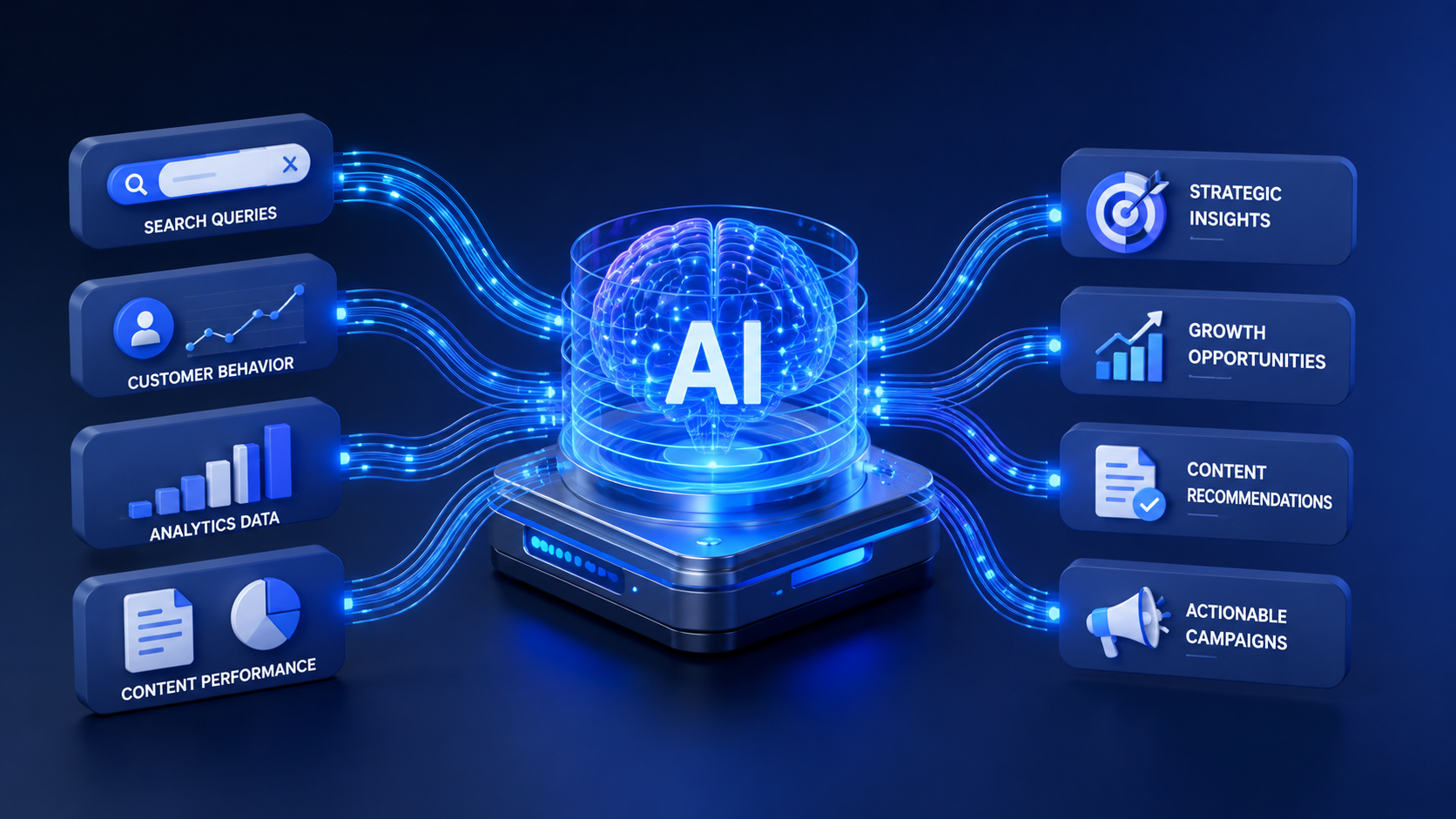
AI-powered marketing takes sprawling, unwieldy datasets and turns them into a direction you can act on. Analysis used to mean weeks of manual crunching. Now AI surfaces intent trends, pinpoints content gaps, and predicts which updates will actually move the needle. You still make the calls. You just make them with sharper evidence and a lot less guesswork.
In practice that means smarter content calendars and tighter prioritization. Demand for a topic spikes? AI spots it in the query data and recommends a refresh or a fresh angle. Behavior shifts on a key page and AI flags it, then suggests the fix: a layout tweak, better internal links, richer FAQs, cleaner schema.
Predictive Analytics in Action
Predictive models look forward. Which keywords are about to surge, which pages are decaying, which products might trend next season. That kind of foresight lets you commit budget and people before a competitor beats you to it. It sharpens personalization too, matching the right piece to the right segment based on how people actually behave.
- Faster insight velocity. Insights update daily, sometimes hourly.
- Higher signal quality. Models strip the noise and spotlight the patterns worth acting on.
- Repeatable wins. Each deployment teaches the system how to do the next one better.
From Recommendations to Results
An insight that changes nothing is worthless. That’s why the strongest teams plug AI straight into SEO automation workflows, auto-generating briefs, refreshing top URLs, repairing internal linking, scheduling technical checks. Then they close the loop, feeding the resulting metrics back into the models so the whole thing keeps sharpening itself.
What you end up with is a marketing engine that adapts fast and learns without being told to. In a crowded market, that’s the difference between effort and actual growth.
Crafting Effective Digital Marketing Strategies
Every strong digital marketing strategies effort starts in the same two places: clear goals and honest customer truth. AI and automation amplify both. They don’t replace the fundamentals. Nail down the outcomes you’re actually chasing first, revenue, qualified pipeline, retention, product adoption. Then map the journeys that produce those outcomes and decide where SEO automation and personalization can strip out friction.
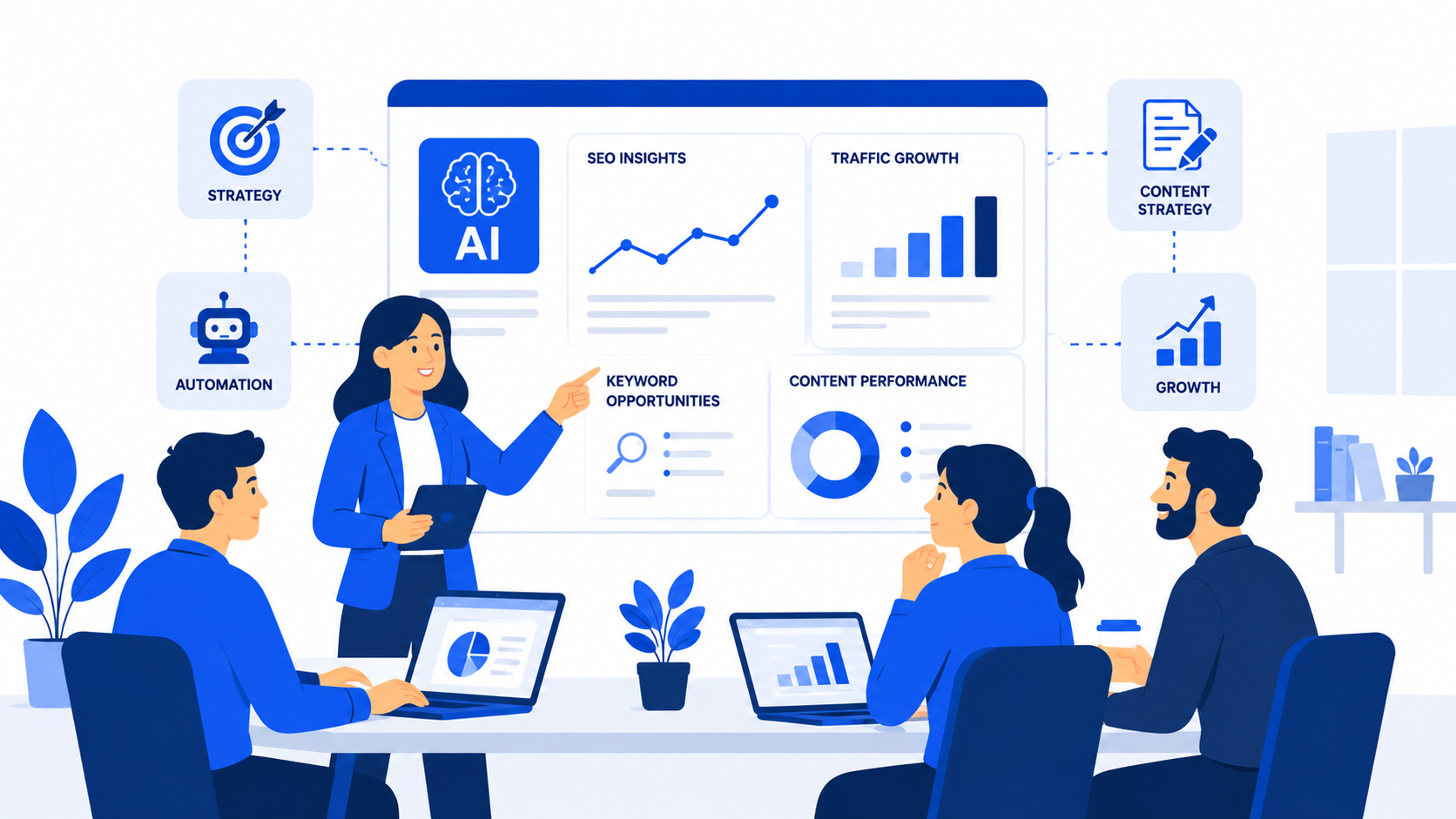
Research is the base layer. Lean on intent analysis, SERP reviews, and on-site behavior to figure out what your audience genuinely wants. AI helps cluster topics, rank opportunities, and catch the gaps competitors keep ignoring. From there you set targets you can measure, share-of-voice by topic cluster, non-brand growth by segment, conversion rates off organic entry pages.
Build a Plan You Can Run
- Content roadmap. Define topic hubs, pillar pages, and supporting articles.
- Technical backbone. Schedule crawls, Core Web Vitals checks, and index audits.
- Measurement model. Align KPIs with milestones and leading indicators.
Execution with Automation
Point content optimization tools at your briefs to guide coverage and hold quality steady. Connect Google Search Console for impression and CTR data. Trigger updates the moment queries shift or performance dips. Managing a large catalog? SEO automation software can push template-level improvements across thousands of pages without breaking things.
Then revisit the whole strategy each quarter. Markets move. Algorithms change. Your audience won’t sit still either. The strategies that hold up are the ones that assume change is coming and use automation to adapt before everyone else does.
AI Marketing Tools: Maximizing Efficiency and Performance
AI marketing tools work on two fronts. They automate the drudgery that bogs teams down, and they sharpen the decisions that count. The good ones behave like force multipliers. Your strategists stay locked on narrative, differentiation, and product truth while the system handles scoring, clustering, and quality checks in the background.
Where do they help most? Content planning, on-page optimization, reporting. AI can assemble topic clusters out of thousands of keywords, draft outlines that match search intent, and recommend internal links that shore up your site architecture. On reporting, anomaly detection catches a traffic or conversion swing and puts it in front of you in hours instead of weeks.
Capabilities That Move the Needle
- Intent alignment. Ensure pages answer the exact question users ask.
- Entity enrichment. Add structured data and topical depth for authority.
- Automated QA. Catch thin content, duplication, and broken links.
Choosing the Right Stack
Look for platforms that connect cleanly to Search Console, your analytics, and your CMS. Weighing options? An AI SEO tools comparison across keyword clustering, brief generation, and monitoring will save you a lot of trial time. Selling online, prioritize AI SEO for ecommerce features like product schema, feed optimization, and metadata updates that scale.
As the stack matures, tie it back into your wider search engine marketing. When paid and organic share what they’re seeing, the high-intent terms surface, the winning ad copy surfaces, the content angles that convert surface, and every channel starts pulling the same direction.
SEO Optimization Automation: Enhancing Visibility and Reach
Rankings rarely collapse all at once. They erode. A page slows down, a link breaks, intent quietly shifts, and one day the traffic’s gone. SEO optimization automation is the guard against that slow drift. It crawls, alerts, and recommends improvements so your site stays fast, indexable, and actually relevant to what people are searching now.
Picture continuous maintenance stacked on top of targeted upgrades. Automated crawls flag technical problems before they cost you visibility. Scheduled refreshes hold content in line with real intent. Prioritized task lists steer your team’s effort toward the work with the highest return. That’s the whole difference between reacting to a traffic drop and never letting it happen.
What an Automated Program Includes
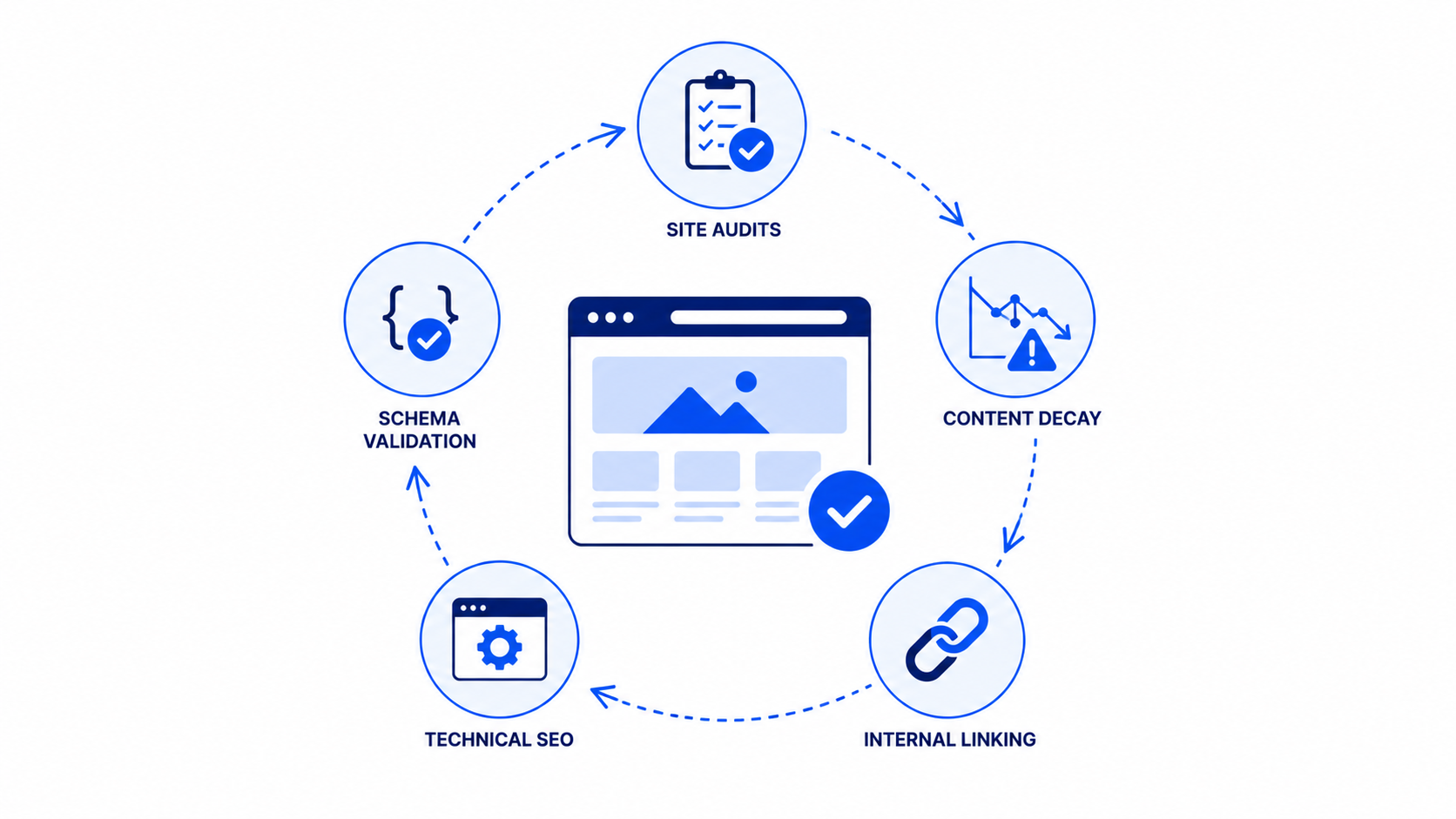
- Recurring site audits. Core Web Vitals checks, status codes, and index coverage.
- Content decay monitoring. Track ranking slide and refresh pages before they fall.
- Internal linking automation. Suggest new links to boost topical authority.
- Schema reviews. Validate structured data to earn rich results.
Key Integrations
Build the workflow around Google Search Console for the canonical read on impressions, queries, and indexing. Add automated SEO tools and search engine optimization tools that fire tasks straight into your project system. Bigger teams get real mileage from SEO automation software, which standardizes fixes across templates, sections, and locales instead of rebuilding the same solution over and over.
The more you automate, the more your visibility holds up under pressure. You stop chasing fires and start running a system that keeps them from starting.
Overcoming Challenges with AI in Digital Marketing
AI hands you real advantages, but there’s a bill attached, and you should plan for it. Data privacy and security top the list. These systems learn from data, which means you need clear policies, working consent mechanisms, and guardrails that hold. Line up with the regulations that apply to you, encrypt anything sensitive, and vet how your vendors handle it. Trust drives growth. Protect it.
Then there’s complexity and cost. Not every shiny feature belongs in your stack. Begin with the handful of use cases that hit hardest, then expand once they prove out. Cloud-based platforms keep the upfront spend low, and plenty of automated SEO tools scale by seat or site, so you can grow into them gradually.
Skills and Change Management
The learning curve is real. Your team has to understand how the models reach a recommendation and what data sits behind it. So build a testing culture, run pilots, measure the lift, then roll out for real. Pair analysts with your content and technical leads so insights actually turn into shipped work. Write the workflows down, and new hires ramp in days instead of weeks.
- Set clear success metrics. Define what “good” looks like before you deploy.
- Train and upskill. Short sessions on models, bias, and best practices go a long way.
- Audit regularly. Validate data sources, accuracy, and ethical use.
From Risk to Advantage
Handle these well and they flip into strengths. You’ll move faster than the competitors sitting on their hands, and safer than the ones sprinting in blind. Put the guardrails in place, phase the rollout, and SEO automation and AI-powered workflows turn into dependable engines you can actually scale on.
Future Trends: The Evolution of AI in Digital Marketing
The next wave of AI-powered marketing gets more predictive, more multimodal, and far more connected across channels. Models will start stitching search, site, CRM, and product data together to forecast demand with real accuracy, then fire off actions on their own the moment the signals move.
Voice and visual search keep expanding, and that reshapes the work. Optimizing for conversational queries and rich media results stops being optional. You’ll need structured data, tight direct answers, and assets built to surface in image and video search. Automation is what keeps all of that fresh and correctly tagged once the volume gets real.
What to Do Now
Get the foundation right. Clean the data. Standardize your tracking. Fold Search Console into your reporting everywhere it belongs. Build topic hubs with internal linking that actually maps the relationships. Run an AI SEO tools comparison on your current stack so you’re ready when smarter automation arrives. The teams that lay this groundwork now are the ones setting the pace later.
AI and SEO automation are rewiring how modern teams plan, execute, and scale. You’ve seen the pieces: automation lifting the manual load, AI sharpening the decisions, the right stack linking insight straight to action. Start with your goals. Map the customer journeys that actually matter. Automate the work that’s been slowing you down. Anchor it with trusted data from Google Search Console and content optimization tools so momentum never stalls out. What you build is a system that adapts fast, learns as it goes, and stacks wins over time. Move on it now and you get durable visibility, better customer experiences, and growth you can count on.
Ready to automate your SEO content strategy? See how SEOBrain.IO generates optimized content in minutes. Let’s turn momentum into measurable growth.
