
Search changed a lot over the last few years, and AI tools for SEO strategies are the reason. These platforms take the slow work off your plate. Keyword research, technical audits, the lot. What they hand back is data-driven insight that a human team would need weeks to pull together. So instead of analyzing competitors, optimizing content, and tracking rankings by hand, businesses now run AI-driven SEO automation to publish optimized content on a steady schedule and surface ranking opportunities at scale.
The pressure is real. Companies that ignore AI-driven SEO fall behind the ones already using automation to keep optimized content flowing. This guide covers 12 of the most effective AI tools for SEO strategies in 2026: how each works, the specific problem it solves, and how to build the right combination for your business. Whether you’re scaling organic visibility from zero or squeezing more out of an existing marketing budget, you’ll see how these tools reshape your SEO workflow and speed up your climb through the rankings.
What Are AI Tools for SEO Strategies and Why Do They Matter?
AI tools for SEO strategies are software platforms that use machine learning to automate and optimize the core work of search marketing. They absorb the repetitive, time-heavy tasks. Keyword research, content analysis, competitor monitoring, technical SEO audits. Your team spends its hours on strategy and judgment calls instead. For organizations fighting resource limits and the bottomless nature of manual SEO, these tools solve real constraints. They also hold consistency across hundreds of pages far better than any person could.
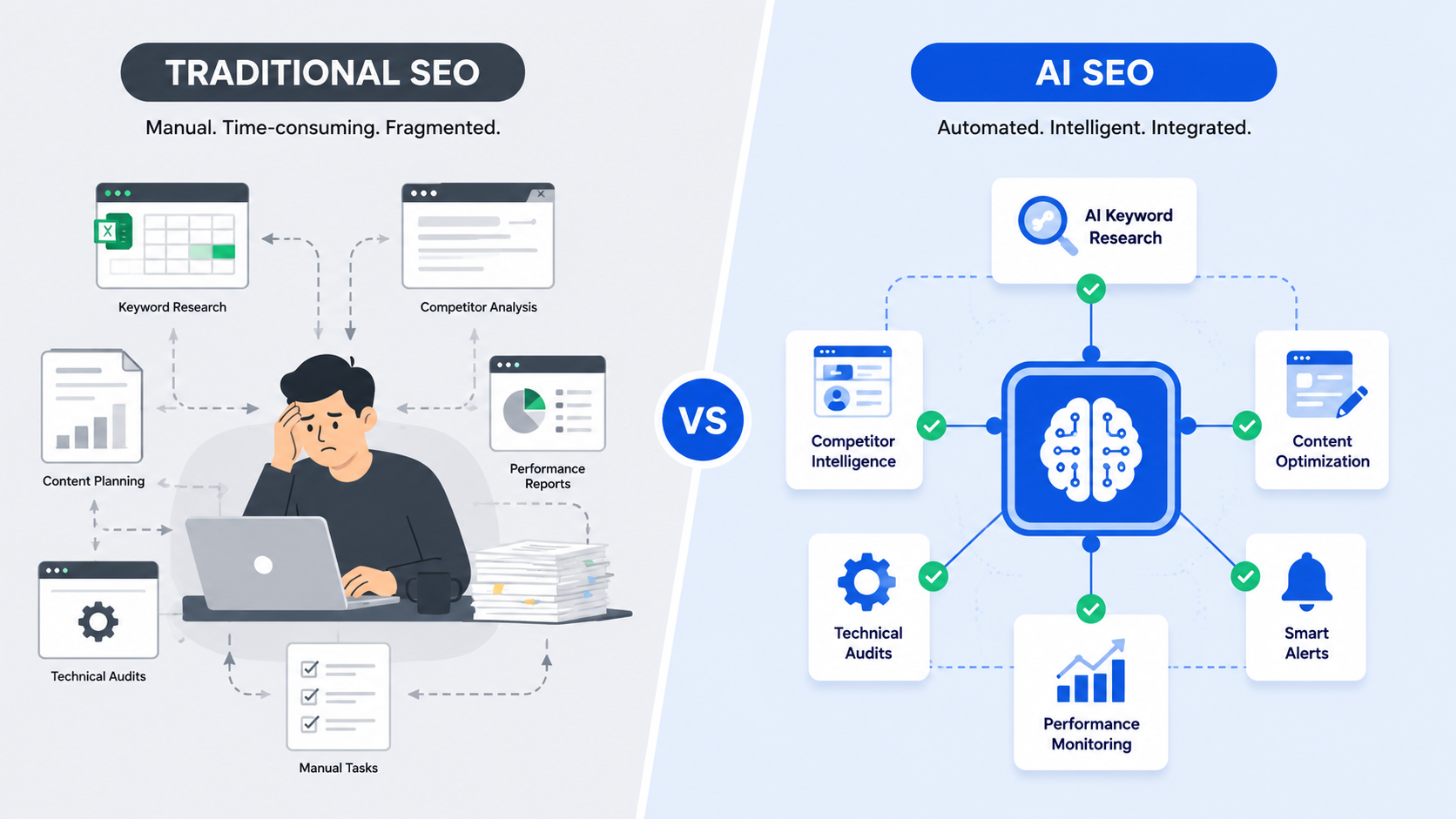
Why is adoption exploding? The reason is plain. Search algorithms got much more sophisticated, competition tightened across nearly every industry, and the volume of content you need to compete keeps climbing. According to Moz’s SEO research, businesses using automated SEO tools see 40-50% faster content production and steadier keyword optimization than teams working by hand. These tools open enterprise-level capability to smaller players. A small or mid-sized business can now compete without building a large specialist team.
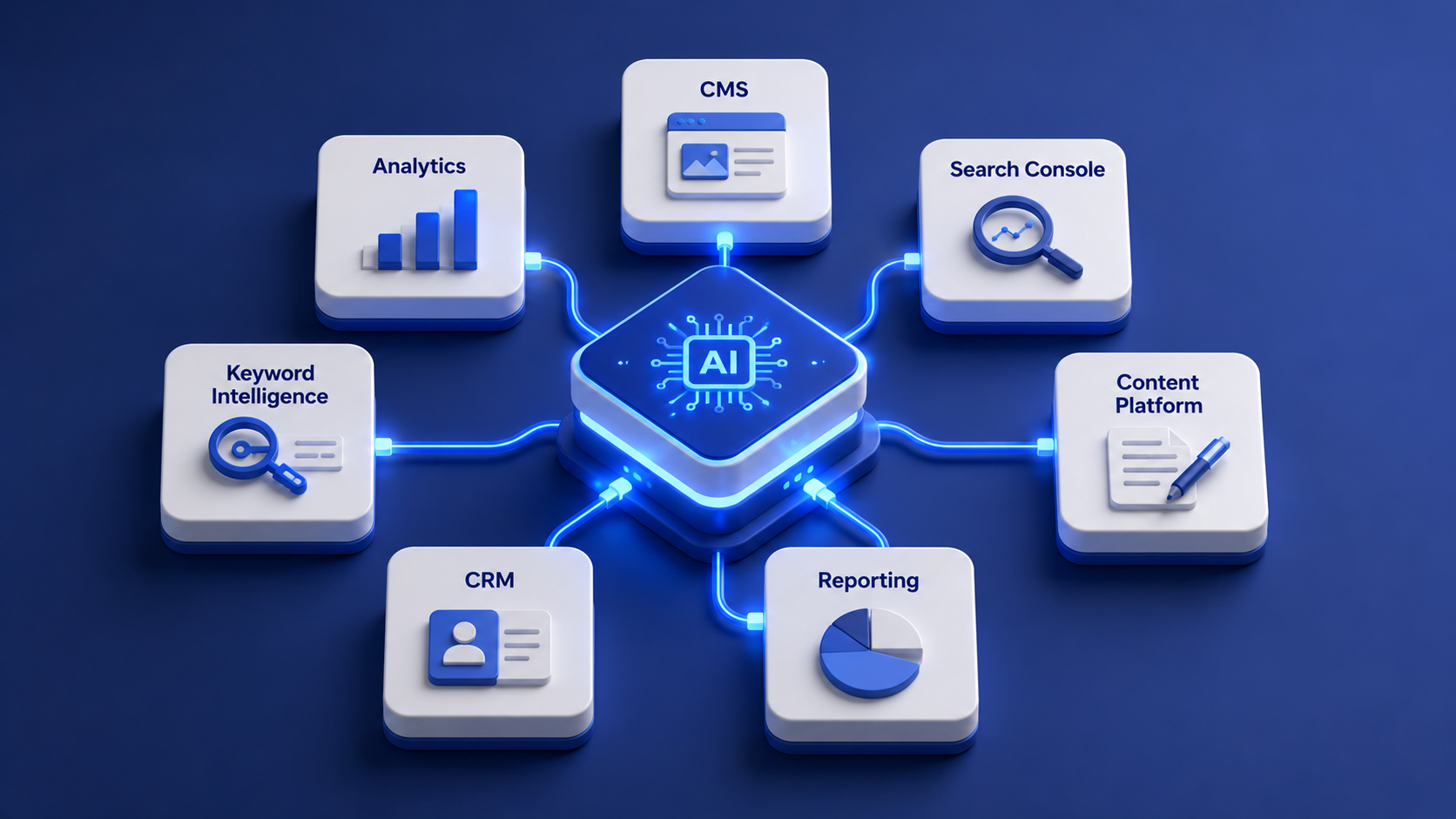
The payoff shows up fast. Automate the SEO grind and you publish optimized content more often, catch ranking opportunities sooner, and react to algorithm shifts quickly. These platforms plug into your content management systems, analytics, and other marketing software, then pull everything into one workflow. Data silos disappear. Manual entry errors drop. For teams without deep SEO expertise, the tools deliver recommendations grounded in proven practice, guiding your calls on keyword targeting, content structure, and what to optimize first.
The edge builds on itself. Platforms in this category pair natural language processing with ranking-data analysis to surface openings competitors haven’t touched. Hand off the routine optimization and your team gets room to write genuinely strong content, build better backlink profiles, and construct the content hubs that establish topical authority. That shift from execution work to strategy work speeds up sustainable organic growth. And it means you don’t have to keep adding marketing headcount just to grow.
Why Automation Matters Right Now
The bar for SEO performance moved in 2026. Your competitors aren’t optimizing content once a quarter. They publish often, test multiple angles, and iterate on data. Manual SEO can’t match that volume or speed. Automation stopped being a luxury and became closer to a requirement for any business serious about visibility. Here’s what most teams underestimate: the platforms that swallow your most time-consuming tasks do more than save hours. They change what your team can do with the resources it already has.
What Are the Key Benefits of Using AI Tools for SEO Strategies?
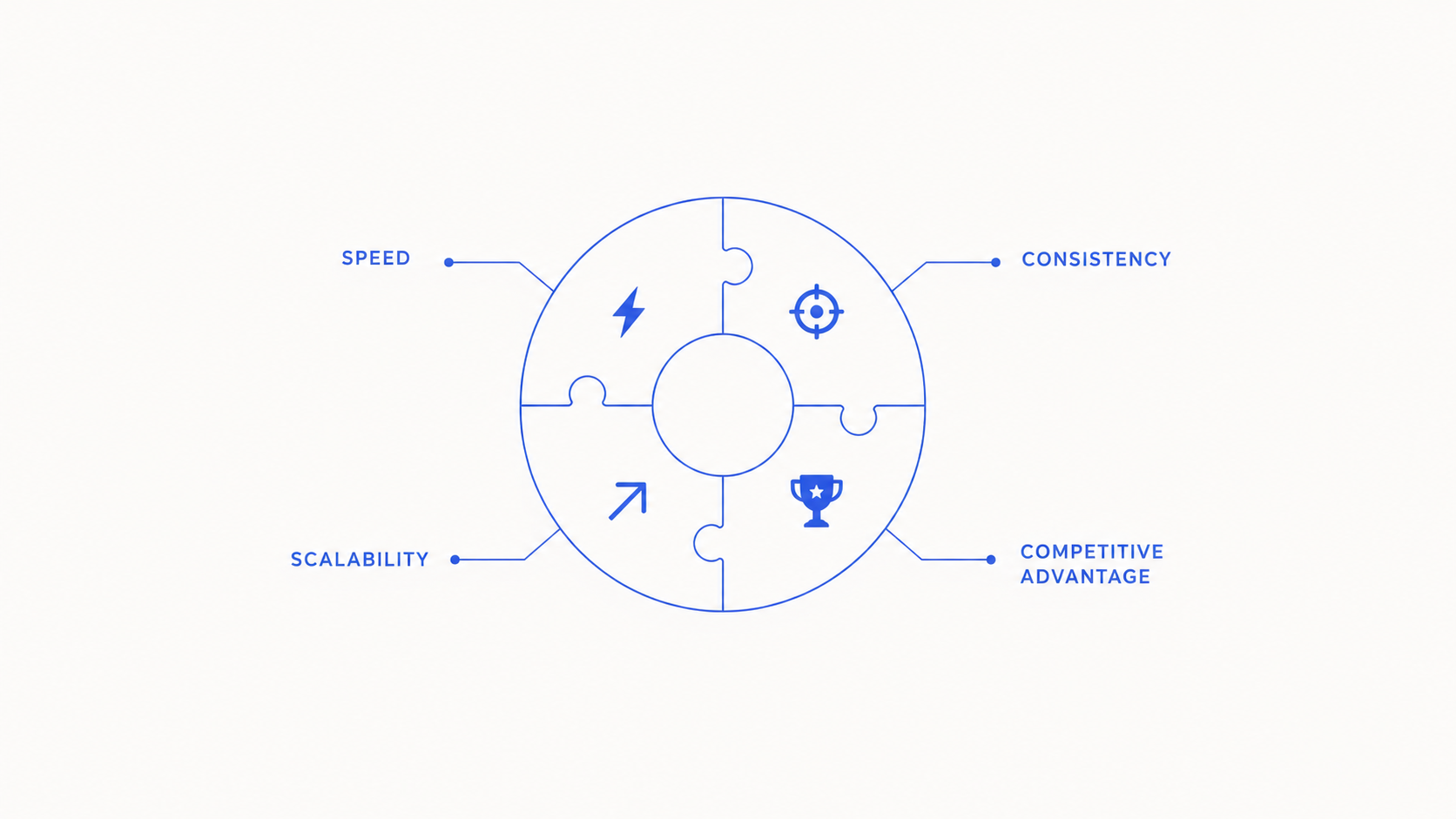
The main wins cluster around four things. Time saved, tighter consistency, sharper decisions, and the ability to run SEO at scale. Teams that adopt AI tools for SEO strategies usually see steep drops in the hours spent on keyword research, content optimization, and technical audits. That freed-up time goes to the strategic, creative work that actually needs human judgment.
Major Benefits Include:
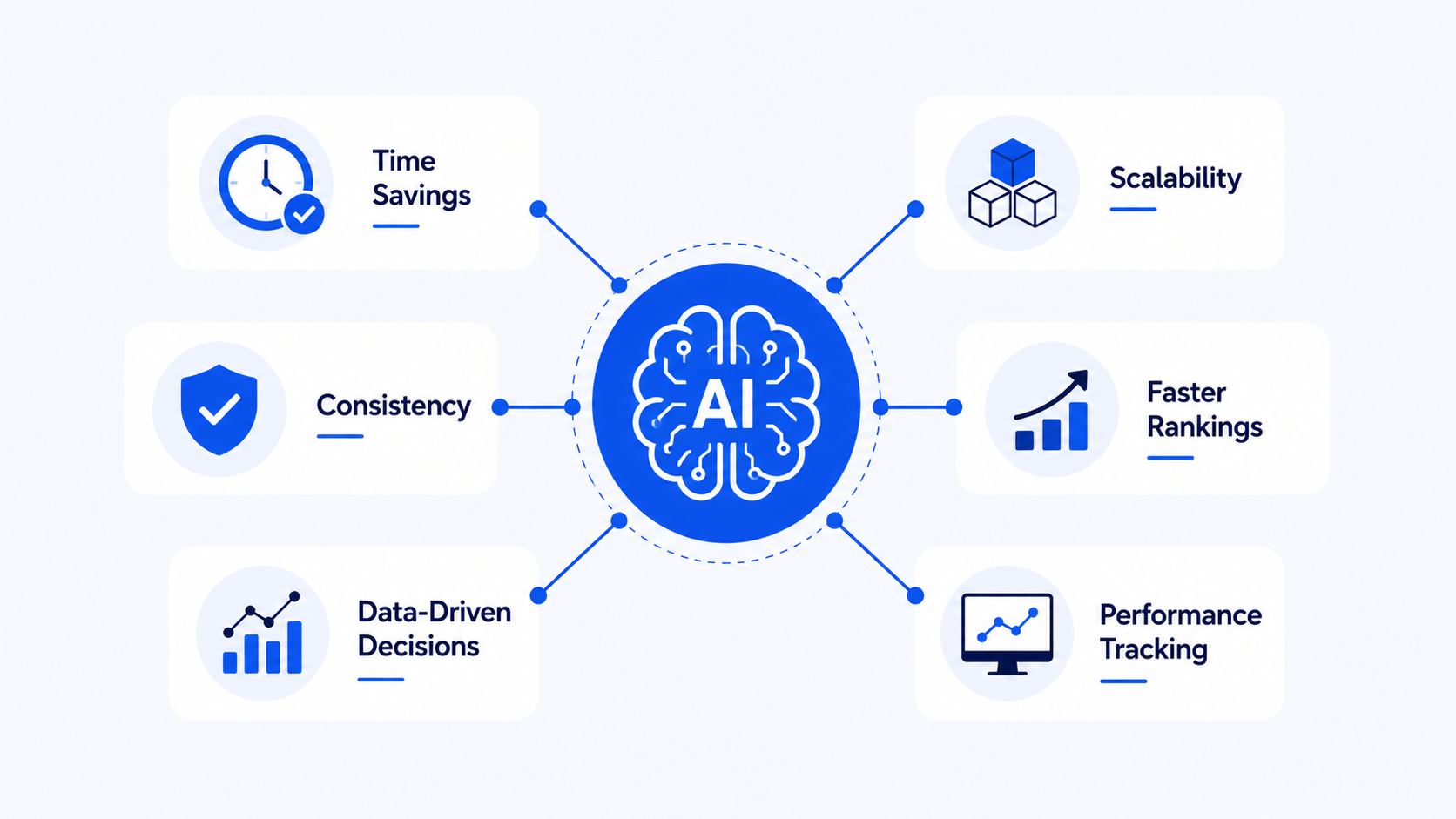
- Time Savings: Reduce content creation timelines by 40-60% by automating keyword research, content briefs, and optimization recommendations, work that previously consumed weeks
- Consistency: Ensure every piece of content meets SEO standards and targets relevant keywords without human oversight variations or inconsistent application of best practices
- Data-Driven Decisions: Make keyword targeting and content strategy choices based on comprehensive competitive analysis rather than intuition or outdated guidelines
- Scalability: Publish optimized content at higher frequencies without proportional increases in team size or budget, allowing small teams to produce large volumes
- Faster Rankings: Target low-competition keywords and high-potential opportunities that manual research often misses, reducing time to first rankings
- Expertise Accessibility: Access enterprise-level SEO capabilities regardless of team size or in-house expertise level, democratizing advanced capabilities
- Performance Tracking: Monitor keyword rankings, traffic impact, and ROI across all content automatically with integrated reporting that provides business-focused metrics
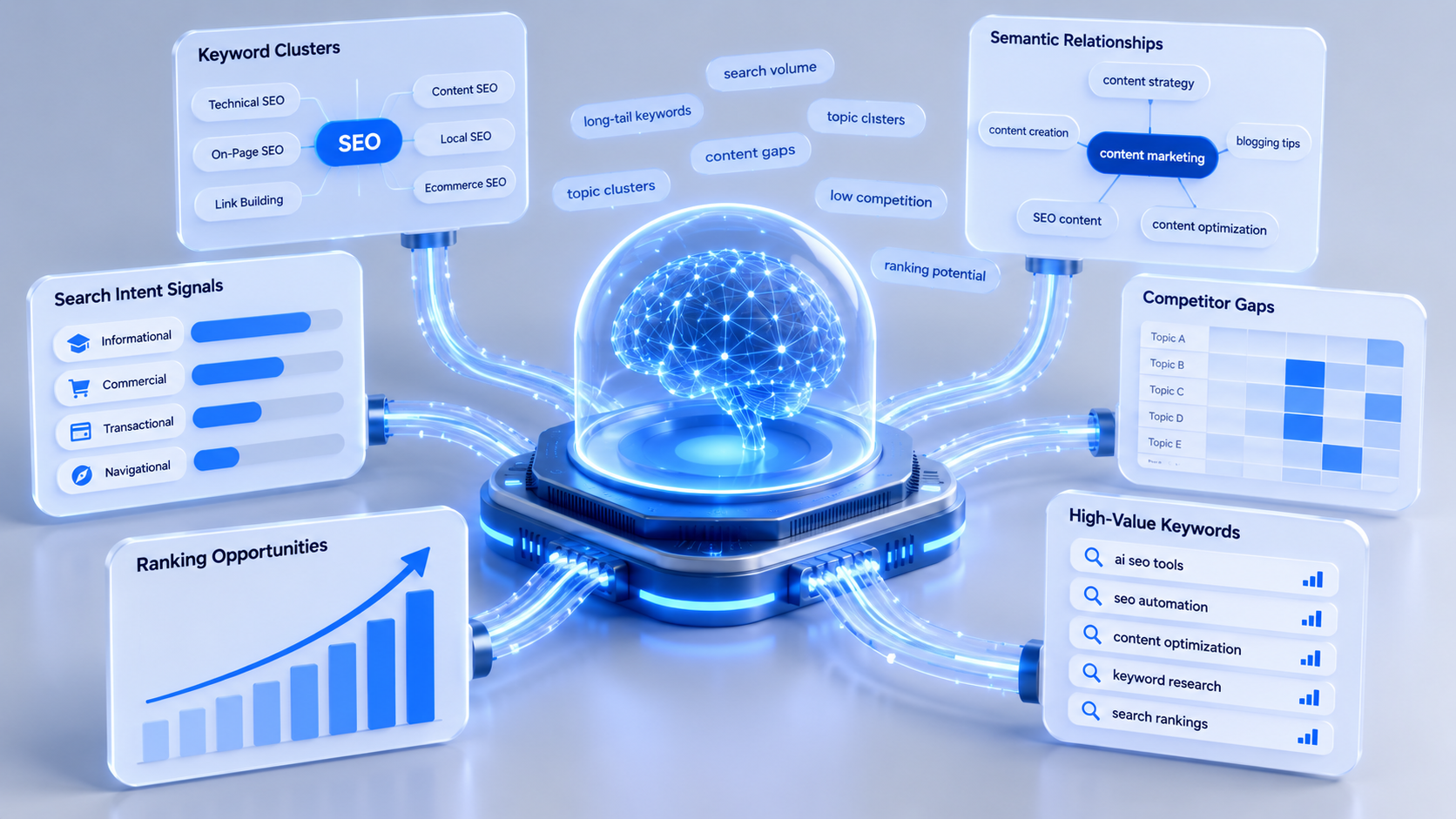
The strategic gains run deeper than the day-to-day ones. These tools find content gaps in your market that are real ranking opportunities, not just high-volume keywords too competitive or too shallow to bother with. Reading your topic clusters and content relationships, they help you build topical authority more methodically than manual work allows. They also map the semantic ties between keywords, so a single strong piece can rank for dozens of related queries beyond your main target.
Algorithm changes never stop. Neither do the shifting best practices. AI automation answers that with continuous optimization. Modern platforms watch for updates and adjust their recommendations around what’s ranking now, so your guidance reflects current ranking factors instead of advice that went stale between quarterly audits. The strategy stays fresh without constant manual re-research.
The Compounding Advantage Over Time
The lead widens the longer you run it. Publish more optimized content on AI recommendations and the platform learns which patterns work in your specific market. A tool trained on your industry’s ranking factors gets steadily more accurate, while competitors leaning on generic guidance miss the subtle advantages unique to your space. That feedback loop is why early adopters of AI-driven SEO automation tend to pull ahead on organic visibility. Three years in, your platform reads your market better than any generic tool, your team knows which recommendations pay off, and your content library keeps getting deeper.
There’s a human upside people rarely mention. Your team ends up happier. SEO professionals would rather think strategically, build creative content, and dig into business impact than grind through research and repetitive optimization. Automation makes the job more interesting and more productive at once. That satisfaction tends to cut turnover and lift the quality of the strategic calls your team makes.
How Do You Choose the Right AI SEO Tool for Your Business?
Start with an honest look at your needs, your budget, your technical requirements, and how things have to integrate. Picking the right AI tools for SEO strategies is easier once those are clear. The landscape runs wide. All-in-one suites on one end, specialists built for a single job like keyword research or technical audits on the other. No single best platform exists. The right pick depends entirely on your situation.
Evaluation Framework:
- Define Your Primary Pain Points: Are you struggling most with keyword research, content optimization, technical SEO audits, competitor analysis, or ranking tracking? Identify 2-3 specific challenges you want automation to solve first, this focus prevents tool overload
- Assess Integration Requirements: Which platforms does your team already use (WordPress, Shopify, HubSpot, Google Analytics, Search Console)? Ensure your chosen AI tool integrates smoothly with your existing stack to avoid creating additional manual work
- Evaluate Feature Depth: Look beyond basic functionality to determine if tools offer advanced features like topical clustering, content gap analysis, semantic keyword variations, and AI-generated content outlines
- Test Platform Accuracy: Most tools offer free trials, use them to validate that recommendations align with your industry and actually work for your specific market. Don’t assume recommendations that work for SaaS companies will work equally well for e-commerce or professional services
- Consider Scalability: Choose platforms that grow with your business, offering flexible pricing models and support for larger content production volumes as you scale
The strong AI tools for SEO strategies share a few traits. They connect to your search visibility data, Google Search Console above all, run competitor analysis, offer keyword research with difficulty scoring, and turn out optimization recommendations you can act on. What each one is actually worth to you swings on your industry, content type, competitive field, and the expertise already on your team.
Budget belongs in the decision. Just never as the only line. A cheap tool that won’t connect to your CMS or match your industry burns more money than a premium platform that delivers steady ranking gains. Plenty of teams find the sweet spot by pairing one comprehensive platform with 1-2 specialists. Run a general-purpose AI SEO automation platform for content optimization, say, and lean on dedicated tools for technical audits, backlink analysis, or competitive intelligence.
Which AI Tools Excel at Keyword Research and Analysis?
Keyword research is still the foundation. AI turned it from a manual slog into a data-driven, automated activity that returns remarkably accurate insight. The best platforms fold in difficulty scoring, search intent analysis, and automated clustering, so you find high-opportunity targets fast and in an orderly way.
Top keyword tools weigh hundreds of ranking factors, not just volume and competition. They read content length, topical depth, backlink profiles, domain authority, and the semantic relationships across pages that currently rank, then produce difficulty scores that predict how hard a keyword really is. That beats generic competition numbers pulled from old bidding data, because it’s built on what ranking pages actually look like. Say a keyword reads as “medium competition” in a traditional tool. AI analysis shows the ranking pages average 4,000+ words, need 100+ backlinks, and cover 30+ subtopics. The real difficulty sits far above the simple label.
Automated clustering is the other big lever. Grouping keywords by topic by hand is tedious, and it tends to come out inconsistent. This is where most teams get stuck. Instead, the AI reads search results, common content structures, and semantic relationships to suggest the best clusters on its own. You learn which keywords to target and how to arrange them into a structure Google reads as thorough coverage of a topic. Your content strategy ends up matching how search engines actually understand topical relationships.
How Can Technical SEO Audit Tools Automate Website Health Monitoring?
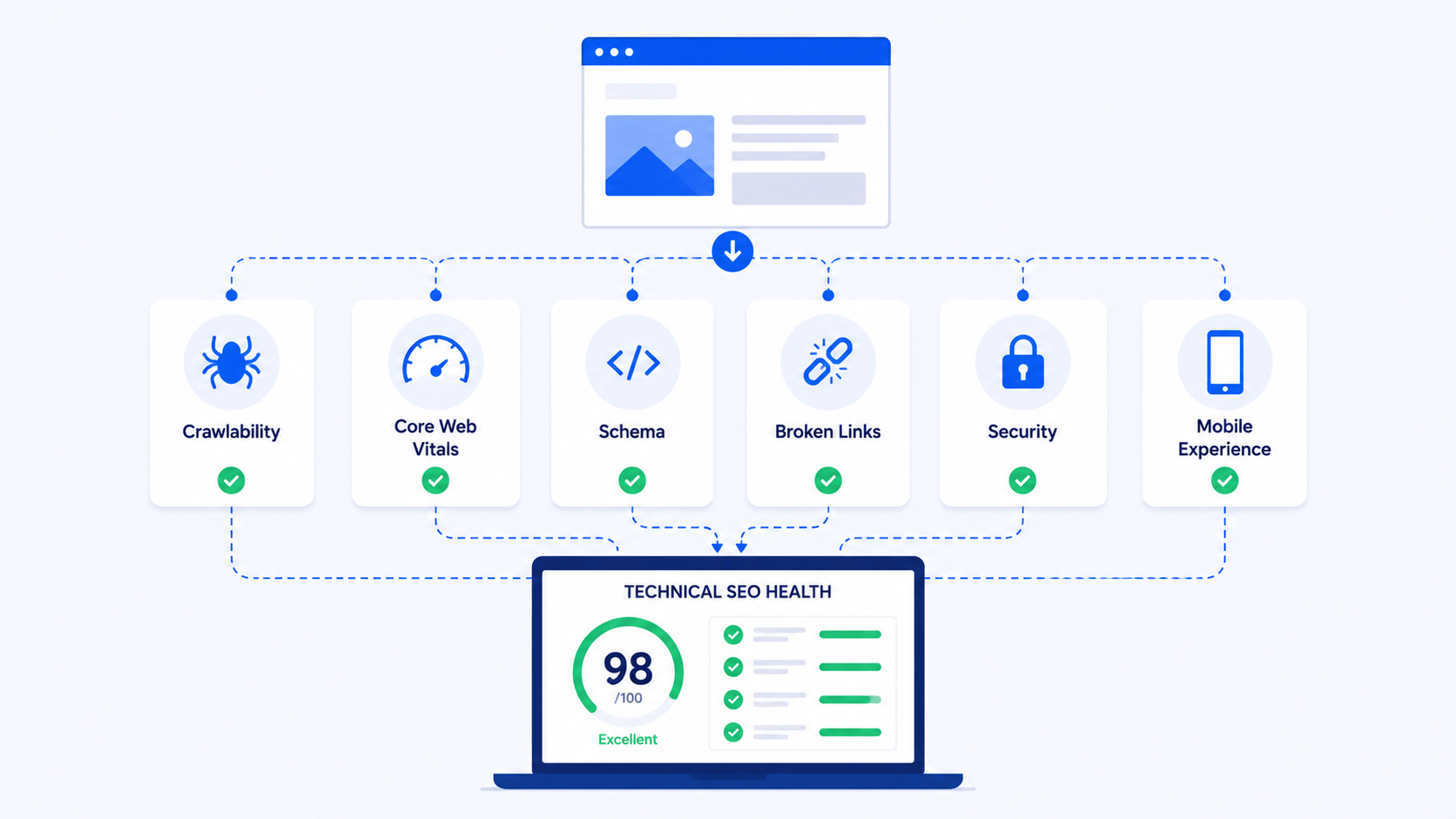
AI-powered technical audit tools crawl your site, flag hundreds of potential issues, and rank them by impact on search visibility. Manual quarterly audits miss emerging problems. Automated monitoring runs continuously and alerts you the moment something breaks. Work that used to demand a specialist’s hours becomes an automated process that scales across large sites without more headcount.
These tools scan structure, code, metadata, performance, mobile compatibility, security, and dozens of other technical factors tied to visibility. The AI checks findings against current Google guidelines and sorts by urgency. Critical problems that could block indexing get separated from minor ones that barely register. That triage keeps teams focused on fixes that lift rankings instead of cosmetic tweaks that go nowhere.
Common Technical Issues Detected:
- Crawlability Issues: Broken internal links, redirect chains, blocked URLs, orphaned pages preventing search engine access and indexation
- Indexation Problems: Pages blocked by robots.txt, unintended noindex tags, authentication issues, duplicate content with incorrect canonical tags
- Mobile Optimization: Responsive design issues, mobile-specific errors, viewport configuration problems, touch target sizing issues
- Performance Metrics: Core Web Vitals issues including Largest Contentful Paint, First Input Delay, and Cumulative Layout Shift
- Security: Missing HTTPS, insecure certificate issues, malware detection, suspicious redirects that harm user experience
- Metadata Problems: Missing or duplicate title tags, missing meta descriptions, heading hierarchy issues, structural markup problems
- Structured Data: Missing schema markup, incorrect implementation, validation errors affecting rich snippet eligibility
Continuous monitoring proves its worth once you see how quietly these problems appear. A developer creates a redirect chain while updating URLs. A site update blocks important pages through robots.txt. A plugin or theme update breaks mobile responsiveness on certain devices. A server change triggers SSL issues. A quarterly audit would catch none of it until the damage had run for weeks or months. Automated monitoring flags the problem the moment it surfaces, and your team fixes it before search engines punish your visibility.
Continuous Performance Tracking
Many audit tools also track how your site scores on the Google metrics that count. Watch Core Web Vitals continuously, the metrics Google explicitly uses in ranking, and your team spots performance regressions and prioritizes by which metric hurts your rankings most in your market. Limited engineering time then lands on improvements that move the needle rather than getting spread thin across minor ones.
Connection to Google Search Console is non-negotiable for a technical audit tool. Platforms wired into Search Console can line up their findings with the actual crawl issues Google reports, confirm whether a fix has registered, and identify which problems Google treats as most critical for your site. That real-world check keeps your technical work aimed at what Google actually cares about for your site and industry, not generic best practices that may not apply.
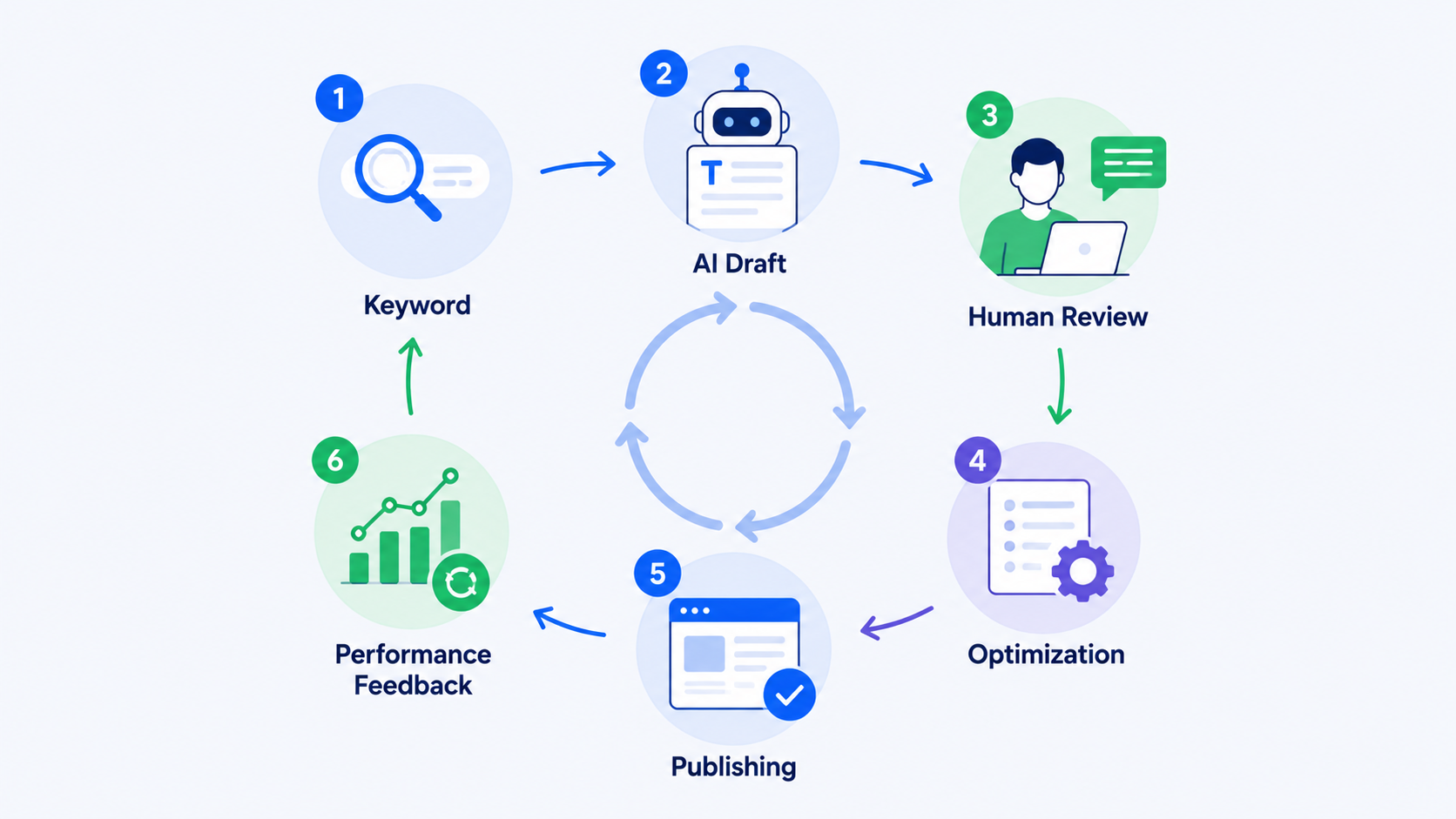
The sharpest tools go past detection and hand you prioritized fixes. Rather than telling you that Core Web Vitals need work, they show which pages cause the biggest drag, what’s behind the poor performance, and the change that would help most. Your engineers fix the highest-impact issues first instead of guessing at priorities.
What Role Do Competitor Analysis Tools Play in SEO Strategy Automation?
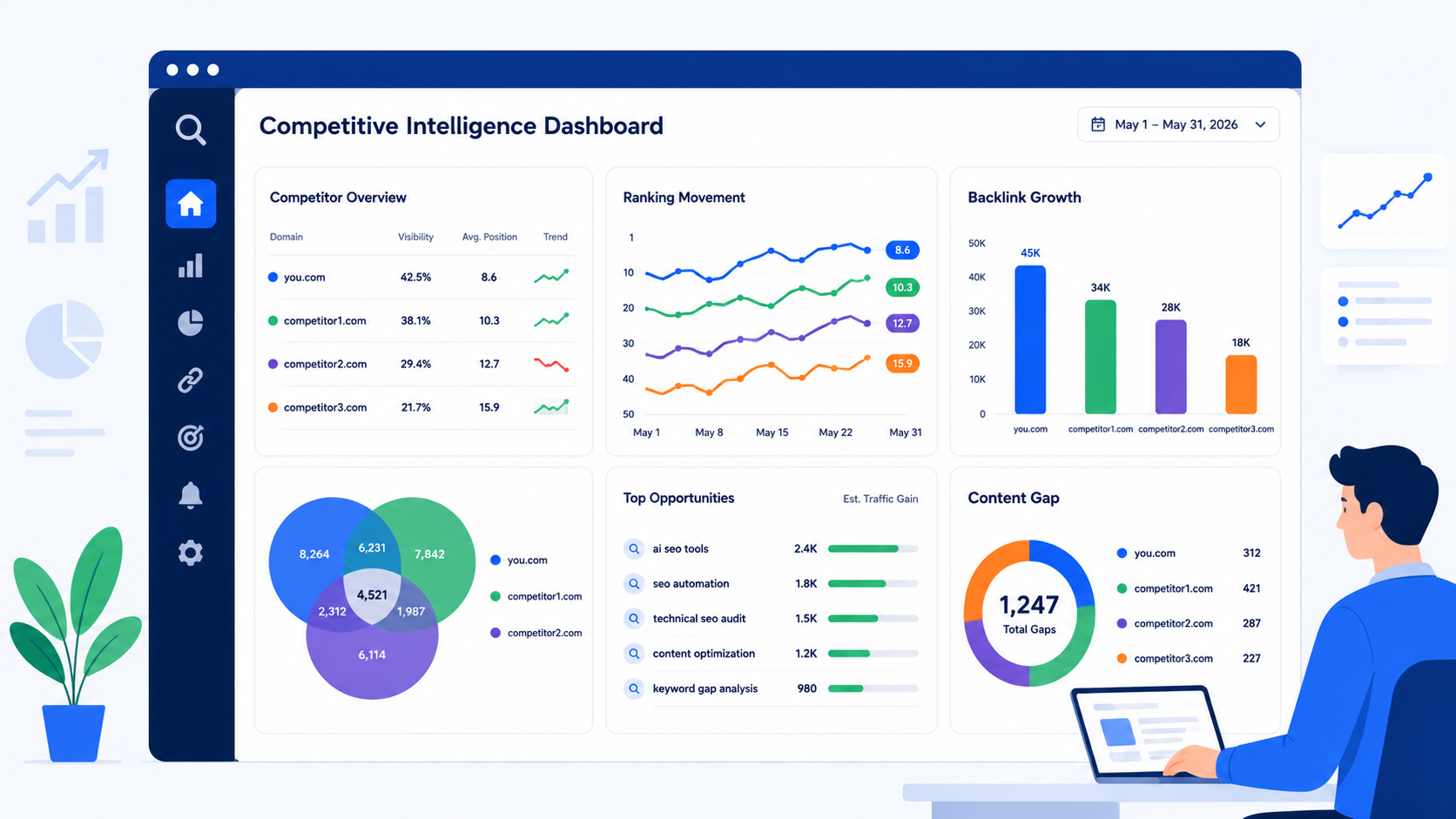
AI competitor analysis tools cut through the work of understanding where you stand, spotting ranking openings, and benchmarking against rivals. Researching competitors’ keywords, backlinks, and content by hand eats 20-30 hours a month. Automated tools deliver that competitive intelligence and feed it straight into your strategy calls. For teams struggling to keep up with the field, they automate the research and surface insights you can act on right away.
It starts with figuring out which competitors actually matter. AI tools read your site, your industry, and search results to name the companies genuinely competing for your most valuable keywords and the ones that are just noise. That distinction carries real weight. Competing against 3 dominant players calls for a different plan than competing against 15. Get it right and you stop burning resources fighting organizations that were never a threat.
Once the real competitors are set, AI platforms track their keyword rankings, content strategy, backlink acquisition, and technical changes on their own. Checking competitor sites by hand every month is slow and expensive. These tools watch continuously and alert you when something meaningful happens. New high-ranking content. A jump in backlinks. Technical improvements. A shift in keyword targeting. That live intelligence lets you respond faster than competitors can move, so you hold or improve your relative position.
Competitive Intelligence Insights:
Automated platforms read competitor content to find the topics they rank for and you don’t, which points straight at content opportunities. Say a competitor ranks for 200 keywords in your industry and you rank for 120. The AI names the 80 you’re missing and shows the content that makes them visible for those terms. From there you decide: match the content, beat it, or aim your effort at openings where your advantages are stronger. That intelligence heads off a common mistake, chasing keywords you’ll never realistically win because a competitor’s authority is already entrenched.
Backlink tools automate the tedious hunt for where competitors earn links and which linking domains carry weight. Rather than picking through each competitor’s profile by hand, the AI names the link sources they use, flags the ones you could plausibly reach, and shows which domains return the most benefit. In markets where backlinks decide rankings, this points you at your best link-building targets and keeps you off sources that don’t matter for your space.
Content gap analysis is another win here. Read what competitors publish, how they structure it, which topics they cover, and how often they ship, and you spot the content types you’re missing or covering too lightly. If competitors keep publishing industry guides, detailed case studies, or comparison articles and you don’t, that’s a gap worth closing. The AI shows exactly what’s missing and how deeply rivals cover it, so you can decide where content resources should go.
Turning Insights into Strategy
The real value of competitor automation is how directly it drives decisions. Rather than churning out interesting but useless “insights,” the best tools point at specific moves. Competitor X ranks for 50 keywords you don’t, and here are the 10 most achievable given your current authority and backlink profile. Your team spends its time deciding how to respond, not compiling data. Weeks of competitor analysis collapse into hours of clear choices.
How Do Rank Tracking and Performance Monitoring Tools Support Continuous Optimization?
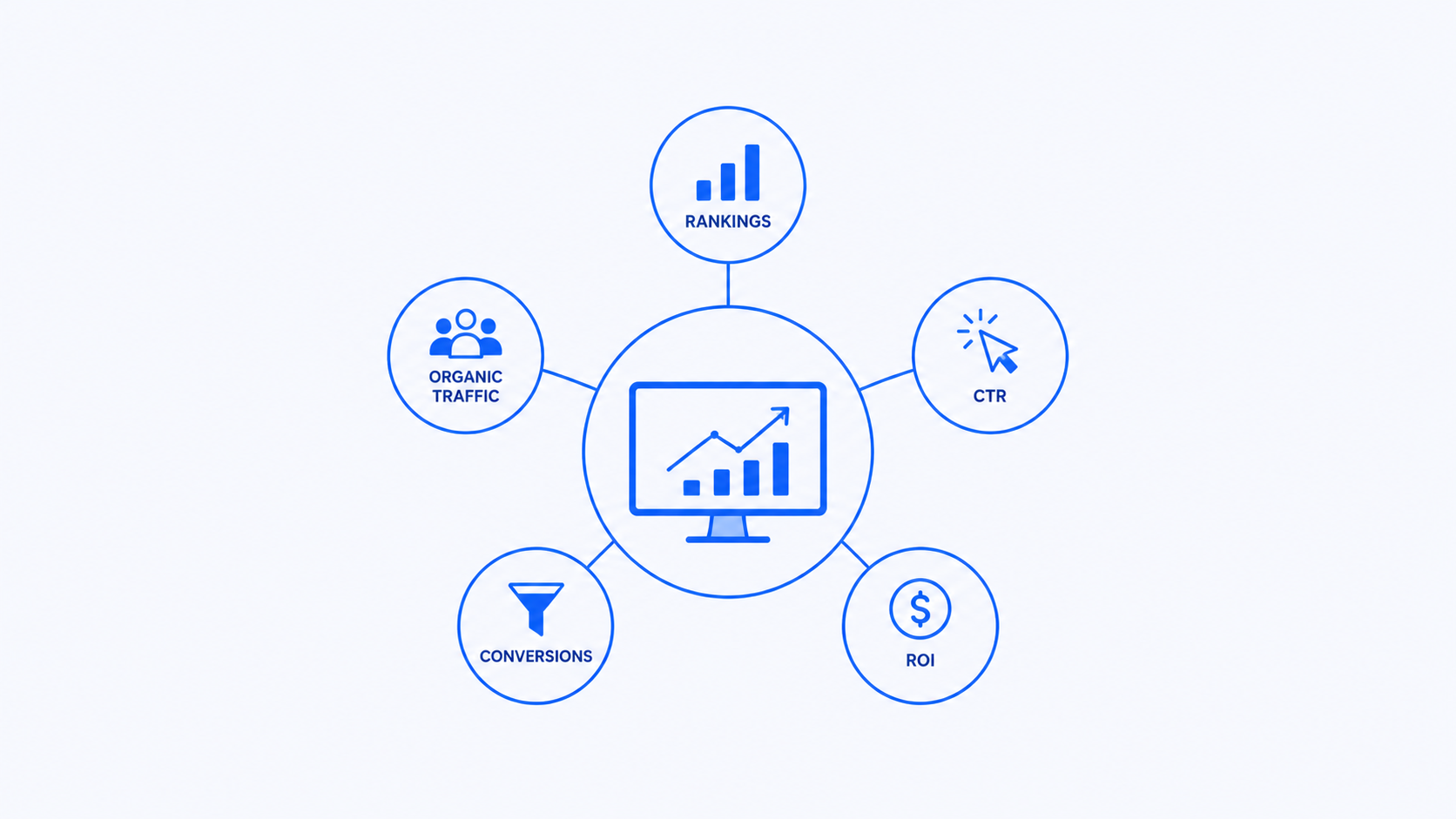
Rank tracking and performance monitoring tools automate keyword tracking, traffic analysis, and SEO ROI measurement. Checking rankings by hand every week or month is slow and inaccurate. These tools watch how your content performs in search continuously and tie ranking changes to traffic and conversion impact on their own. For businesses chasing more organic traffic through better visibility, automated rank tracking turns scattered data into a clear story about what’s working.
Automated tracking monitors your target keywords daily, sometimes several times a day, following position changes, visibility swings, and competitive movement. The AI knows which changes matter. A 5-position drop from position 2 hurts far more than a slip at position 25, and it alerts you when the significant moves happen. Over time these tools surface patterns that become your edge. Which pieces drive traffic at which positions. How long new content usually takes to peak in your market. Which pieces convert best. That pattern recognition gets more valuable the longer you run the tool.
The best rank trackers merge ranking data with traffic and conversion data to answer the question that actually matters: which rankings drive revenue? Instead of optimizing for raw search volume, you prioritize the keywords that convert, so your SEO effort lands on genuinely valuable targets. That business-first approach ties rank tracking to marketing and sales goals rather than leaving it a siloed chase after volume numbers that don’t track with outcomes.
Can AI-Powered Tools Actually Generate Content, and How Should You Use Generated Content?
AI content generation has come a long way. It moved from unusable keyword-stuffed text to tools that produce readable, well-structured first drafts. They can generate outlines, full articles, product descriptions, optimized variations of existing content, even technical documentation. Knowing both the genuine capability and the real limits is what separates using these tools well from publishing obviously machine-made content and paying for it in reputation.
Modern generators are trained on huge volumes of published content and SEO data, and they produce coherent, organized pieces that cover a target topic in full. The AI grasps content structure conventions, heading hierarchies, natural keyword integration, and how to satisfy search intent. For informational content, how-to guides, product descriptions, and definitions, where accuracy and completeness matter more than originality, an AI first draft cuts production time hard. Treat that output as ready to publish, though, and you end up with low-quality content that dents your credibility.
The approach that works treats AI output as a strong first draft that still needs human review, fact-checking, customization, and editorial polish. It’s a starting point that kills blank-page paralysis and research busywork, not finished copy. A human writer should always then:
- Verify Factual Accuracy: Check all claims, statistics, and examples against authoritative sources. AI tools sometimes confidently assert incorrect information or hallucinate citations that don’t exist. This is critical to prevent publishing misinformation
- Add Industry Expertise: Inject specific knowledge, examples, and insights that distinguish your content from generic AI output and make it valuable specifically for your audience
- Customize for Your Audience: Adjust tone, examples, and explanations for your specific customer base and use case. Generic content that works everywhere works well nowhere
- Refine Structure: Rearrange sections, adjust emphasis, and ensure logical flow that serves your reader’s specific journey through the topic
- Ensure Uniqueness: Add original perspective, case studies, and unique angles that make your content distinct from competitor content and worth reading instead of just scanning
AI generation earns its highest return on optimized variations of content that already works. Say a blog post drives real traffic and conversions. An AI tool can spin variations targeting related keywords or different audience segments. Writers build from proven templates instead of a blank page. You pair the efficiency of automation with content that has already shown it converts. No gamble on whether it works, just variations on a known winner.
What Integration and Workflow Considerations Matter When Adopting AI SEO Tools?
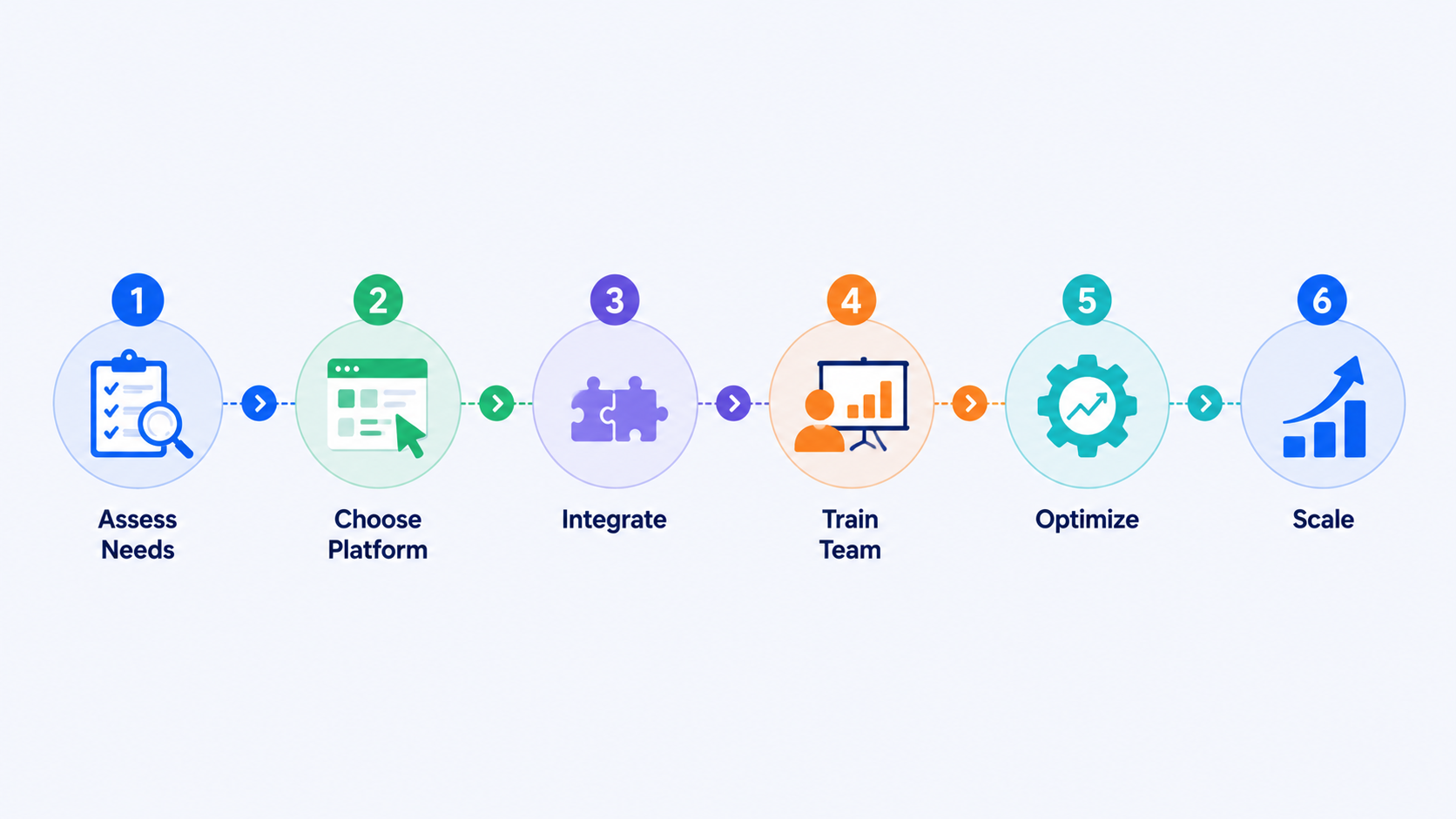
Rolling out AI tools for SEO strategies well takes deliberate integration with your existing marketing stack, team workflows, and business processes. Tools that don’t slot cleanly into what your team already uses create friction, drag down adoption, and erode ROI. The implementations that succeed treat selection and integration as a strategic process, not a hunt for the single “best” platform on a feature checklist.
Map your current tech stack first and pin down the critical integration points. Most marketing teams run some mix of CMS platforms (WordPress, Shopify, HubSpot), analytics (Google Analytics, Adobe Analytics), search visibility platforms (Google Search Console, Bing Webmaster Tools), project management (Asana, Monday.com), and communication tools (Slack, Microsoft Teams). AI SEO tools that natively connect to these build a smooth workflow. Tools that don’t force manual exports and imports that defeat the automation and eat the very time you were trying to reclaim.
Workflow fit matters as much as technical fit. Pin down exactly where the AI tools land in your content process. Do they help at planning (topic selection and keyword research), creation (briefs and outlines), optimization (post-publication improvements), or analysis (performance tracking)? Tools that ride your team’s natural workflow get adopted. Tools that demand an entirely new process, or ask people to change how they work, stall.
Critical Integration Considerations:
- CMS Compatibility: Does the tool integrate with your CMS to enable direct content publishing, or does it require manual content transfer that creates friction and reduces adoption?
- Data Connectivity: Can it connect to Google Search Console, Analytics, and other data sources automatically, or does it require manual data input that reintroduces busywork?
- Team Collaboration Features: Does it support multiple team members, handle version control, include commenting and approval workflows, and integrate with your team communication tools?
- Reporting and Dashboards: Can it generate reports your leadership team needs, or will you need to manually compile data from multiple sources for leadership visibility?
- API Access: Can your technical team integrate it with custom systems or build workflows that connect to your unique business processes?
Budgeting for setup time and training is critical, and teams routinely lowball it. They underestimate the hours needed to configure tools, migrate historical data, wire up integrations, and train people. An implementation that looks simple tends to reveal its complications once the team runs it at scale. Set aside 4-8 weeks for a full rollout of a major SEO automation platform, covering setup, integration testing, training, and a few rounds of workflow refinement. That timeline heads off the usual failure, launching a tool before anyone’s ready to use it well.
Change Management and Phased Adoption
Weigh your team’s technical skill when you choose. Some AI SEO platforms want real configuration and API work. Others run out of the box. If technical depth is thin on your team, a platform with strong out-of-the-box functionality and solid implementation support usually returns faster than a feature-heavy one that needs extensive custom integration. You want people productive on day one, not stuck configuring for weeks before they can start.
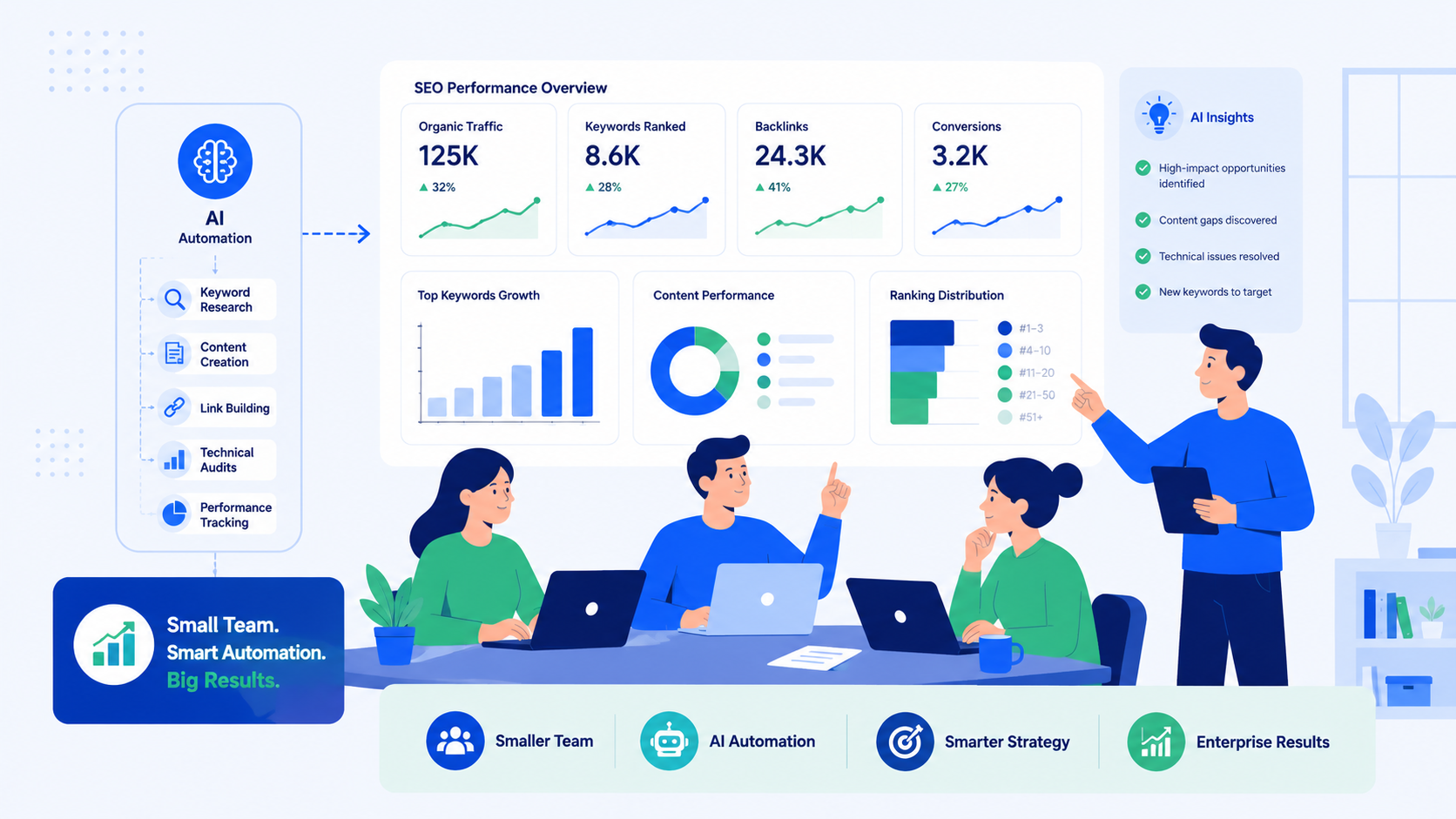
Worth sitting with: the businesses winning organic search right now aren’t the ones with the biggest teams or budgets. They’re the ones running their SEO through smart automation, letting a small team do what used to take a whole department. Pick the right mix of AI tools for SEO strategies and you publish optimized content more often, catch ranking openings sooner, scale organic growth without piling on headcount, and react to competitive moves faster than before.
Success comes down to matching tools to your actual pain points, folding them carefully into your existing workflows, and treating AI recommendations as the start of a strategic decision rather than the last word. Your team’s expertise, judgment, and creativity stay essential. The tools sharpen those human strengths. They don’t replace them. Start with your most urgent problem, implement it fully, measure the results, then expand. That disciplined path is what delivers consistent, measurable ROI.
Ready to rework your SEO workflow with AI automation? See how Aegasis Labs’ AI-powered SEO platform automates keyword research, content optimization, technical audits, and competitive analysis, freeing your team to focus on strategy instead of execution. Start a free 14-day trial today and see how much content your team can optimize and publish in half the time.
