

Keyword research used to be a painful, time-consuming process. Marketers would spend entire days digging through spreadsheets, analyzing competitors, and manually sorting through thousands of search terms. But that’s changing fast.
AI keyword research is transforming how businesses discover high-value search terms their audiences actually use. Instead of hours of manual work, AI-powered tools complete comprehensive research in minutes while improving accuracy and targeting precision. Using machine learning algorithms and natural language processing, AI systems analyze search patterns, competition levels, and user intent far faster than any human researcher could manage.
This comprehensive guide walks you through exactly how AI-driven SEO works for keyword discovery, the concrete efficiency gains you can expect, the best tools available today, and proven step-by-step implementation strategies. Whether you’re managing a small team or leading enterprise SEO efforts, you’ll discover how to optimize your content strategy without burning out your team.
What is AI Keyword Research and Why Does It Matter?
AI keyword research applies artificial intelligence and machine learning to automate discovering, analyzing, and prioritizing keywords for SEO and content strategy. Instead of manually searching and evaluating thousands of keywords one by one, AI systems instantly process massive datasets, spotting patterns and opportunities human researchers would miss.
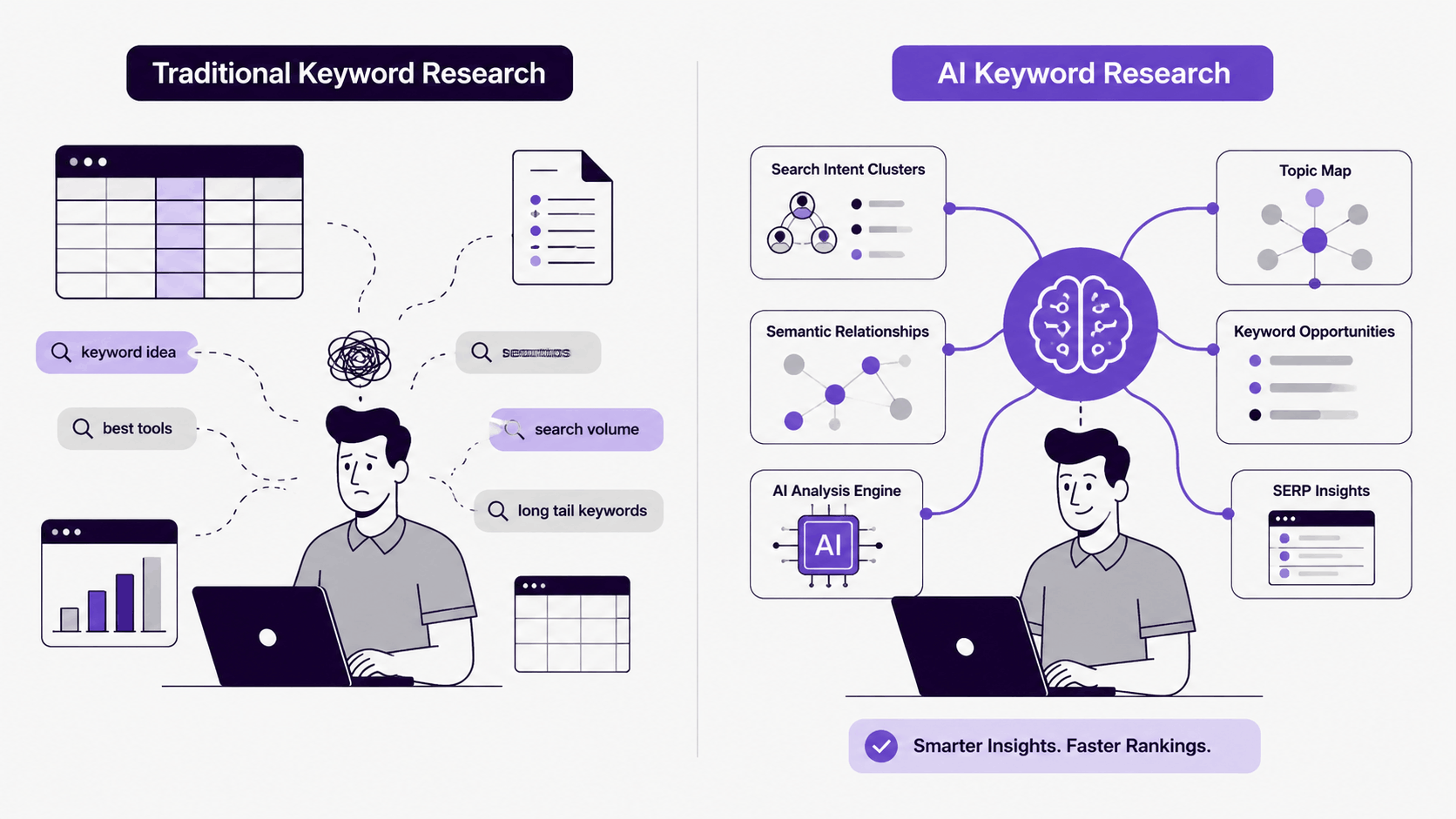
Here’s the reality: traditional keyword research is exhausting. Marketers spend enormous time juggling spreadsheets, analytics platforms, and competitor analysis tools—often with inconsistent results and missed opportunities. We see this pattern constantly with organizations struggling to maintain SEO momentum while dedicating excessive resources to the research phase alone.
AI keyword research solves this fundamental problem by automating the heavy lifting. The system identifies relevant terms, assesses search volume and competition, evaluates user intent, and even predicts keyword performance—all while you focus on strategy and content creation.
Why This Matters for Your Bottom Line
For businesses seeking to improve online visibility through SEO without dedicating excessive internal resources, AI-driven SEO provides a genuine competitive advantage. The efficiency gains are remarkable—research that once consumed days now completes in hours or even minutes. Moreover, AI continuously learns from new search data, ensuring your keyword strategies stay current with shifting search behaviors and algorithm updates.
Why is this important? Because keeping pace with ever-changing search engine algorithms is genuinely challenging. Manual approaches lead to inconsistent results and missed opportunities. AI removes that friction, automatically surfacing emerging trends and competitive shifts that demand your attention.
The practical impact is significant. Your team can publish optimized content more frequently and consistently. You address one of the core pain points for growing organizations: maintaining regular, high-quality optimized content without overwhelming your team. Instead of your best strategist spending three days on keyword research, they spend thirty minutes, then invests the remaining time building compelling content strategy and executing on priorities that actually move the needle
How Does AI-Powered Keyword Analysis Work?
AI-powered keyword analysis operates through several interconnected machine learning processes working together to deliver comprehensive insights. Think of it as teaching a computer to understand not just what people search for, but why they’re searching and what they actually need to find.
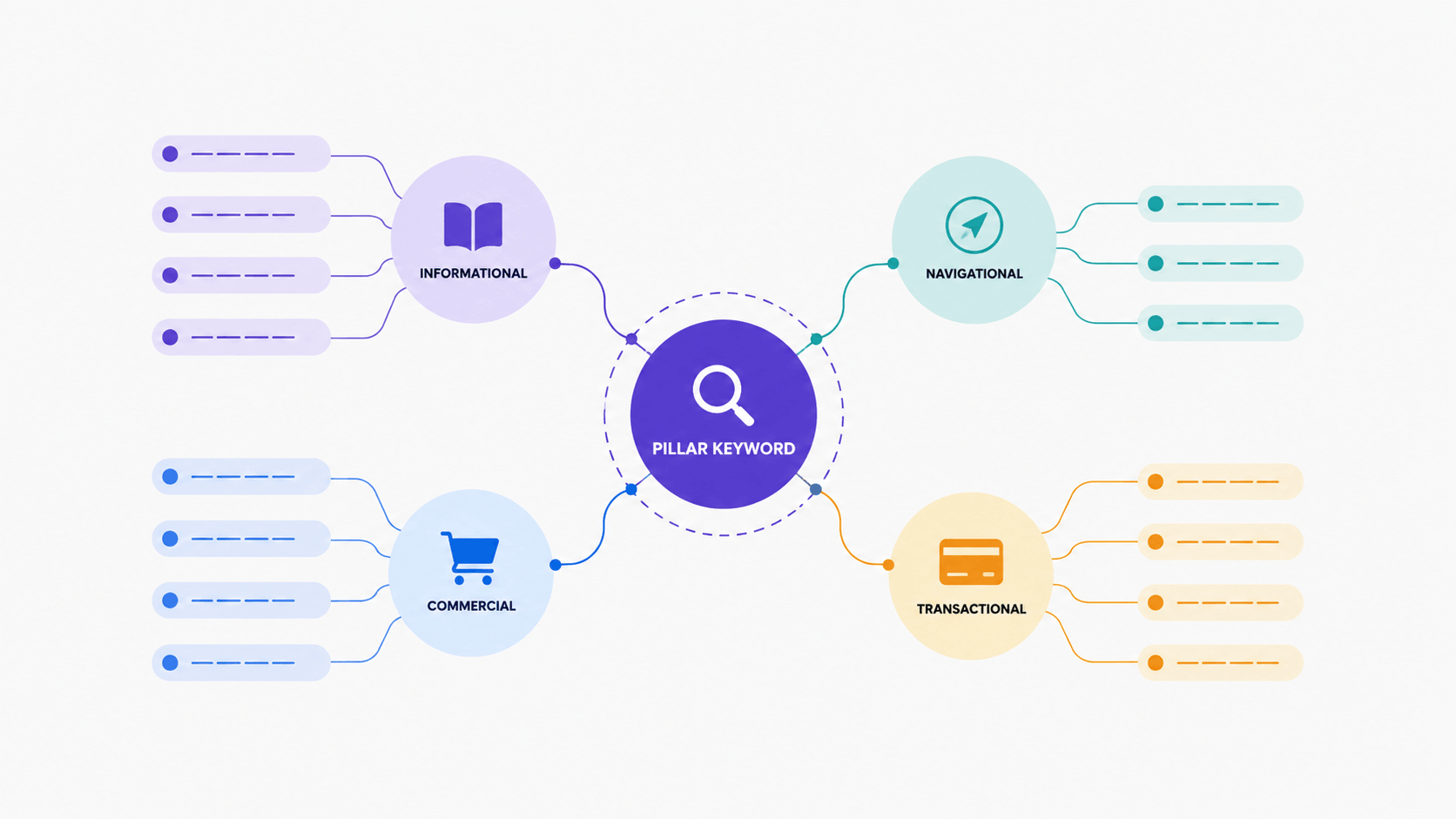
First, these systems use natural language processing (NLP) to understand semantic meaning behind search queries. This is crucial because it means AI recognizes that “best shoes for running,” “top running shoes,” and “quality running footwear” represent similar user intent, even though the exact words differ. This semantic understanding prevents you from missing keyword opportunities and helps you cluster related terms intelligently.
The AI Keyword Analysis Process
The process begins with comprehensive data collection. AI algorithms crawl search engines, analyze trending search patterns, monitor competitor websites, and review user behavior data from platforms like Google Search Console. According to industry best practices documented by Google Search Central, understanding search patterns is fundamental to effective keyword strategy. AI systems integrate data from multiple sources to build detailed keyword databases with actionable metrics.
Next, AI applies sophisticated classification algorithms to categorize keywords across multiple dimensions simultaneously. Rather than manually assigning keywords to categories (a process that takes hours), AI instantly classifies terms by search intent—informational, transactional, or navigational. The system also determines difficulty level, identifies search volume trends, and recognizes seasonal patterns. This multi-dimensional analysis would require a team of analysts working for days, but AI completes it in seconds with greater accuracy.
Continuous Learning and Refinement
Third, AI continuously refines its recommendations based on performance data. When you implement keywords suggested by AI systems and track the results, the algorithms learn which recommendations proved accurate and which missed. This feedback loop means AI SEO strategies become progressively more effective over time, tailored specifically to your business, your market, and your customers’ actual behavior. Unlike static research you conduct once annually, AI-powered systems actively improve with every implementation decision you make.
The result is a keyword research system that works more like a strategic partner than a tool. The more you use it, provide feedback, and measure results, the smarter it becomes about your specific opportunities. It learns what keywords drive customers, not just traffic. It understands your competitive position. It recognizes emerging threats and opportunities in your market before they become obvious.

What Are the Key Efficiency Gains from AI Keyword Research?
The efficiency advantages of AI keyword research are measurable and substantial across multiple dimensions of your SEO workflow. Let’s walk through the concrete benefits you can expect.
The most obvious gain is speed. Where manual keyword research for a comprehensive strategy might consume 20-40 hours of focused work, AI tools generate initial research and recommendations in 30-60 minutes. This dramatic time reduction immediately frees your team to focus on strategic decisions and content creation rather than data gathering and analysis. Your best people spend their time on high-value work instead of spreadsheet maintenance.
Beyond pure speed, AI delivers efficiency through reduced errors and improved consistency. Manual keyword research is vulnerable to human oversight—keywords get duplicated, important long-tail variations are missed, or competitive analysis contains gaps. A researcher might miss keywords that don’t immediately come to mind, even though search volume is substantial. AI systems methodically process every relevant keyword variation without fatigue or inconsistency, ensuring comprehensive coverage of your entire keyword opportunity space.
Scalability Without Proportional Cost
AI drives efficiency through scalability—perhaps the most underrated benefit. A small marketing team without dedicated SEO specialists can now conduct keyword research equivalent to what a large enterprise team would produce. This scalability is genuinely transformative for startups and growing companies that need professional-grade research without professional-grade budgets. Automated SEO tools powered by AI enable these businesses to compete with larger organizations on keyword strategy sophistication and research quality.
AI also improves efficiency in prioritization. Rather than manually ranking keywords by a single metric (usually just search volume), AI evaluates opportunities across multiple criteria simultaneously—search volume, competition difficulty, user intent alignment, trend direction, and conversion likelihood. This means you don’t waste time pursuing keywords that look attractive in one metric but lack real business value. AI instantly identifies the 20% of keywords that will drive 80% of your results, allowing you to concentrate effort on high-impact opportunities.
Additionally, AI reduces the cost per keyword analyzed. With manual research, each new keyword or competitor analysis requires your team’s time. With AI systems, the marginal cost of analyzing additional keywords approaches zero once setup is complete. This means you can afford to be comprehensive and thorough, examining not just your primary market but also long-tail opportunities, niche variations, and emerging trends. You can research competitor keywords across ten different products simultaneously. You can analyze seasonal variations. None of this is feasible with manual methods, but it’s trivial for AI.
Data-Driven Decision Making
Perhaps most importantly, AI enables data-driven decision making throughout your SEO program. Instead of relying on intuition about which keywords matter, you have quantified, comparable analysis of every opportunity. Instead of debating which direction to invest, you can point to AI-generated metrics and make confident decisions backed by data. This shifts keyword strategy from an art form (where the best practitioner wins) to a science (where the best process wins).
How Can You Use Search Console Data with AI Tools?
Google Search Console is one of the most valuable data sources for AI-powered keyword research, yet most businesses underutilize the strategic insights it contains. Search Console shows exactly which queries bring users to your site, the impressions they receive, and click-through rates—real performance data that beats any estimate or prediction. AI tools excel at extracting actionable insights from this raw Search Console data that would be impossible to spot manually.
When you integrate Search Console with AI keyword research tools several powerful analyses become possible. Let me walk through the most impactful ones.
Finding Quick Wins and Low-Hanging Fruit
First, AI identifies keywords where you rank on page 2-3 but receive few clicks. These “low-hanging fruit” keywords are genuinely valuable—you’re already ranking in the conversation, but you’re not capturing the traffic you should. Often, these keywords need only minor content improvements to move to page 1 and capture significantly more traffic. AI analyzes your content against top-ranking competitors for these keywords and suggests specific, actionable optimizations to boost your ranking.
For example, AI might identify that you rank #8 for “sustainable yoga mat materials” with only 2% click-through rate. Top-ranking competitors have more detailed product comparisons. AI recommends adding a comparison section to your content, restructuring your introduction to better match the top result’s approach, and strengthening specific keyword variations. These targeted recommendations beat generic “improve your content” advice.
Second, AI discovers keyword opportunities within your existing traffic. Search Console shows queries that land on your site but don’t match your primary target keywords—these represent gold mines of opportunity. For example, you might rank for “sustainable yoga mat reviews” to find your yoga studio website. AI recognizes this intent mismatch and suggests creating targeted content that captures related search volume with better alignment. Maybe you create a “beginner’s guide to sustainable yoga equipment” that naturally addresses these searches while establishing authority.
Leveraging Performance Data for Competitive Advantage
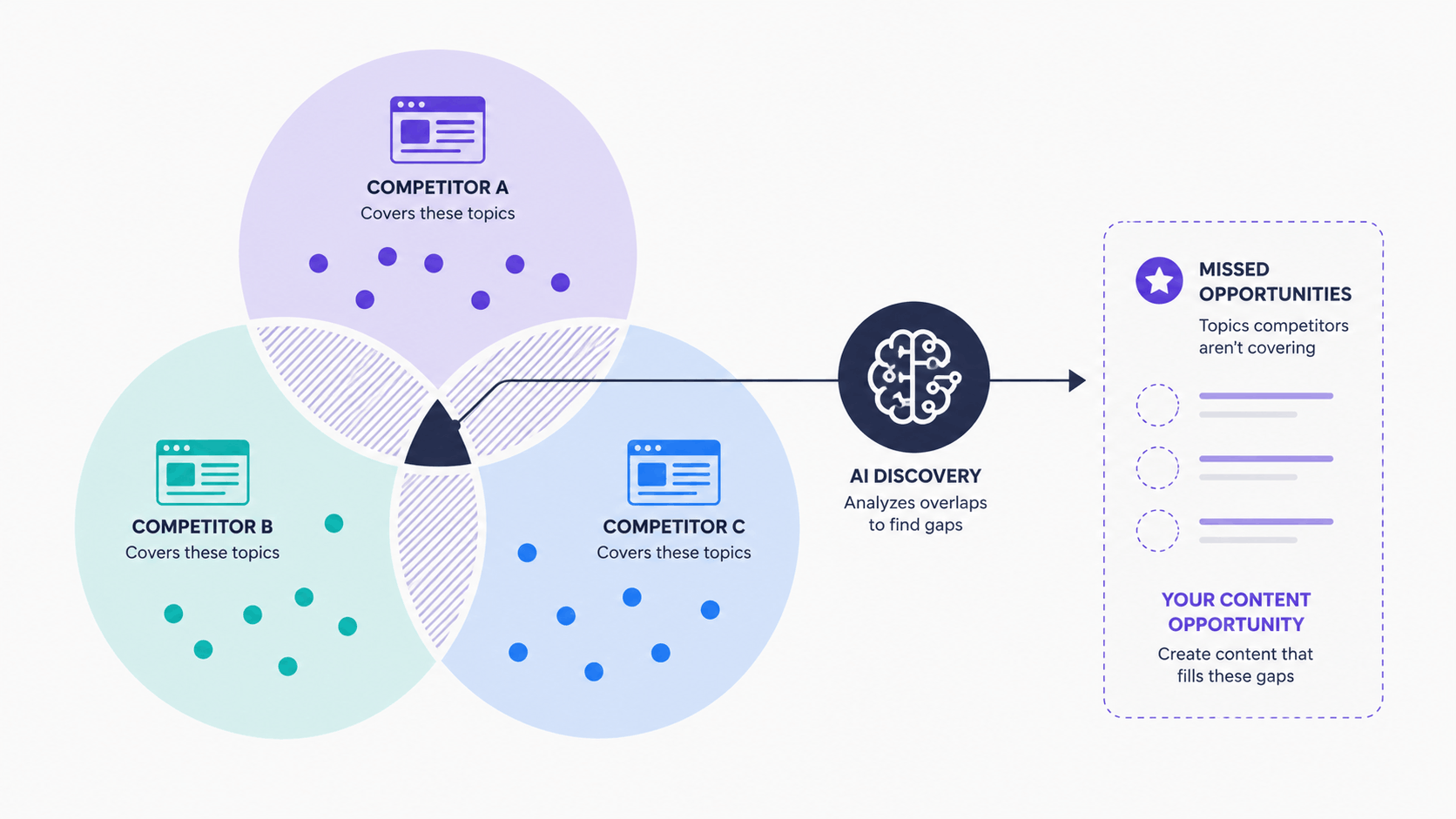
Third, AI performs sophisticated competitive analysis using Search Console data. When you connect your account with AI tools, they benchmark your keyword performance against industry averages and identified competitors. This reveals which keywords you’re outperforming on and which represent competitive disadvantages where competitors dominate. AI then prioritizes keywords where you have the best opportunity to gain ground.
This is particularly powerful because you’re not just seeing which keywords are large opportunities in general—you’re seeing which keywords your specific competitors are winning on, where you’re closest to displacing them. Maybe your competitor ranks #1 for a high-volume keyword but their content is dated and poorly structured. AI flags this as a high-potential opportunity—your competitor is vulnerable, and superior content could capture that position.
AI also uses Search Console data to predict keyword performance for new content. Based on your historical data and broader market trends, AI estimates search volume and realistic ranking positions for keywords you don’t currently rank for. This helps you make data-driven decisions about which new keywords to target, rather than guessing based on search volume alone. You can evaluate whether targeting a keyword with 500 searches/month is realistic for your site’s authority, or whether you need to build more foundational authority first.
Continuous Monitoring and Alerts
Additionally, AI continuously monitors your Search Console data and alerts you to significant changes. A keyword you’ve always ranked well for suddenly drops 5 positions? AI flags it immediately with analysis of potential causes. A new keyword starts appearing in your search results with surprising frequency? AI recognizes the emerging opportunity. Rather than waiting for your monthly or quarterly review, you catch important changes immediately and can respond quickly before they impact your traffic.
What AI SEO Strategies Should You Implement First?
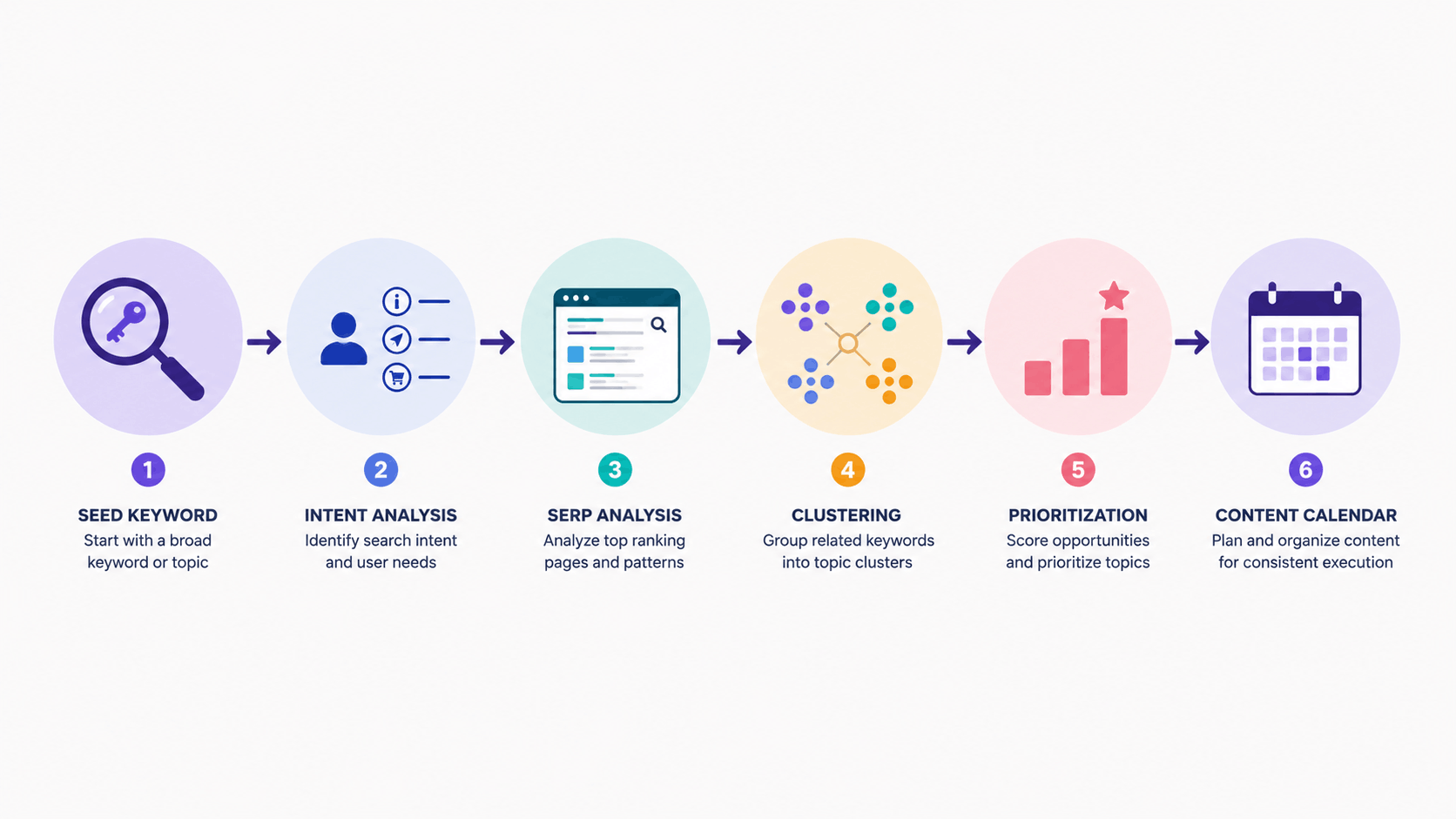
Implementing AI-driven SEO requires a strategic approach rather than simply adopting every tool available at once. The most effective strategies start with foundational elements and build systematically from there. Let’s walk through the right sequencing.
Begin by establishing clear business objectives for your SEO efforts.
This might sound basic, but it’s critical. AI performs best when it optimizes toward specific goals—whether that’s increasing organic traffic volume, capturing specific customer segments, improving conversion rates from organic search, or establishing authority in particular topic areas. Without clear objectives, even sophisticated AI systems generate unfocused recommendations. You end up with a list of keywords rather than a strategic direction.
Building Your AI Keyword Research Foundation
Your first implementation step should be connecting your most critical data sources to AI tools. Start with Google Search Console (your actual performance data), your website analytics (where traffic goes and what happens), and ideally your CMS platform (to understand your content inventory). This data foundation allows AI to understand your current performance, identify the most impactful opportunities in your specific market, and recommend changes calibrated to your situation. Many AI keyword research tools offer straightforward Search Console integration, making this connection simple.
This is where many organizations discover their biggest wins. You’re not looking for new keywords—you’re finding existing traffic you’re leaving on the table. You’re finding keywords where you rank #8 but could realistically reach #3 with targeted improvements. You’re finding keywords you rank for accidentally (because related topics appear in your content) that you should intentionally optimize. These quick wins often drive more results than chasing entirely new keywords.
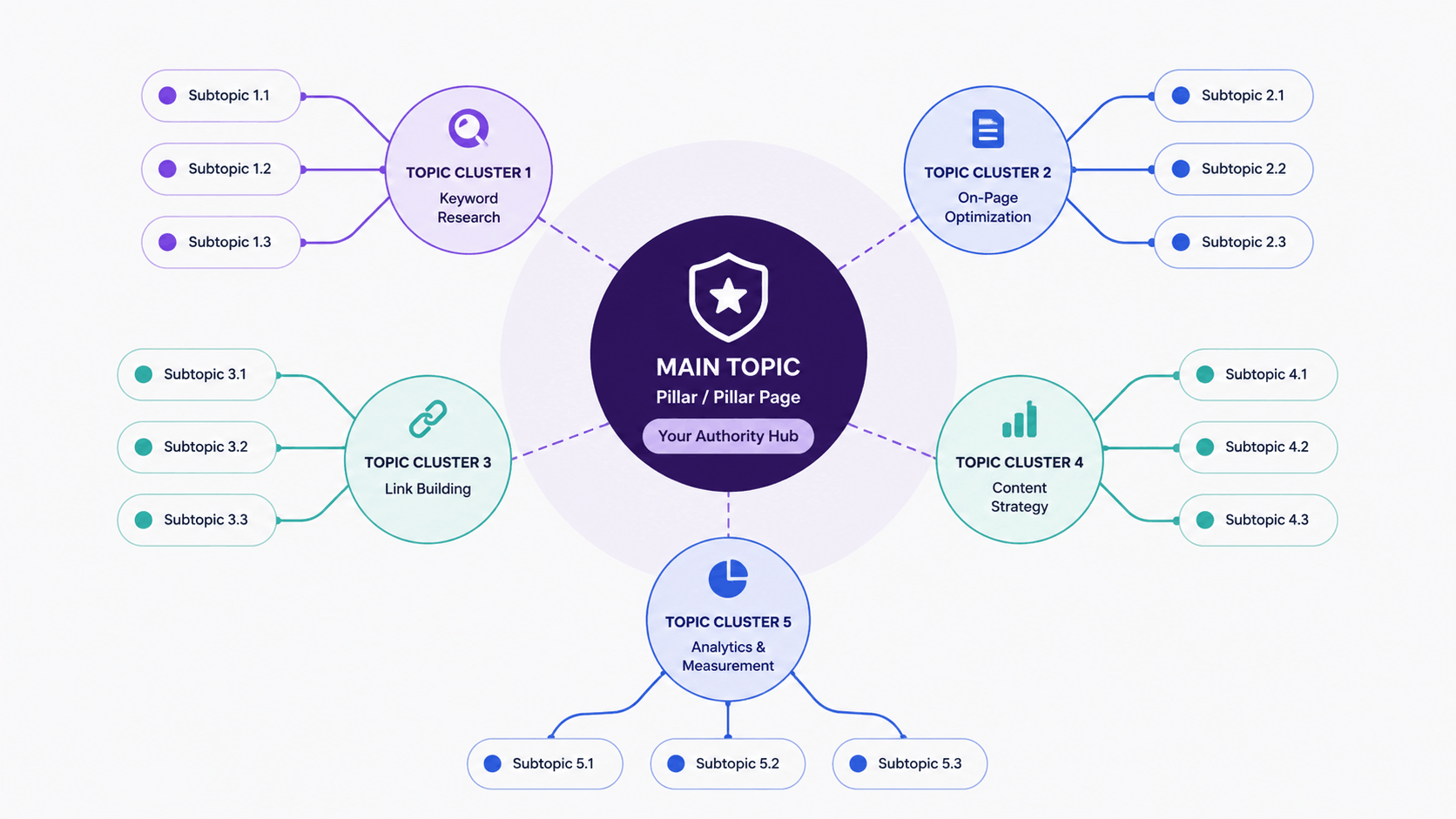
Third, use AI to develop a keyword clustering Strategy. AI-driven SEO tools automatically group related keywords and identify topic clusters that should be covered by individual content pieces or comprehensive guides. This differs fundamentally from traditional keyword research by organizing keywords around user intent and topic relevance rather than just search volume. For instance, rather than creating separate content for “SEO tips,” “SEO best practices,” and “SEO strategies,” AI recognizes these belong in a topic cluster and recommends a comprehensive guide addressing all variations with proper internal linking.
Prioritization and Implementation Strategy
Fourth, prioritize keywords based on AI-generated opportunity scores. Rather than making subjective decisions about which keywords to target first (or relying on your loudest stakeholder’s opinion), use AI metrics that evaluate search volume, competition difficulty, your current ranking position, and business value. AI can weight these factors toward your specific goals, ensuring your team focuses on keywords with the highest expected ROI. This transformation from gut-based prioritization to data-driven prioritization often reveals unexpected opportunities and prevents wasted effort on keywords that look good but have low actual value.
The sequencing matters here. You’ll want to target your “quick wins” first—keywords where you rank 5-8 but could reach page 1 with content improvements. These build momentum and demonstrate value quickly. Then move to new keyword targets where you have content authority but haven’t created specific optimized content. Finally, pursue entirely new opportunities where you need to build authority and topical coverage first.
How Do Automated SEO Tools Streamline Your Workflow?
Automated SEO tools powered by AI transform keyword research from an isolated activity into an integrated workflow component. Rather than conducting research separately and then manually implementing findings (with inevitable loss of information and momentum along the way), modern automated tools connect research directly to content creation, optimization, and performance tracking. This integration eliminates handoff points where details get lost and creates continuous feedback loops that improve results over time.
At the research stage, automated tools continuously monitor keyword performance and identify new opportunities without waiting for your manual review cycles. Most tools update keyword metrics daily, immediately flagging when new search trends emerge or competition intensifies. This means your research is never stale—your strategy adapts to market changes automatically rather than requiring quarterly or annual updates and reports.
Integration with Content Creation Workflows
Many advanced automated SEO tools integrate keyword insights directly with content creation platforms. Rather than exporting a keyword list and manually creating content briefs based on research, these systems can automatically generate content outlines, suggest internal linking opportunities, and recommend content structure based on how top-ranking competitors organize similar content. This integration means your content creation team receives research-driven briefs rather than just raw keyword data.
The practical impact is significant. Your writers spend less time researching how to structure content and more time writing it. Your editors have clear guidance about which keywords should appear in which sections. Your project managers can see which content pieces support broader keyword strategies. Everyone is literally working from the same page, derived from the same research.
Unified Reporting and Performance Dashboards
Final efficiency gains come from consolidated reporting. Rather than exporting data from multiple tools and reconciling it in spreadsheets (creating version control nightmares and endless inconsistencies), automated SEO platforms provide unified dashboards showing keyword performance, content performance, traffic trends, and strategic recommendations in one place. This consolidation makes it genuinely easier for teams to understand results and coordinate across departments.
Marketing can see which keywords drive traffic and conversions. Content teams can see which pieces are underperforming and need optimization. Executive leadership can see whether organic revenue is growing. SEO specialists can see where their efforts are working and where they need adjustment. Everyone benefits from transparency around the same data, eliminating arguments about “whose numbers are right.”
The cascading efficiency gains are substantial. Research that took days now takes hours. Content creation that required extensive research takes less time with intelligent briefs. Optimization that required ongoing manual analysis happens automatically. Reporting that consumed hours in spreadsheet manipulation becomes push-button dashboards. These efficiencies compound—the time you save in month one enables more content in month two, which generates more data in month three, which provides better targeting in month four.
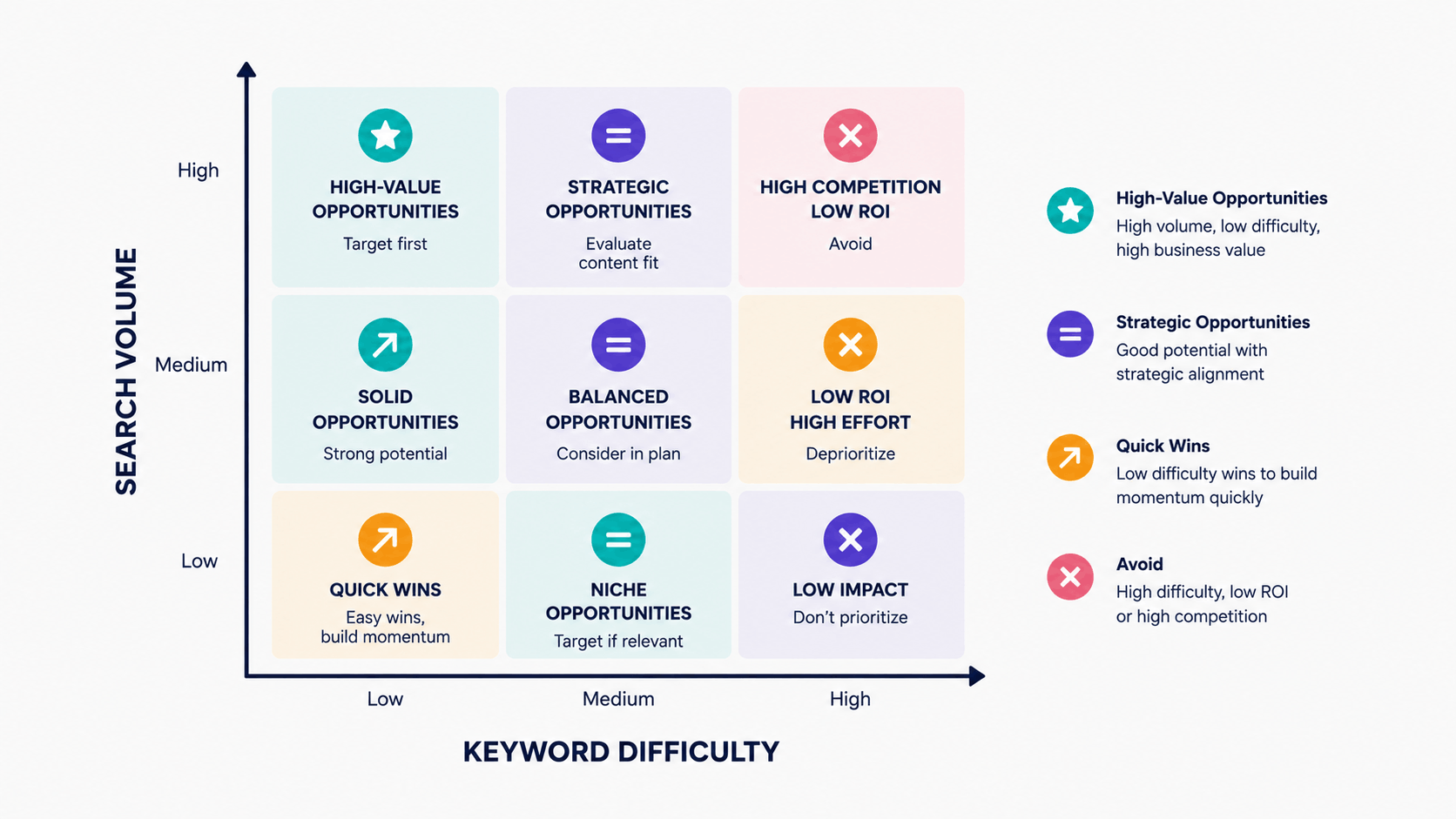
What Metrics Should You Track in AI-Powered Keyword Research?
Tracking the right metrics is essential to measuring whether AI keyword research actually improves your SEO performance and justifies the investment. Rather than simply noting which keywords you rank for, you need metrics connecting keyword research to concrete business outcomes. Let’s walk through the most important ones.
The foundation is tracking keyword rankings: which positions your target keywords occupy in search results, how these positions change over time, and whether rankings improve faster with AI-driven strategies than with previous approaches. But rankings alone don’t tell the complete story. A keyword might rank #1 but drive minimal traffic because search volume is low. Or it might rank #5 but drive substantial traffic because the keyword is high-volume.
How Should You Choose the Right AI Keyword Research Tool?
Selecting an AI keyword research tool requires evaluating several technical and practical dimensions to ensure the tool matches your specific needs, team size, organizational structure, and budget constraints. There’s no universally “best” tool—the right choice depends on your situation. Let’s walk through the key decision points.

Start by assessing data quality and freshness. The best AI is only as good as its underlying data foundation. Compare tools by checking whether their keyword metrics align with your own Search Console and analytics data. A tool that reports dramatically different search volumes than Google’s official channels should be viewed with considerable skepticism. Look for tools that update data frequently—daily or weekly is ideal compared to monthly updates that become stale quickly.
Evaluate the breadth of data sources integrated into each tool’s AI system. Tools that combine Google Search Console data, competitor analysis, search trends, user behavior data, and ranking data typically provide more accurate and actionable recommendations than tools relying on a single data source. More integration points mean the AI has richer context for making recommendations and identifying opportunities that single-source tools would miss.
AI Interpretability and Technical Integration
Consider the AI’s interpretability. Can you understand why the tool recommends specific keywords? The best tools explain their reasoning—”this keyword is recommended because it has high search volume with moderate competition and aligns with your existing content authority.” Tools that simply list keywords without explanation provide less value because you can’t adjust recommendations when they miss important context about your business, your customers, or your strategic priorities.
Assess integration capabilities with your existing tech stack carefully. Can the tool connect to your CMS platform, analytics account, and webmaster tools? Integration reduces manual work and creates the data flow necessary for true workflow efficiency. Tools requiring manual data export and import create friction that eliminates much of the efficiency benefit. You end up doing the integration work that AI was supposed to eliminate.
Pricing, Scalability, and Support
Finally, compare pricing models relative to your expected usage. Some tools charge per keyword analyzed, others per user, and others offer flat-rate pricing regardless of volume. Startups often benefit from tools with simple, flat pricing that scales proportionally with business growth. Large organizations with complex needs might prefer usage-based pricing that scales with sophisticated analysis. Calculate the cost per keyword researched and total cost of ownership, including integration time, training, and ongoing management overhead.
Don’t overlook customer support and learning resources. Even excellent tools require proper setup and team training. Tools backed by comprehensive documentation, video tutorials, and responsive support teams will deliver faster ROI because your team gets value-extracting guidance. Tools with minimal support require you to figure everything out through trial and error, slowing adoption and delaying results.
What Are Common Mistakes in AI Keyword Research Implementation?
Even with sophisticated AI tools, common implementation mistakes can undermine your keyword research effectiveness and create inefficiencies rather than solving them. Understanding these pitfalls helps you avoid them and extract genuine value from your AI investment.
The most prevalent error is over-reliance on AI recommendations without strategic business judgment. AI tools excel at identifying opportunities and analyzing data at scale, but they lack understanding of your specific business goals, your customer psychology, your market nuances, and your competitive positioning. The most effective approach combines AI recommendations with strategic human judgment—use AI to identify candidates and surface data, then apply business context to prioritize and validate them. AI excels at analysis; you excel at strategy and judgment.
Another frequent mistake is targeting search volume without considering commercial intent or actual conversion likelihood. A keyword with 10,000 monthly searches sounds valuable until you realize those searches come from people with no purchase intent, no budget, and no relationship to what you offer. AI can identify keywords with strong conversion likelihood if you provide feedback about which keywords actually drove business value, but many teams simply chase volume metrics. This leads to publishing content targeting popular keywords that generate traffic but not customers.
Strategic Integration and Content Execution
Many teams also make the mistake of implementing AI-driven keyword research without updating their content strategy accordingly. They analyze keywords, get recommendations, then continue creating content the same way they always have—targeting single keywords rather than topic clusters, publishing individual articles rather than comprehensive guides, failing to optimize existing content for new keyword opportunities. Without changing your content approach to match AI-driven recommendations, you don’t realize the full potential of the research. The insight and the execution must align.
Another significant error is failing to maintain consistent implementation. Teams often do initial AI keyword research and then abandon it, losing the value of continuous optimization and evolution. Keyword markets change. Competition shifts. New opportunities emerge. The businesses that benefit most from AI keyword research treat it as an ongoing strategic process—continuously monitoring for new opportunities, updating keyword strategies quarterly, and refreshing content based on performance data. Abandoned keyword research provides one-time value; maintained research compounds benefits over time.
Many organizations also make the mistake of siloing keyword research from other SEO activities. Keyword research should inform content strategy, internal linking structure, technical optimization priorities, and even paid search decisions. When keyword research exists separately from content strategy, link building, and technical SEO, opportunities for synergy are lost. The most effective implementation integrates AI-driven keyword insights throughout your entire SEO program, creating a cohesive strategy rather than isolated initiatives.
Organizational and Training Considerations
Finally, teams often underestimate the importance of training and adoption. Simply purchasing an AI keyword research tool doesn’t create efficiency if your team doesn’t understand how to interpret the recommendations and implement them effectively. Invest in proper training on the tool itself, on how to interpret AI-generated metrics and recommendations, and on how to translate research into content strategy and action. The efficiency gains from AI only materialize when your entire team understands how to use it and why the recommendations matter.
How Do You Measure ROI from AI Keyword Research?
Demonstrating the return on investment from AI keyword research requires establishing baseline metrics before implementation and tracking relevant performance indicators afterward. Without this comparison, you can’t actually prove the tool is working.
Begin by documenting your pre-AI keyword research costs and capabilities: How much time does your team currently spend on keyword research? How many keywords can you research thoroughly each month? What percentage of your target keyword universe receives attention? How long does it take to update your keyword strategy? How much does this cost your organization annually? These baseline numbers make the efficiency improvements quantifiable and undeniable.
Next, establish what constitutes success for your business. For some organizations, increasing organic traffic is the primary goal. For others, driving qualified leads from organic search is more important than raw traffic volume. For others still, capturing market share in specific high-value keyword categories is the objective. Your success metrics should connect to actual business outcomes, not just SEO metrics. If organic traffic increases 50% but conversions stay flat, the improvement may not justify the investment in tools and training.
Implementation Speed and Content Metrics
Track implementation speed improvements. The time from keyword research completion to published, optimized content typically decreases dramatically with AI systems. If your team previously spent three weeks researching keywords and creating content for ten new pieces, and now does it in one week, that’s quantifiable efficiency. Calculate the labor cost of that time savings—it often exceeds the cost of the AI tool within months. A team member freed from research work can work on higher-value initiatives or produce more content.
Measure performance attribution more accurately by tracking which keywords drive business outcomes. Use enhanced UTM parameters or GA4 settings to tag traffic by keyword research source. This reveals whether keywords identified by AI keyword research tools actually perform as predicted. Many teams find that AI-recommended keywords perform better than historically identified keywords because AI targets based on multiple factors, not just search volume or intuition.
Calculate the organic traffic value using your company’s standard attribution model and conversion data. If your AI keyword research implementation enables you to capture an additional $50,000 in annual revenue from organic channels, that clearly demonstrates ROI regardless of what the tool costs. Connect traffic improvements directly to keyword research implementation timing when possible. Avoid giving credit for traffic growth that would have happened anyway—look for acceleration or step changes that correlate with your AI implementation.
Competitive Metrics and Long-term Value
Measure content publication consistency and pace. Most teams discover they can publish more content at higher quality using AI-driven keyword research. If you increased content publication from 4 pieces per month to 8 pieces per month while maintaining quality, and each piece generates ongoing traffic and conversions, that’s substantial business value. Track organic traffic growth month-over-month and identify whether it accelerates after AI keyword research implementation.
Evaluate competitive position changes systematically. Are you ranking for more keywords than competitors? Are your rankings improving faster? Is your share of impressions in your target keyword categories increasing? Are you capturing market share from identified competitors? These competitive metrics reveal whether AI keyword research is helping you gain market position. You want to be gaining on your competition, not just moving traffic around internally.
Track keyword ranking changes for your target keywords specifically. Document your baseline rankings for 50-100 important keywords before implementing AI keyword research. Then measure whether those rankings improve faster after implementation. If your average ranking position improves from #6 to #4 within six months (instead of the usual twelve months), that’s evidence that AI is working. Compare this improvement rate to your historical improvement rates.
Finally, calculate the total cost of ownership and payback period. Tally the investment: tool cost, integration time, training, and ongoing management time. Then calculate how much revenue that investment has enabled. Most businesses find that an AI keyword research tool pays for itself within 3-6 months through efficiency gains and improved keyword targeting. After that, the tool becomes a valuable asset with minimal ongoing cost but substantial ongoing benefit.

What’s the Future of AI in Keyword Research and SEO?
The field of AI-driven keyword research continues evolving rapidly, with emerging capabilities that will further transform how businesses approach SEO strategy. Understanding these trends helps you position your organization for future success and avoid investing in tools that will become obsolete.
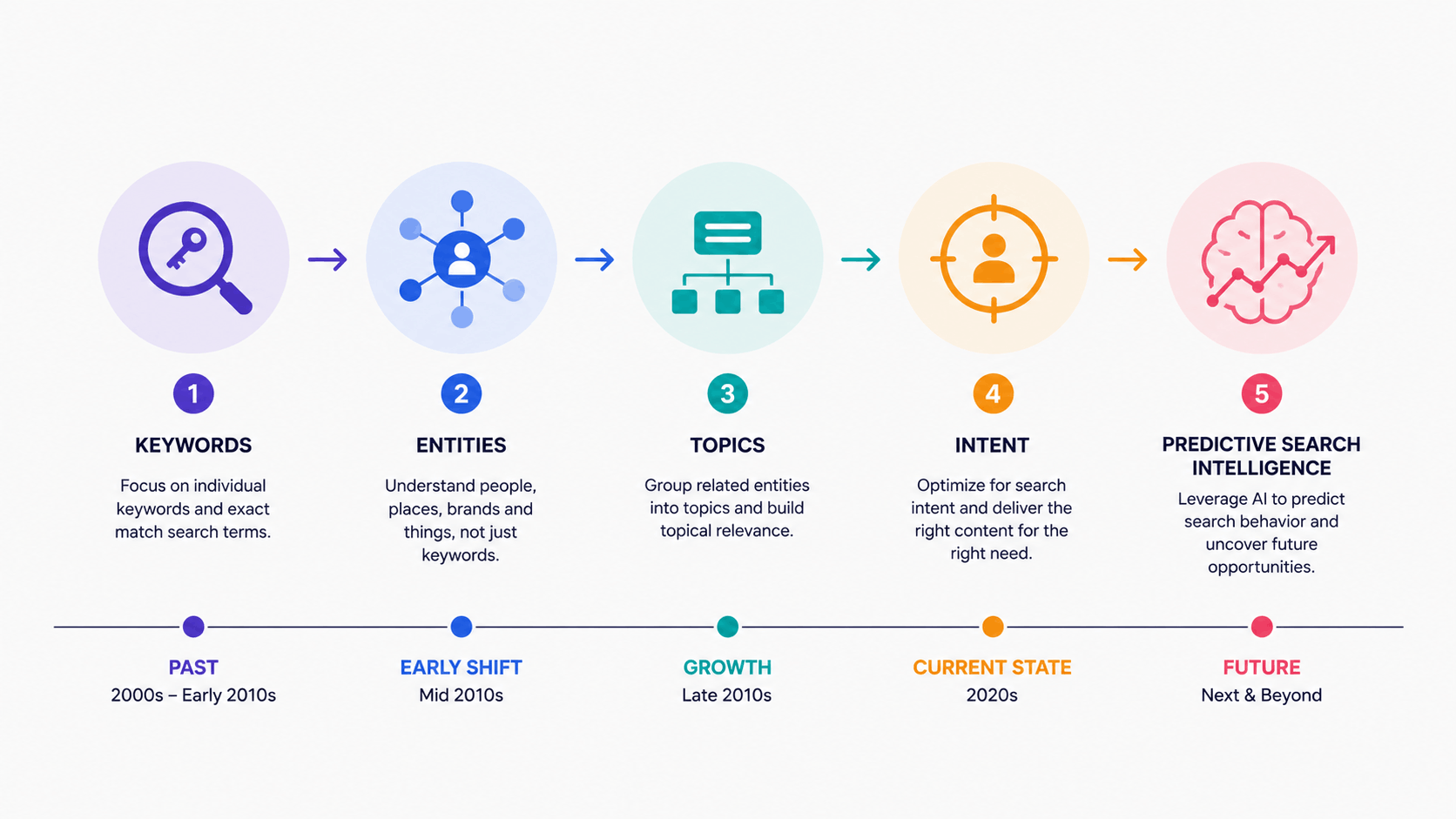
Predictive analytics represents a significant frontier—perhaps the most transformative next step. Rather than analyzing current keyword performance, next-generation AI systems will forecast which keywords will become valuable in six or twelve months before they gain mainstream attention. This predictive capability enables businesses to position content before demand spikes, capturing first-mover advantage in emerging keyword spaces. Imagine knowing which keywords will trend three months from now and publishing authoritative content that’s ready when searches spike.
AI is increasingly integrating with multimodal search capabilities. As Google and other search engines expand beyond text to images, videos, and voice search, AI keyword research tools are evolving to understand keyword opportunities across these formats. Video keyword research and voice search optimization are becoming integrated components of comprehensive AI keyword research rather than separate specialties. Businesses using next-generation AI tools can identify keywords valuable for video content or voice queries alongside traditional text search opportunities.
Advanced AI Capabilities and Integration
Large Language Models (LLMs) are expanding AI’s understanding of semantic relationships between keywords and content topics in profound ways. Current systems understand keywords as discrete entities with metrics. Next-generation systems will understand how keywords relate to broader conceptual frameworks, user journeys, and information needs. This deeper semantic understanding will enable AI to recommend content strategies that address user needs comprehensively rather than chasing individual keywords.
Future AI systems will increasingly personalize keyword recommendations to individual businesses based on their industry, target market, historical performance data, and competitive position.
Rather than generic recommendations that apply to all businesses, AI will develop deep understanding of what works specifically for your business, your competitors, and your market. This personalization will make AI recommendations progressively more valuable over time as the systems learn from your specific results and feedback.
AI is also moving toward integrated, end-to-end SEO orchestration. Rather than separate tools for keyword research, content optimization, and performance tracking, comprehensive AI platforms will manage your entire SEO strategy as an interconnected system. Research findings will automatically inform content creation systems, which will feed performance data back to research algorithms, creating continuous improvement cycles that don’t require manual intervention.
Market Evolution and Competitive Implications
The trajectory is clear: AI-driven keyword research will become progressively more integrated, predictive, and personalized, while requiring less manual oversight and interpretation. The businesses that adopt AI keyword research early and build processes to manage these evolving capabilities will maintain competitive advantage as the technology advances.
Industry resources like Moz’s SEO Learning Center track these developments and provide insights into emerging capabilities. Following these resources helps you stay ahead of the curve and anticipate changes before they become obvious to your competitors.
The future also involves more sophisticated competitive intelligence. AI will not just analyze keywords but understand competitive strategies at a deeper level. Which competitors are gaining on you? In which keyword categories? What content strategies are they using? What topics are they building authority in? This competitive intelligence will help you identify gaps and opportunities in ways current tools can’t.
AI keyword research transforms how businesses discover, analyze, and prioritize opportunities in their SEO strategy. By automating tasks that previously consumed enormous amounts of manual work, AI-driven keyword research enables marketing teams to operate with exceptional efficiency while improving research quality, accuracy, and strategic alignment. The benefits are concrete and substantial: research time drops from days to hours, keyword opportunities are identified with greater accuracy and less bias, and continuous updates ensure strategies stay current with market changes.
Ready to transform your keyword research and accelerate your SEO results? Evaluate your current process, identify the efficiency gaps holding you back, and explore AI keyword research tools designed for your team’s specific needs. Start with a comprehensive keyword audit using AI, then build from there. Your competitors are already moving—don’t fall behind. The time to implement is now.
