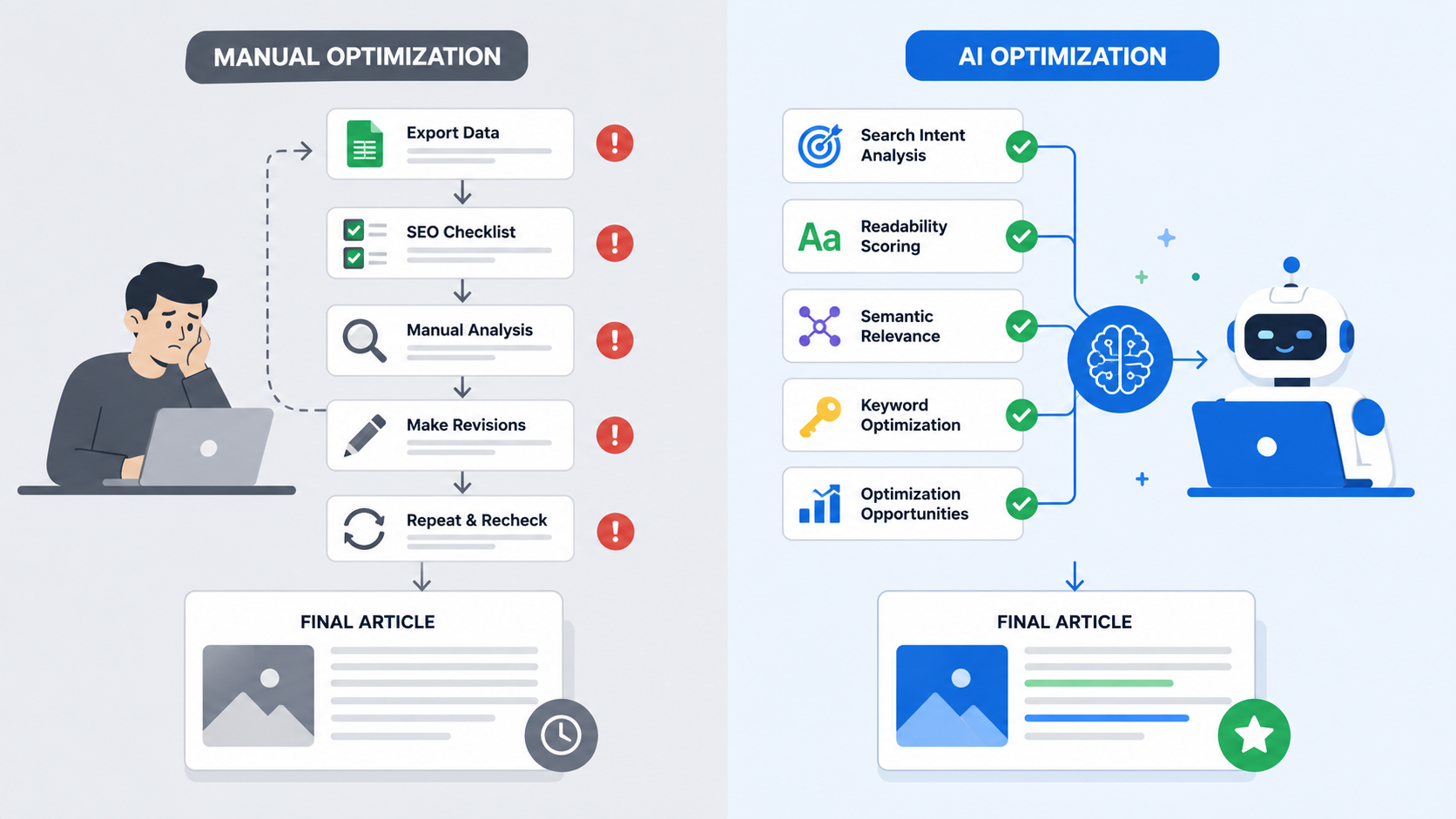

AI content optimization has become the game-changer for businesses serious about search visibility. At its core, it’s about using artificial intelligence and machine learning to analyze, create, and refine content in ways that genuinely improve search rankings and reader engagement. Unlike traditional manual optimization—which relies on guesswork and hours of tedious work—AI-powered systems process vast amounts of data instantly, uncovering patterns that humans might never discover. This complete guide walks you through how to harness AI’s power to boost engagement, improve search visibility, and achieve measurable performance gains through smarter content strategies that align with how modern search engines actually evaluate quality and relevance.
What Is AI Content Optimization and Why Does It Matter?
AI content optimization represents a fundamental shift in how successful businesses approach SEO. Rather than relying on intuition or outdated best practices, AI analyzes millions of data points to determine what actually works for search rankings and reader engagement. The technology examines top-ranking content, identifies structural patterns, analyzes keyword distribution, evaluates readability metrics, and measures engagement signals—all in seconds. This isn’t theoretical; it’s a practical, measurable advantage that compounds over time.
For organizations struggling with the time-consuming nature of manual SEO content creation, AI offers a solution that scales without proportional resource investment. Teams can maintain consistent publishing schedules without dedicating significant internal resources to repetitive optimization work. According to research from HubSpot’s State of Content Marketing, companies using AI-assisted content strategies report 40% faster content production and 30% improvement in engagement metrics—numbers that translate directly to competitive advantage.
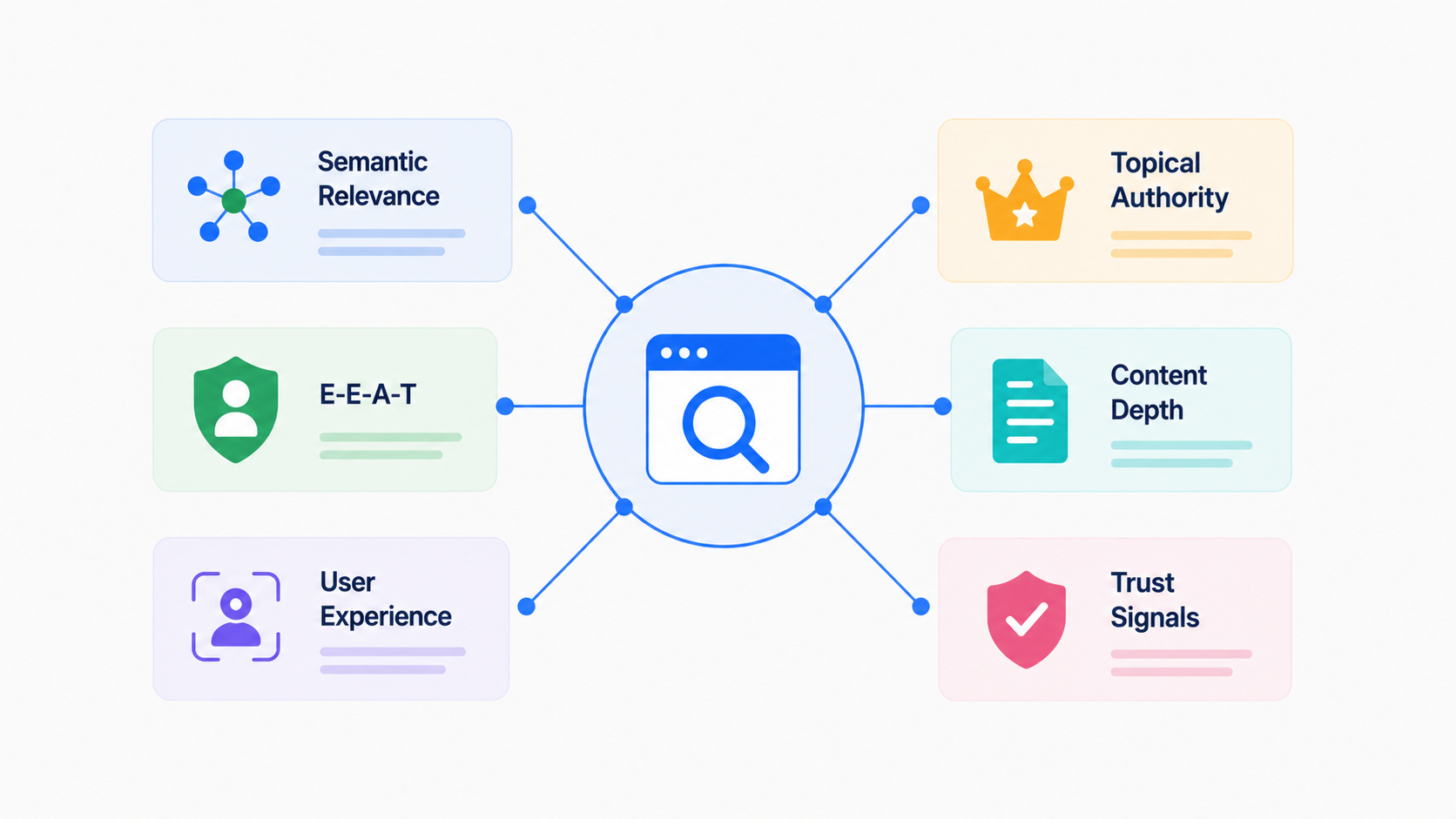
The importance of AI content optimization becomes crystal clear when you consider how search engines have evolved. Modern algorithms evaluate far more than keywords and backlinks—they assess semantic relevance, user experience signals, content depth, topical authority, and trustworthiness. AI systems understand these multifaceted ranking factors and can optimize content across all dimensions simultaneously. This comprehensive approach leads to better performance across multiple SEO metrics—from click-through rates to time on page to conversion potential. It’s the difference between optimizing for algorithms and optimizing for actual human success.
Understanding the AI Content Optimization Process
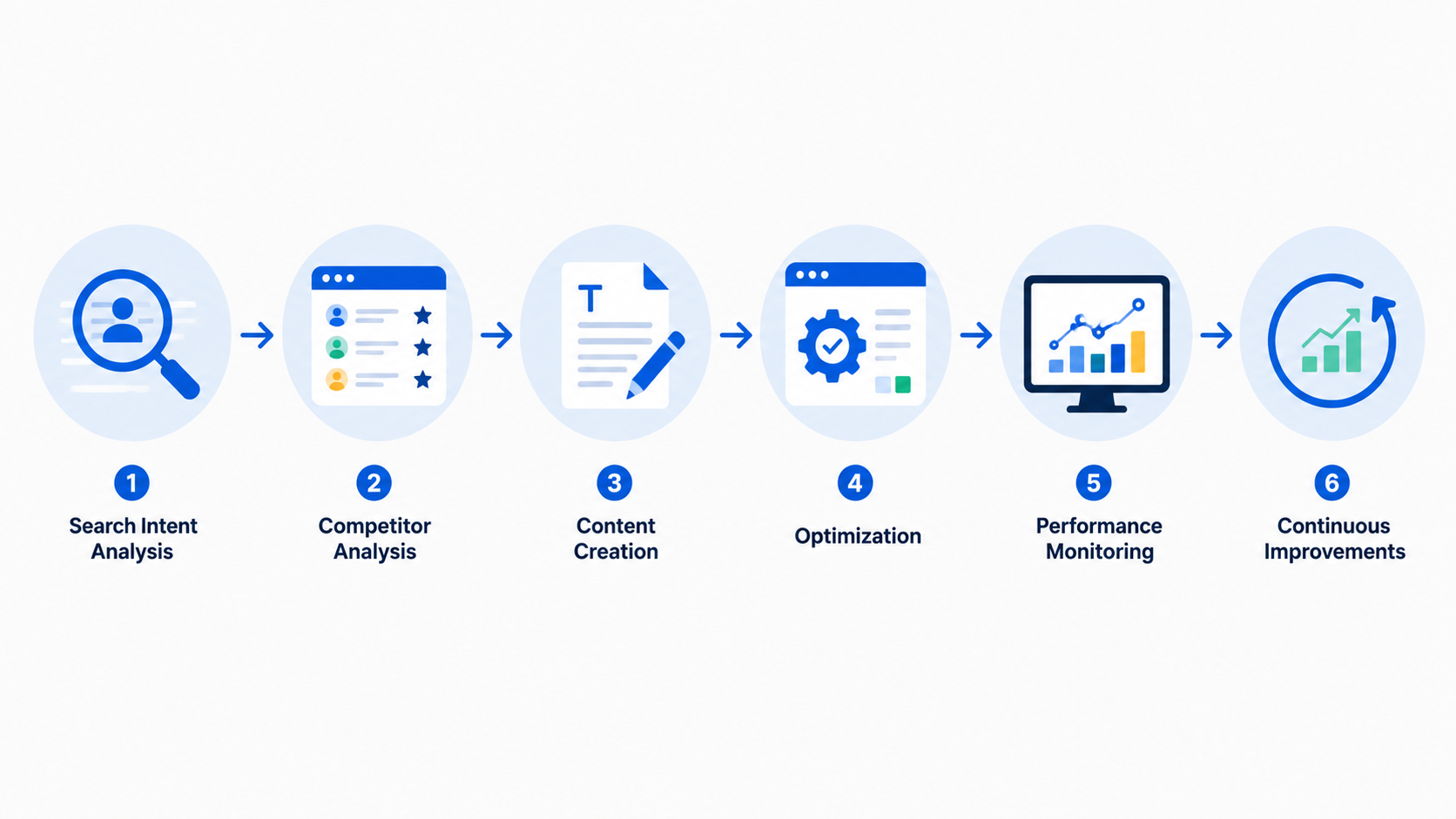
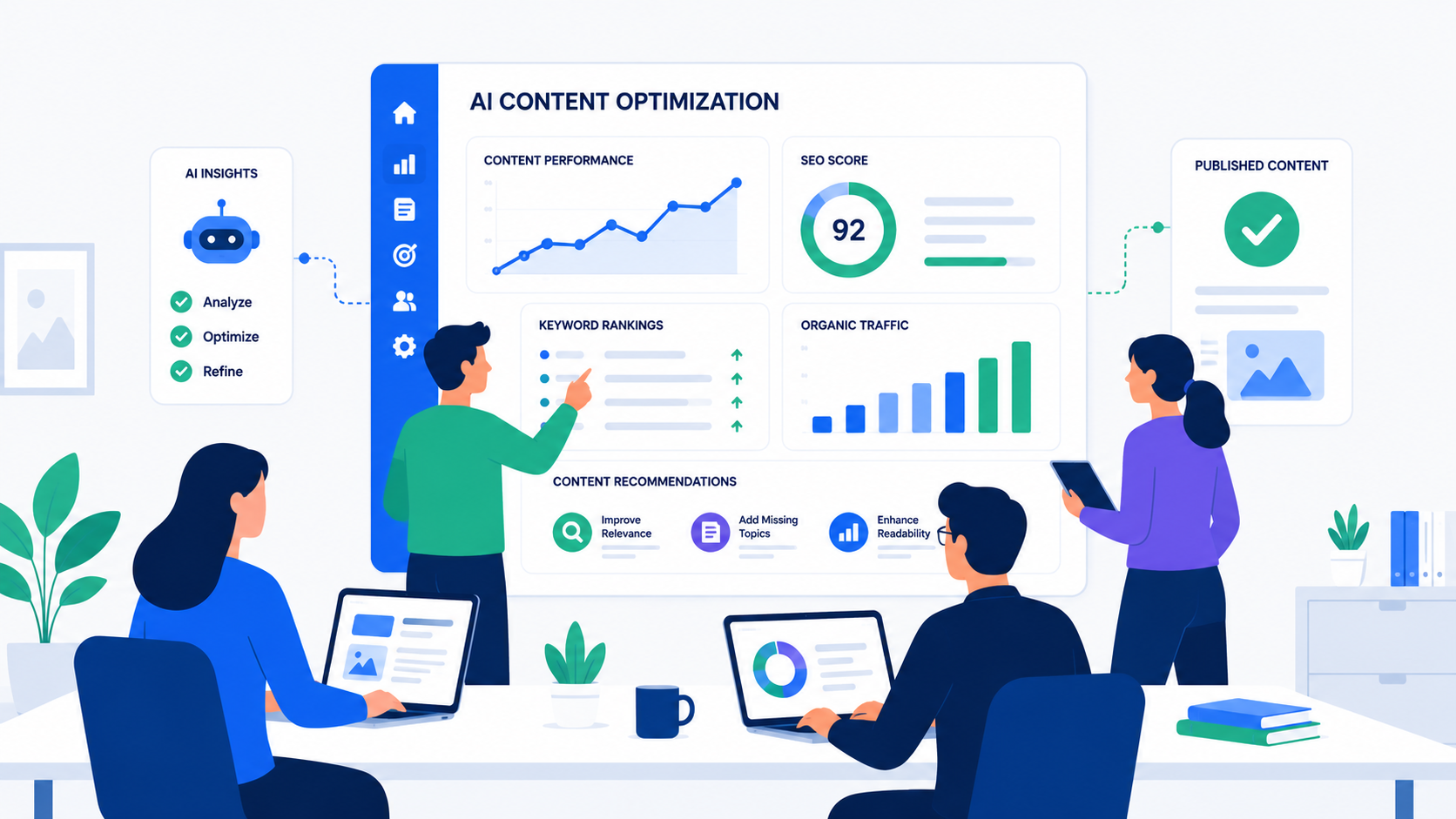
The mechanics of AI content optimization involve several interconnected stages working in concert. First, AI analyzes your target keywords and search intent, determining what topics your audience actually wants to read about—not what you assume they want. Second, it examines top-ranking pages to identify patterns in structure, length, keyword usage, and topical coverage. Third, it generates or refines content based on these insights, ensuring your material addresses user needs comprehensively and naturally. Finally, it measures performance and suggests adjustments to improve results continuously.
What sets modern AI apart from older automation tools is its ability to understand context and nuance. Rather than simply counting keyword occurrences, sophisticated AI systems comprehend topic relevance, semantic relationships, and user satisfaction indicators. This understanding enables more natural, reader-friendly optimization that doesn’t feel forced or artificial—a critical factor since search engines increasingly penalize obvious keyword stuffing and prioritize content that serves genuine reader needs. The result? Content that ranks because it’s genuinely valuable, not because it games the system.
Here’s a practical example: older tools might recommend inserting your primary keyword every 100 words. Modern AI understands that your keyword “AI content optimization” naturally belongs in certain sections and would sound forced in others. It suggests incorporating semantic variations like “machine learning-powered optimization,” “AI-driven content strategy,” and “automated content refinement” to cover the topic comprehensively while maintaining natural reading flow. This semantic sophistication is why AI-optimized content outperforms mechanically optimized content in real-world rankings.
How Does AI-Powered Keyword Strategy Builder Transform Your SEO Foundation?
Keyword research forms the absolute foundation of effective content marketing, yet traditional approaches have significant limitations that undermine results. Manual keyword research requires hours of brainstorming, competitor analysis, and search volume estimation—work that often relies on incomplete data and subjective judgment that varies between team members. AI-powered keyword strategy builders eliminate these constraints by instantly analyzing millions of search queries, identifying high-opportunity keywords that competitors miss, and revealing gaps in competitive content coverage.
A modern keyword strategy builder powered by AI uses machine learning to uncover three critical insights that transform your content foundation. First, it identifies keywords with strong search intent signals—queries where people are genuinely ready to take action or seek specific information rather than just browsing. Second, it assesses competition realistically, distinguishing between keywords that appear low-competition but are also low-value versus those with genuine business potential and audience demand. Third, it reveals keyword clusters and semantic relationships, helping you understand how to structure content around topic pillars rather than creating isolated keyword-driven articles that compete with each other.
Consider how this works in practical application. Instead of guessing that “AI content optimization” might rank for 200 searches monthly, an AI system shows you that this keyword actually connects to searches like “AI SEO tools,” “automated content optimization,” “machine learning SEO,” “content automation software,” and dozens of related variations. It reveals that people searching these terms have specific questions about implementation complexity, cost implications, expected results, and specific tool recommendations. With this insight, you can create comprehensive content that addresses the entire topic cluster, dramatically increasing your chances of ranking for multiple related queries and establishing topical authority.
Implementing Keyword Strategy at Scale
The real advantage of AI-powered keyword strategy emerges when scaling keyword research across multiple content initiatives. Rather than assigning a skilled team member to spend weeks researching 50 keywords, AI systems deliver comprehensive keyword analysis for hundreds of terms in minutes. This enables strategic decisions about content prioritization based on actual data rather than educated guesses or hunches. You can identify which topics have the highest search volume, lowest competition, strongest commercial intent, and greatest alignment with your expertise and business goals.
Furthermore, AI keyword strategy tools surface secondary keywords and long-tail variations automatically—another major advantage. These longer, more specific phrases often have significantly lower competition than broad primary keywords but still deliver meaningful search volume, making them easier to rank for while attracting higher-quality traffic. An AI system might identify that “how to implement AI content optimization” has 10 times less competition than the primary keyword but captures 30% of the search volume—valuable intelligence that helps you balance your content strategy between ambitious moonshot opportunities and readily-winnable keywords.
This intelligent keyword clustering transforms your content planning. Instead of creating 50 isolated articles targeting different keywords, you might create 8-10 comprehensive pillar pieces that cover topic clusters, plus supporting content that addresses specific variations. This approach improves both search engine performance (search engines reward topical authority) and user experience (readers find comprehensive coverage on topics they care about). The AI system automatically identifies which keywords should be primary pillar articles versus supporting content, eliminating guesswork and ensuring efficient use of your content budget.
Can AI Really Improve Your Page SEO Across All Ranking Factors?
Page SEO encompasses far more than just keyword placement—this is a critical distinction many marketers miss. Modern on-page optimization requires addressing title tags, meta descriptions, header structure, internal linking architecture, readability metrics, content length, topical depth, semantic relevance, and user engagement signals. Manually optimizing all these elements for each piece of content becomes exponentially complex as your content library grows, making AI assistance indispensable.
AI page SEO tools analyze your existing content and generate specific, actionable recommendations for improvement across all these dimensions. These systems evaluate your title tag against top-ranking competitors’ titles, suggesting more compelling alternatives that balance keyword inclusion with clickability. They analyze your meta description for length, clarity, keyword integration, and conversion potential, ensuring it accurately represents your content while enticing clicks from search results. They review your heading structure to verify logical hierarchy and keyword integration, catching inconsistencies that confuse both readers and search engines. They assess internal linking opportunities, identifying where linking to existing content would increase topical relevance and keep readers engaged longer on your site.
Beyond these technical factors, AI evaluates content quality dimensions that directly impact search rankings. Google’s Search Central documentation emphasizes that search visibility depends on experience metrics like page load speed, mobile responsiveness, and visual stability—technical factors where AI can automatically identify issues and suggest fixes. AI systems also analyze readability by calculating metrics like average sentence length, paragraph complexity, vocabulary level, and formatting patterns, ensuring your content remains accessible to your target audience while maintaining authority and expertise signals.
The Semantic Layer of Page SEO
One often-overlooked aspect of modern page SEO is semantic optimization—and this is where AI truly excels. Search engines now understand meaning and context far better than earlier algorithms that relied on exact keyword matching. AI systems excel at this semantic layer, automatically incorporating semantic variations, related concepts, and topical synonyms throughout your content in ways that feel natural and enhance comprehensiveness.
For example, content about “AI content optimization” benefits tremendously from naturally incorporating related concepts like “machine learning in SEO,” “automated keyword research,” “content performance analysis,” and “ranking factor optimization.” Traditional writers might struggle to weave these concepts together naturally without repetition or awkwardness, but AI systems identify exactly where semantic additions strengthen relevance without disrupting readability. This comprehensive topical treatment improves rankings because it demonstrates authoritative coverage of the entire topic, not just surface-level explanation that visitors can find anywhere online.
This semantic sophistication also helps with another critical ranking factor: topical authority. When search engines crawl your site and find multiple interconnected pieces covering related concepts within a topic area, they recognize your domain as an authoritative source on that topic. AI helps you create these semantic connections intentionally, linking related content pieces and ensuring comprehensive concept coverage. The result: individual pages rank better because your entire domain demonstrates expertise, not just individual articles in isolation.
What Are the Most Effective AI Content Optimization Tools Available Today?
The content optimization tools landscape has evolved dramatically over the past few years. Purpose-built AI solutions now offer capabilities that rival or exceed what expensive agencies could deliver even three years ago. Understanding which tools fit your workflow and budget is essential for implementing AI effectively without disrupting your existing processes. The right tool selection can mean the difference between successful integration and abandoned AI experiments.
First, consider comprehensive platforms that combine keyword research, content creation, and optimization in a single integrated ecosystem. These all-in-one solutions streamline workflow by eliminating the need to switch between multiple disconnected tools and manually transfer data between systems. A quality platform integrates AI-powered keyword research, content templates, readability analysis, SEO scoring, and performance tracking. This integration means your keyword insights directly inform your content creation process, and your performance data feeds back into future keyword strategy refinement—creating a closed loop of continuous improvement.
Second, evaluate specialized optimization tools that focus deeply on specific aspects of the optimization process. A dedicated content optimization tool might analyze your draft and provide paragraph-by-paragraph feedback on readability, keyword integration, topical coverage, and engagement factors. These tools often excel at single-purpose tasks because their developers can invest deeper algorithmic sophistication into that specific problem. You might use one platform for keyword research, another for content optimization, and a third for performance analysis—this multi-tool approach allows you to choose the best solution for each specific task.
Third, factor in integration capabilities with your existing workflow and technology stack. The best tool for your business depends partly on your current setup. If you’re publishing through WordPress, integration with that platform saves tremendous time versus copying and pasting between disconnected tools. If you’re managing multiple brands through a marketing cloud platform, compatibility with that system is critical. If you’re using a specific CMS or content management process, native integration becomes a deciding factor.
Choosing the Right Tool Mix
Most mature marketing organizations don’t rely on a single tool but instead combine complementary solutions that work well together. You might use one platform for comprehensive keyword research and strategy building, a separate tool for content creation and optimization, and another for performance analysis and reporting. This approach allows you to choose the best solution for each specific task rather than compromising across all functions.
When evaluating content optimization tools, prioritize those offering explainable AI—tools that don’t just provide a score but explain why they recommend specific changes. Tools that show you exactly which competitor pages rank highest for your target keyword and what characteristics those pages share are more valuable than black-box solutions offering recommendations without context. This transparency helps you understand SEO principles while using AI to accelerate execution, turning your team into better marketers rather than making them dependent on AI recommendations they don’t understand.
Consider also the learning curve and support available. Some tools require substantial training before your team can use them effectively; others offer intuitive interfaces that junior marketers can master quickly. The best tool for your team depends partly on your team’s existing SEO knowledge and appetite for learning new platforms. Tools with strong community support, video tutorials, and responsive customer success teams will accelerate your implementation success.
How to Create AI-Optimized Content That Actually Ranks and Engages?
Creating content that ranks requires navigating multiple competing demands simultaneously: search engine optimization, reader engagement, topical authority, business goals, and brand differentiation. AI helps you balance these competing priorities by identifying patterns in what actually works across thousands of successful examples. Here’s how to create content that search engines reward and readers actually engage with.
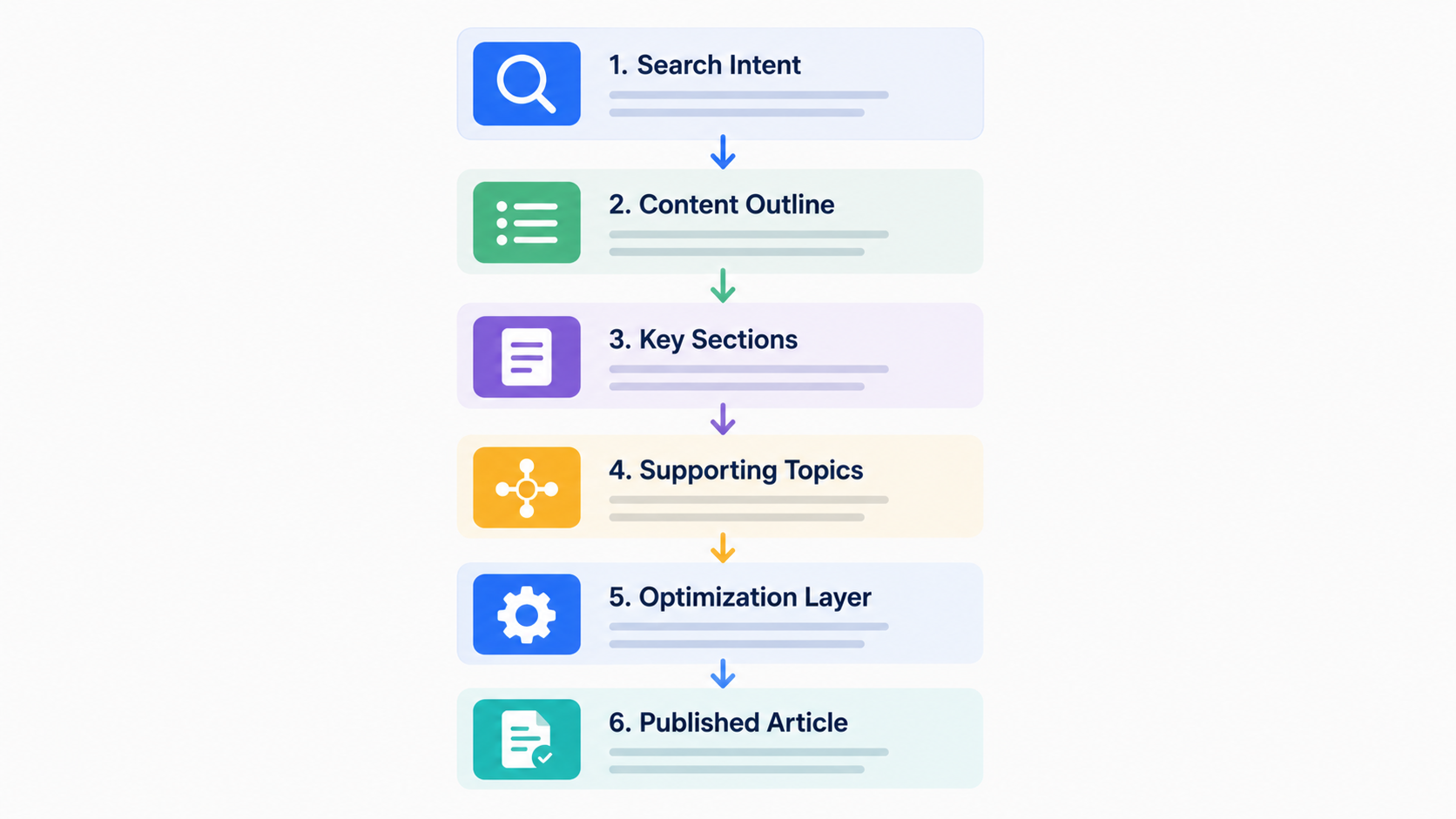
Start by establishing a clear content framework based on your target keyword and the search intent behind it. If someone searches “AI content optimization,” what problem are they trying to solve? Are they learning what it is? Evaluating whether their business needs it? Comparing different tools or approaches? Seeking detailed implementation guidance? AI systems can identify which intent dominates your target keyword by analyzing the types of content currently ranking. You’ll then structure your content to comprehensively address that primary intent while incorporating related angles that enhance value.
Next, use AI to generate your core outline based on proven patterns from top-ranking content. This doesn’t mean plagiarizing competitor content—rather, it means identifying common sections and themes that both readers and search engines expect. If the top 10 results for your keyword all include sections on implementation, ROI measurement, and tool selection, your outline should reflect these reader expectations. AI can identify these patterns instantly, saving hours of competitive analysis that would otherwise require manual review of dozens of pages.
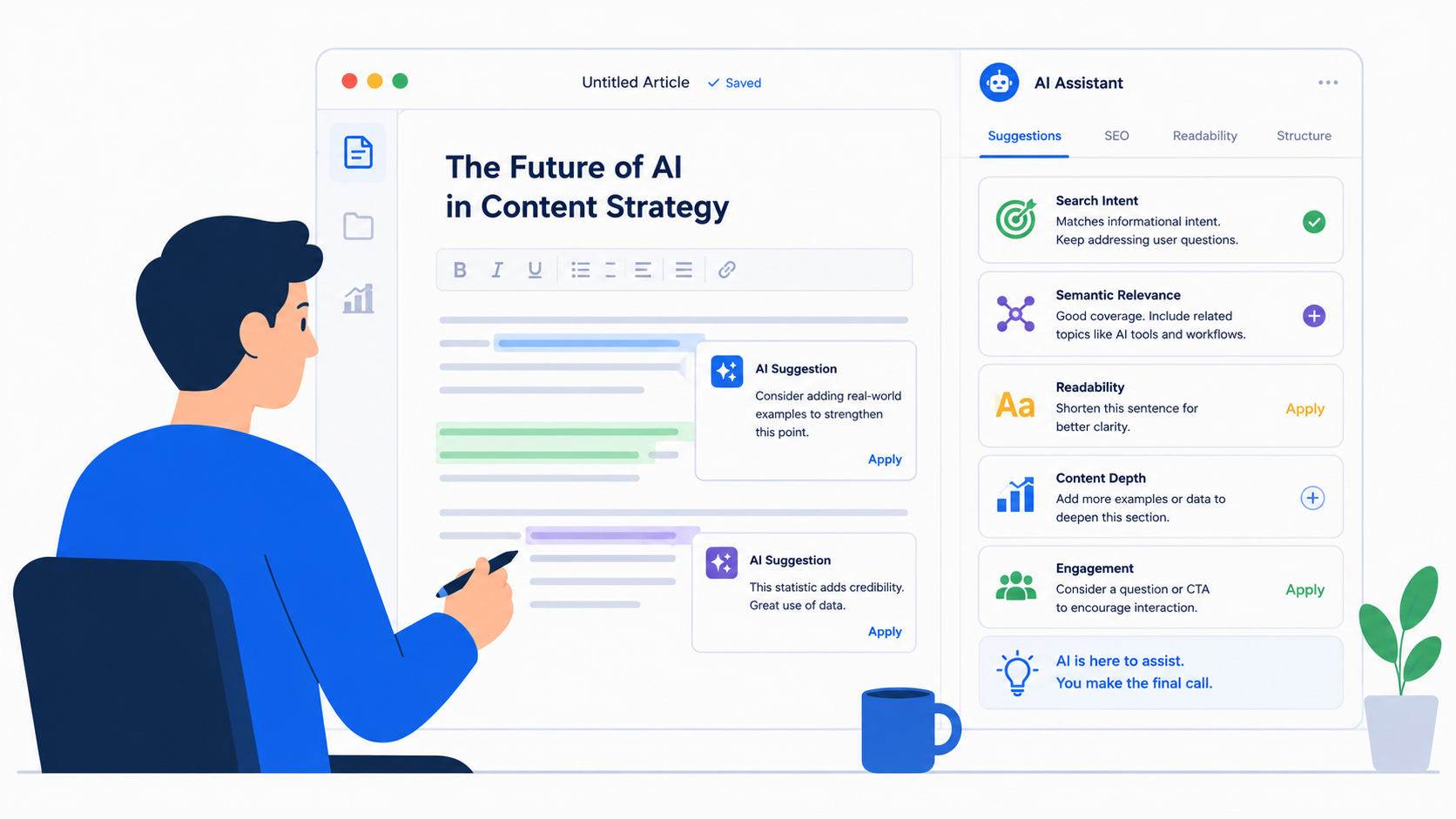
When writing the actual content, use AI as a collaborative co-author that keeps you on-brand while optimizing for performance. Some writers initially resist AI writing assistance from fear of losing authenticity, but modern AI works best as an editor and optimizer rather than a replacement author. Write your first draft in your natural voice and with your unique perspective, then use AI to optimize for readability, keyword integration, topical depth, and engagement. AI can flag paragraphs where you’ve been too technical for your intended audience or too vague to provide real value. It can suggest more compelling topic transitions, identify gaps in your coverage, and highlight opportunities to strengthen key points.
Measuring Content Optimization Success
After publishing, AI-powered analytics reveal whether your optimization efforts actually improve search visibility and drive engagement. Quality content optimization platforms track how your pages perform compared to competitors for target keywords. They show you which content pieces generate the most organic traffic, attract the highest-quality backlinks, and drive the best conversions. This performance data feeds back into your keyword strategy, helping refine future content prioritization and optimization approaches based on real results.
Track these specific metrics for content optimization: organic traffic growth (month over month), average rankings for target keywords, click-through rates from search results, average time on page, bounce rates, internal link clicks, and conversion rates. Compare these metrics for AI-optimized content versus your previous process. Within 60-90 days, you should see measurable differences. If you’re not seeing improvement, that’s valuable feedback—it might mean your target keywords have different intent than you assumed, your audience responds to different content angles than competitors, or your AI optimization isn’t aligned with your actual content goals.
Why Does Content Optimization Through AI Boost Engagement More Than Traditional Methods?
Engagement metrics have become increasingly critical to search rankings. Google’s systems measure how users interact with content—how long they stay on the page, whether they click through to other pages, whether they return to your site for additional content, and dozens of other signals. Content optimized purely for keyword density or link building often fails to engage readers, resulting in high bounce rates and poor user signals despite technically containing target keywords. This is a fundamental flaw in keyword-only optimization.
AI-optimized content performs better on engagement because it’s built on understanding actual reader needs rather than search engine requirements alone. When AI analyzes top-ranking content for your target keyword, it doesn’t just extract keyword frequencies and title patterns—it identifies which questions readers actually ask, which objections they have, which examples resonate most, and which content structures keep readers engaged longest. This insight-driven approach is fundamentally different from mechanical keyword insertion.
This reader-focused optimization leads to dramatically better engagement. Content structured around genuine reader questions feels more natural and helpful, encouraging readers to stay longer and explore more pages on your site. Content that addresses common objections and concerns builds trust and credibility. Content that includes specific examples and case studies provides concrete value rather than abstract theory. Content that balances depth with accessibility maintains engagement across different reading speeds and attention spans. These engagement factors create a virtuous cycle: better engagement sends positive signals to search engines, which improves rankings, which drives more traffic.
Consider how this works practically. A page that keeps readers engaged for 3 minutes instead of 30 seconds sends vastly different signals to Google’s ranking algorithms. Longer average session duration indicates users found your content valuable, increasing the likelihood of ranking higher for similar searches in the future. Better engagement also increases the probability of shares, backlinks, and repeat visits—all signals that improve overall domain authority and search performance. This is why AI-optimized content often outperforms manually optimized content even when both target the same keywords.
The Psychology Behind AI-Optimized Engagement
AI systems identify engagement patterns by systematically analyzing which content elements correlate with longer reading times and return visits. They notice, for instance, that content addressing the most common reader objection upfront tends to retain readers better than content burying counterarguments deep in the piece. They identify that specific statistics and research citations build credibility more effectively than vague claims. They recognize that clear transitions between sections prevent reader loss at topic boundaries. They understand that formatting choices—bullet points, subheadings, short paragraphs—dramatically improve engagement on digital screens.
By systematically incorporating these evidence-based engagement drivers, AI helps create content that naturally keeps readers engaged without manipulative tactics or artificial padding. You’re not adding filler to hit word count targets; you’re using AI to implement psychological and behavioral principles that make content more compelling. This approach respects reader intelligence while optimizing for measurable business results.
How Can AI Help You Achieve Better Performance in Less Time?
The business case for AI content optimization ultimately comes down to efficiency and measurable results. Creating high-quality, fully optimized content manually requires either substantial in-house expertise, significant financial investment in expensive agencies, or acceptance of mediocre search performance. AI enables a fourth option: achieving professional-quality optimization with reasonable resource investment from in-house teams. This changes the competitive economics of digital marketing.
Quantify this advantage practically. A skilled SEO content specialist might produce one fully optimized, ready-to-publish piece daily—representing significant payroll expense for an organization. An AI-assisted team can produce multiple optimized pieces daily, with the human specialist focusing on strategy, fact-checking, original insights, and brand voice rather than repetitive optimization work. This productivity multiplier means smaller teams can maintain publishing schedules that previously required much larger investments. A team of three using AI effectively can outproduce a team of seven working manually.
Beyond raw speed, AI improves consistency—another often-overlooked advantage. Manual optimization varies based on the specific team member working on each piece, the time pressure they face, and their individual SEO knowledge. Some team members understand semantic optimization intuitively; others default to simple keyword insertion. Some excel at creating reader-friendly structure; others produce dense walls of text. AI applies the same optimization standards consistently across every piece, eliminating the quality variation that comes with human-dependent processes. This consistency means you can build predictable search visibility improvements rather than inconsistent results based on who handled each article.
Furthermore, AI-powered optimization compounds over time. Early AI-optimized content may not outperform manually optimized content from expert practitioners, but the speed advantage means you’re publishing more pieces optimized at 85% of expert quality than your manual process could produce at 95% quality. More pages ranking for related keywords creates topical authority that strengthens all your content’s search performance. Network effects emerge as better internal linking recommendations strengthen both individual pages and overall domain authority. After 6-12 months, the compounding advantages become substantial.
Time Allocation and Resource Optimization
When implementing AI content optimization, the key question isn’t whether AI replaces humans—it’s how to redeploy human time toward higher-value activities that create competitive advantage. Rather than spending hours on mechanical optimization tasks, your team can focus on original research, unique insights, expert interviews, and strategic direction. A marketer using AI for optimization might spend 4 hours on research and writing, then 30 minutes optimizing with AI, where the traditional process would require 4 hours of research, 3 hours of writing, and 2 hours of manual optimization.
This time reallocation improves content quality in the long run. Human experts freed from repetitive optimization work can spend more time conducting primary research, developing original frameworks, conducting interviews, analyzing performance data, and exploring emerging trends. These activities create genuinely differentiated content that ranks well because it’s uniquely valuable, not just technically optimized. You transform your team from optimization technicians into thought leaders and original researchers—a shift that benefits both your search performance and your brand positioning.
What Search Engine Algorithm Changes Make AI Optimization Essential Now?
Understanding why AI optimization matters requires understanding how search algorithms have fundamentally evolved. Older approaches to SEO could succeed by targeting keywords directly and building backlinks—relatively simple ranking factors that didn’t require deep content understanding. Modern search algorithms evaluate dozens of ranking factors simultaneously, many involving semantic understanding and user experience assessment that humans struggle to optimize manually at scale. This evolution makes AI assistance essential rather than optional.
Search Engine Journal’s coverage of Google’s algorithm updates shows increasing emphasis on content quality, topical authority, and user experience signals. The shift toward E-E-A-T (Experience, Expertise, Authoritativeness, Trustworthiness) means that demonstrating genuine authority on a topic now matters more than previous algorithms allowed. Meeting this requirement means covering topics comprehensively, addressing reader questions thoroughly, providing evidence for claims, and publishing consistently on focused topic areas. It’s not enough to mention keywords anymore; you must demonstrate deep expertise.
AI optimization aligns naturally with these evolved ranking factors. Rather than gaming algorithms through keyword stuffing or link manipulation, AI helps you create content that genuinely serves reader needs comprehensively. The system ensures your coverage is thorough, your explanations are clear, your claims are supported with evidence, and your expertise comes through authentically. This alignment with what modern algorithms actually reward is why AI-optimized content increasingly outperforms content optimized for older ranking factors. You’re not fighting the algorithm; you’re working with it.
Another critical evolution is the shift toward semantic understanding and entity recognition. Modern search engines comprehend topic relationships, entity concepts, and contextual meaning in ways that older keyword-based approaches couldn’t address. This semantic layer requires optimization across related concepts and variations, not just your primary keyword. AI systems excel at identifying and naturally incorporating semantic variations, ensuring your content comprehensively covers topic dimensions that readers and search engines both care about.
Preparing for Future Algorithm Evolution
Why is this crucial now? Because algorithm changes continue. The next significant update could emphasize factors you haven’t considered or change how existing factors are weighted. Content optimized through AI approaches—comprehensive, reader-focused, technically sound, semantically rich—stands better positioned to withstand algorithm changes because it’s built on enduring principles rather than exploiting current quirks. AI systems that base optimization on what top-ranking content actually contains will automatically adapt to algorithm changes reflected in which content types rank well. You’re not optimizing for today’s algorithm; you’re building durable content architecture for tomorrow’s changes.
What Are Common Mistakes When Implementing AI Content Optimization?
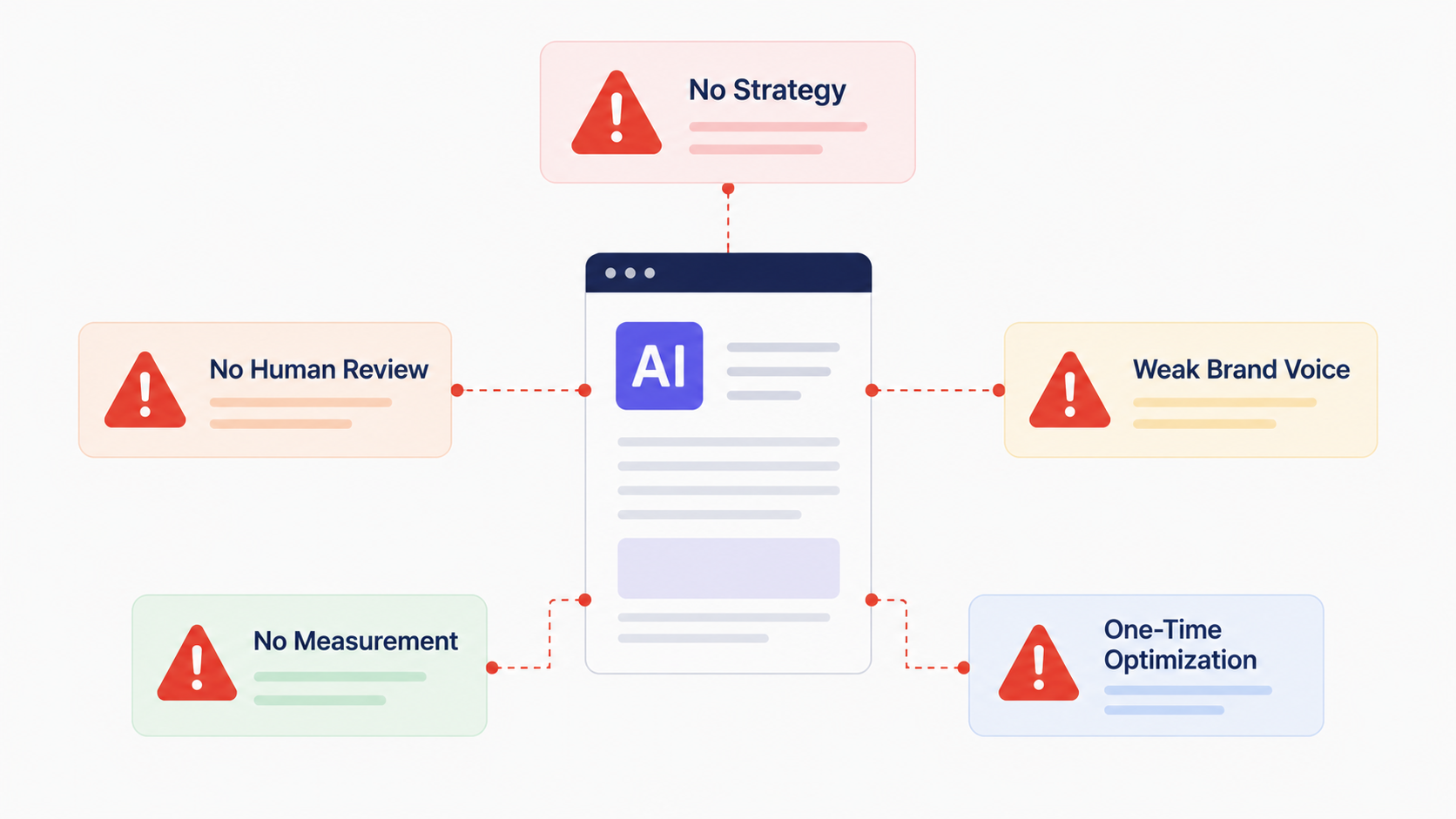
Despite AI’s substantial promise and proven capabilities, many organizations implement it ineffectively, missing the significant potential benefits available to them. Understanding these common pitfalls helps you avoid them and maximize your AI investment. Learning from others’ mistakes accelerates your path to success.
The first mistake is using AI without clear strategy. Organizations sometimes deploy keyword research tools, content generation platforms, or optimization software without establishing what success actually looks like. How much organic traffic are you trying to generate? Which keywords represent priority opportunities? Which audience segments matter most to your business? What differentiates your content from competitors? Without answers to these strategic questions, even sophisticated AI applications produce mediocre results. AI is a tool that amplifies human strategy—it can’t compensate for unclear strategic direction or misaligned business goals.
The second mistake is over-relying on AI writing generation without human oversight. Some teams use AI to produce first drafts they publish with minimal human review, reasoning that speed matters more than quality. This approach typically fails because AI-generated content often lacks the original insights, authentic voice, fact-checking accuracy, and unique perspective that differentiate valuable content from mediocre content. The best approach treats AI as an efficiency multiplier for human expertise, not as a replacement for human judgment and knowledge.
Your unique insights and perspective are what attract readers and earn authority.
The third mistake is ignoring brand voice and unique perspective during optimization. AI systems trained on internet-wide data tend to produce content that sounds professional but generic—it could have come from anyone. Content that simply recycles conventional wisdom rarely ranks well because search engines reward originality, and readers prefer sources that offer unique perspectives. When implementing AI optimization, maintain editorial oversight ensuring your AI-optimized content preserves your distinctive voice, your original insights, and your unique approach. This is where human editors become critical.
The fourth mistake is neglecting systematic measurement. Some organizations implement AI tools but don’t systematically track results. They assume that because the tool provides recommendations, following those recommendations must improve performance. Without measurement, you never discover which optimizations actually drive results for your specific business and audience. Establish baselines for organic traffic, rankings, and engagement before implementing AI. Track whether your optimization efforts actually improve these metrics. This data-driven approach lets you refine your AI implementation based on actual results.
Avoiding Implementation Pitfalls
The fifth mistake is treating AI optimization as one-time work rather than ongoing process. Effective SEO requires continuous optimization and content expansion as search landscapes evolve and new opportunities emerge. Create processes where AI becomes embedded in your content workflow, not a one-off project or pilot. This ongoing integration allows you to accumulate benefits over months and years rather than experiencing a single improvement spike that plateaus.
The final mistake is not providing AI systems with sufficient context about your business and audience. AI systems produce better results when you provide detailed information about your target customer, your competitive differentiation, your unique value proposition, and your business goals. Generic optimization for generic audiences produces generic results. Specialized AI guidance toward your specific audience, market position, and business objectives produces dramatically superior outcomes. Invest time in telling AI systems about your business context.
How Does AI Content Optimization Fit Into Your Broader Digital Strategy?
AI content optimization shouldn’t exist in isolation or as a standalone initiative. The most sophisticated implementations weave AI into a cohesive digital marketing strategy where each component reinforces others. Your content strategy, SEO efforts, social media presence, and paid advertising should work together synergistically, with AI amplifying results across all channels. This integrated approach multiplies results beyond what siloed efforts could achieve.
Start by recognizing that AI-optimized content serves multiple purposes simultaneously. A single well-optimized article can rank for your target keyword, establish topical authority, generate social shares, provide material for repurposing into multiple formats, answer common sales objections, and attract relevant backlinks. Rather than creating separate content for each purpose, comprehensive AI optimization creates content that achieves multiple objectives efficiently. One piece of content becomes a multi-channel asset.
Integrate AI insights into your product strategy and customer journey mapping. If AI reveals that a common search query reflects an unmet customer need, that insight should inform product development priorities. If AI analysis shows that competitors are addressing an audience need you’re currently ignoring, that represents both a content opportunity and a potential business opportunity. This strategic integration transforms AI from a content tool into a business intelligence platform that improves decision-making beyond marketing.
Consider how AI content insights improve your paid advertising and social media strategy. Keywords and topics that AI identifies as high-opportunity represent valuable ad targeting opportunities. Content angles that AI identifies as resonating with your audience represent social media themes worth emphasizing. This integration means your AI investment pays dividends across multiple marketing channels, not just organic search. You’re building a coherent strategy where all channels support each other.
Measuring True ROI From AI Optimization
Ultimately, AI content optimization’s value depends on business outcomes. Track not just rankings and traffic—track actual business results: leads generated, customers acquired, revenue influenced. This measurement horizon might extend 6-12 months because organic search provides sustained, compounding benefits rather than immediate spikes. Short-term thinking will undervalue AI initiatives that deliver significant long-term value.
Quantify the resource savings from improved efficiency. If your AI implementation allows your team to maintain higher content output without adding headcount, calculate that as saved hiring and payroll costs. If improved consistency reduces revisions and rework, measure that efficiency gain. These operational benefits often exceed search traffic benefits in year one, making the business case for AI investment clear even before organic traffic fully compounds. Most importantly, resist the urge to optimize in isolation. AI content optimization creates most value when integrated into broader strategies: building comprehensive topic authority, creating content that serves multiple purposes, aligning with customer needs and product strategy, and accumulating benefits across organic search, paid, social, and direct response channels.
What’s Your Next Step for Implementing Smarter Content Optimization?
The competitive advantage that AI provides diminishes the longer you delay implementation. Organizations that invested in AI content optimization 2-3 years ago now operate at dramatic efficiency and effectiveness advantages over those still relying on manual approaches. The technology has matured from experimental and risky to essential and proven, and the gap between leaders and laggards continues widening. The question isn’t whether to implement AI—it’s whether you can afford to wait.
Begin with honest assessment of your current state. Map your content creation process from keyword research through publication and measurement. Identify which stages consume the most time and resources relative to the value they create. Determine where human expertise adds irreplaceable value versus where mechanical optimization wastes expert time on repetitive tasks. This clarity reveals where AI integration provides the greatest leverage and highest ROI.
Next, pilot AI solutions with specific, measurable project goals. Rather than organizational-wide implementation that risks disruption, start with a focused initiative: create 20 optimized pieces on a specific topic cluster, measure results over 90 days, then decide whether to expand. This approach limits risk while generating concrete data about whether AI optimization improves your specific results. You’ll quickly learn which AI tools fit your workflow naturally, which optimization recommendations your audience actually responds to, and whether the business case justifies broader investment based on your real numbers.
During your pilot, emphasize systematic measurement and iterative refinement. Track baseline metrics before AI implementation: average organic traffic per article, average rankings for target keywords, average engagement metrics, resource hours per piece. Then measure identical metrics for AI-optimized content. Calculate whether improvements justify the AI investment and resource reallocation. Use results from your pilot to refine your approach before broader implementation—don’t scale before you’ve proven the model works for your business.
Finally, recognize that successful AI implementation requires cultural shift alongside tool implementation. Your team must view AI as a collaborative partner that amplifies human expertise rather than threat to replace human skills. Invest in training that helps your team understand which AI recommendations to follow, which to question, and how to preserve your brand voice while benefiting from optimization insights. This human-AI collaboration creates superior results compared to either humans or AI working independently. Great content comes from humans who understand their audience, combined with AI that understands optimization patterns.
AI content optimization represents the most significant shift in how businesses achieve search visibility and engagement since search engines themselves emerged. By combining machine learning’s pattern recognition with human expertise and strategy, organizations can create content that ranks better, engages more deeply, and delivers clearer business results. The shift from manual optimization toward AI-assisted processes doesn’t diminish the importance of human expertise—rather, it fundamentally transforms how that expertise gets applied. Strategic thinkers, original researchers, and authentic voices become more valuable, not less, because AI handles mechanical work. Humans focus on strategy, insight, and differentiation while AI handles optimization. The businesses winning in organic search today aren’t those with the largest content teams or biggest budgets, but those using AI intelligently to amplify team productivity and effectiveness. Whether you’re a startup pursuing growth with limited resources or an established organization seeking competitive advantage, implementing smarter content optimization through AI is no longer optional—it’s essential for maintaining search visibility and delivering better performance in increasingly competitive digital environments.
Ready to transform your content strategy with smarter AI-powered optimization? Start by auditing your current content creation workflow and identifying where AI automation could reduce manual effort while improving search visibility and engagement. Then explore how AI-driven keyword research, content generation, and optimization tools can help your team publish optimized content at scale—without requiring extensive SEO expertise or larger budgets. Discover how customers are achieving better search rankings and engagement in 60 days or less.