
Google answers the question before you ever reach the organic listings now. Generative results are the AI-written summaries sitting at the top of the search page, pulling information from several sources into one fresh answer. They change how the results page works, and the change runs deep: where people click, which content gets seen, how marketers have to approach optimization all shift at once. Featured snippets lift exact text from a single existing page. Generative results don’t. They synthesize multiple sources into new, AI-created answers.
For businesses fighting for organic visibility, that cuts both ways. A user who reads a full AI summary answering their query often has no reason to open any website, which pushes the old “zero-click” behavior well past featured snippets. So you need to know how these summaries move user behavior and SERP click-through rates if you want to hold your search presence. This guide covers three things: how generative results actually work, what they measurably do to organic click patterns, and the strategic changes your content strategy needs to survive the new search environment.

What Are Generative Results and How Do They Function?
Search engines used to index pages and rank them. That was the whole game. Google’s generative AI now does something else: it synthesizes answers from multiple sources and writes original summaries that land at the top of the SERP. Large language models power this. They pull relevant information from authoritative sources and compile it into one coherent answer, without lifting a featured snippet from any single page.
The mechanics differ from traditional results in ways that matter. A user enters a query, Google’s generative AI reads the top-ranking pages, extracts what’s relevant, and generates a new summary. The answer you see may not trace back to one source at all. Take a query about “benefits of remote work.” The summary might combine HR blogs, academic research, company case studies, and news articles into an AI-generated answer, one that didn’t exist until Google assembled it from existing content.
Key Differences from Traditional Search Features
Featured snippets have been around for years, and they pull verbatim text from existing web pages. Generative results create new content for the search result itself. That gap matters for marketers. A page that ranks well might never get cited in a generative result, while a page with deeper expertise gets referenced even when it sits outside the top three organic positions. Ranking position and citation have come uncoupled, and that brings both uncertainty and fresh opportunity.
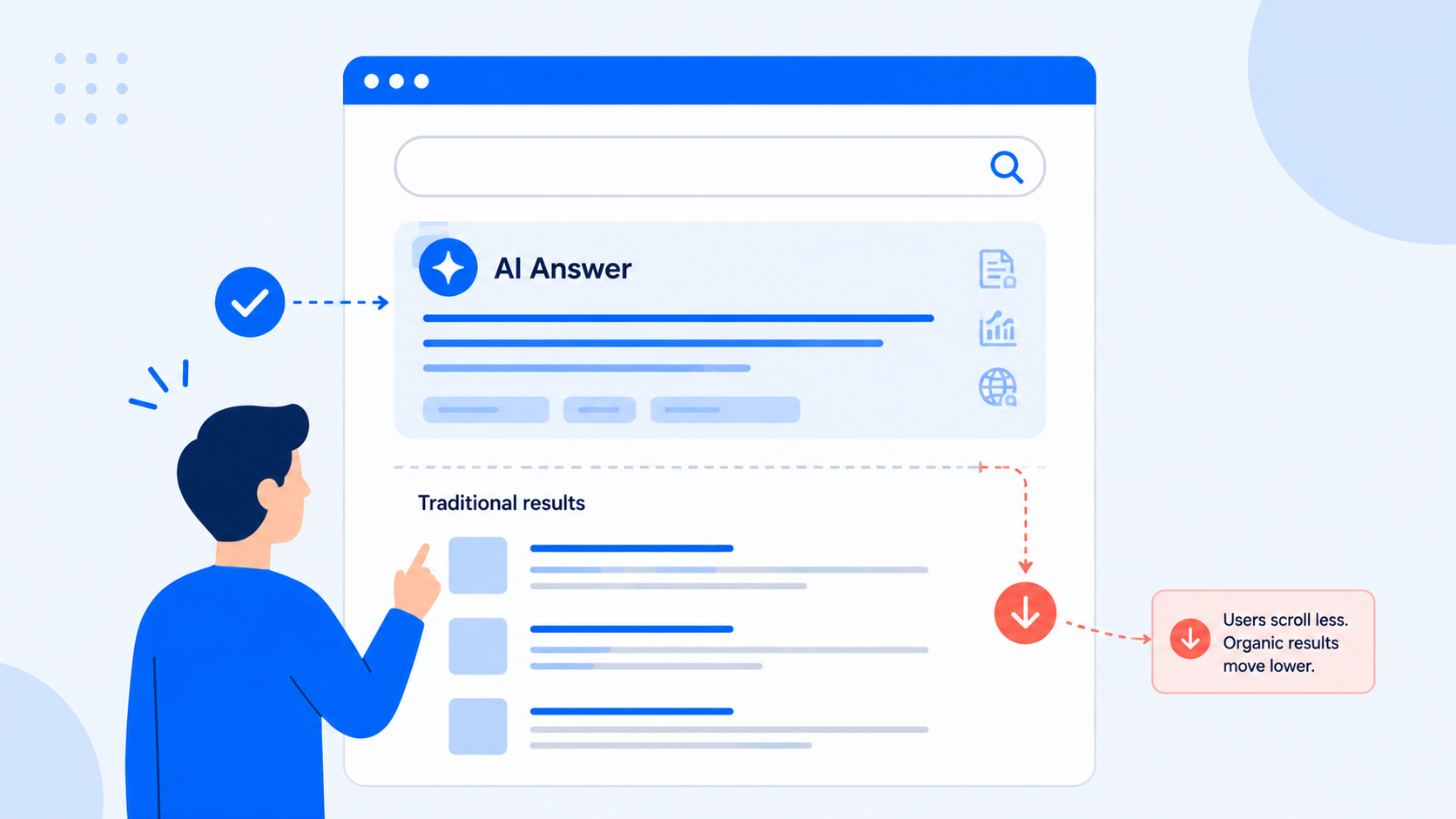
These summaries also sit above every traditional organic result. They take up serious space at the top of the SERP and shove organic listings further down the page. Call it the “zero-click” phenomenon at a larger scale. Instead of clicking through to pages one by one, users read the AI-generated summary and leave Google without visiting a single site. Industry analysis ties this structural change to a real shift in behavior, with some reporting up to 15-20% increases in zero-click searches since generative results became widespread. That leaves marketers with a double problem.
You have to feed the generative answers and find new ways to earn clicks when nobody visits your page directly. Visual prominence makes it worse, since the AI summary becomes the first answer most people see no matter which page the information came from.
How Do Generative Results Impact Click-Through Behavior and User Engagement?
Prominent AI summaries at the top of the SERP make people less likely to click through to individual sites. That’s the measurable change generative results brought. The behavior spreads past featured snippets into a much wider set of searches. A user who finds a satisfying answer in the generative result has no reason to scroll into the organic listings below.
Click-through rates have dropped across most content categories since generative results rolled out. Studies tracking SERP behavior put queries with generative answers at roughly 18-27% lower click-through rates to traditional organic results, measured against identical queries on engines without generative features. The drop isn’t even. Informational queries looking for a quick definition or overview take the hardest CTR hit. Transactional and navigational queries hold up better, since users still have to reach an actual retail or service page to finish what they came to do.
Behavioral Patterns in Generative Search
People behave in distinct ways once a generative result is in front of them. Simple informational queries (“What is X?”, “How does Y work?”) often get satisfied by the summary alone. Complex queries that need real research or comparison work differently. Users read the generative result, then click into the individual sources it cites. That splits the journey into two stages: read the AI summary first, then selectively visit the sources it references or recommends.
This reshuffles which pages get clicks. A page at organic position 3 might see fewer clicks overall, while pages cited inside the generative result pick up traffic even when they rank lower. Citation drives traffic on its own now, apart from organic ranking. Commercial-intent queries follow yet another pattern. For product research and comparison, generative results tend to list several options and recommendations, then sponsored results, then organic listings. A user reading those recommendations clicks through to evaluate a specific product, and the click is more qualified because it came from an AI recommendation rather than raw ranking position.
Transactional queries feel less of this. Users still have to reach a real retail or service page to complete the purchase, so overall SERP performance holds steadier. Even then, a citation in the generative result adds credibility and awareness. Knowing these patterns tells you which content types and search intents are worth the most optimization effort. Not all content gains equally from generative visibility.
Which Content Types Benefit Most from Generative Results?
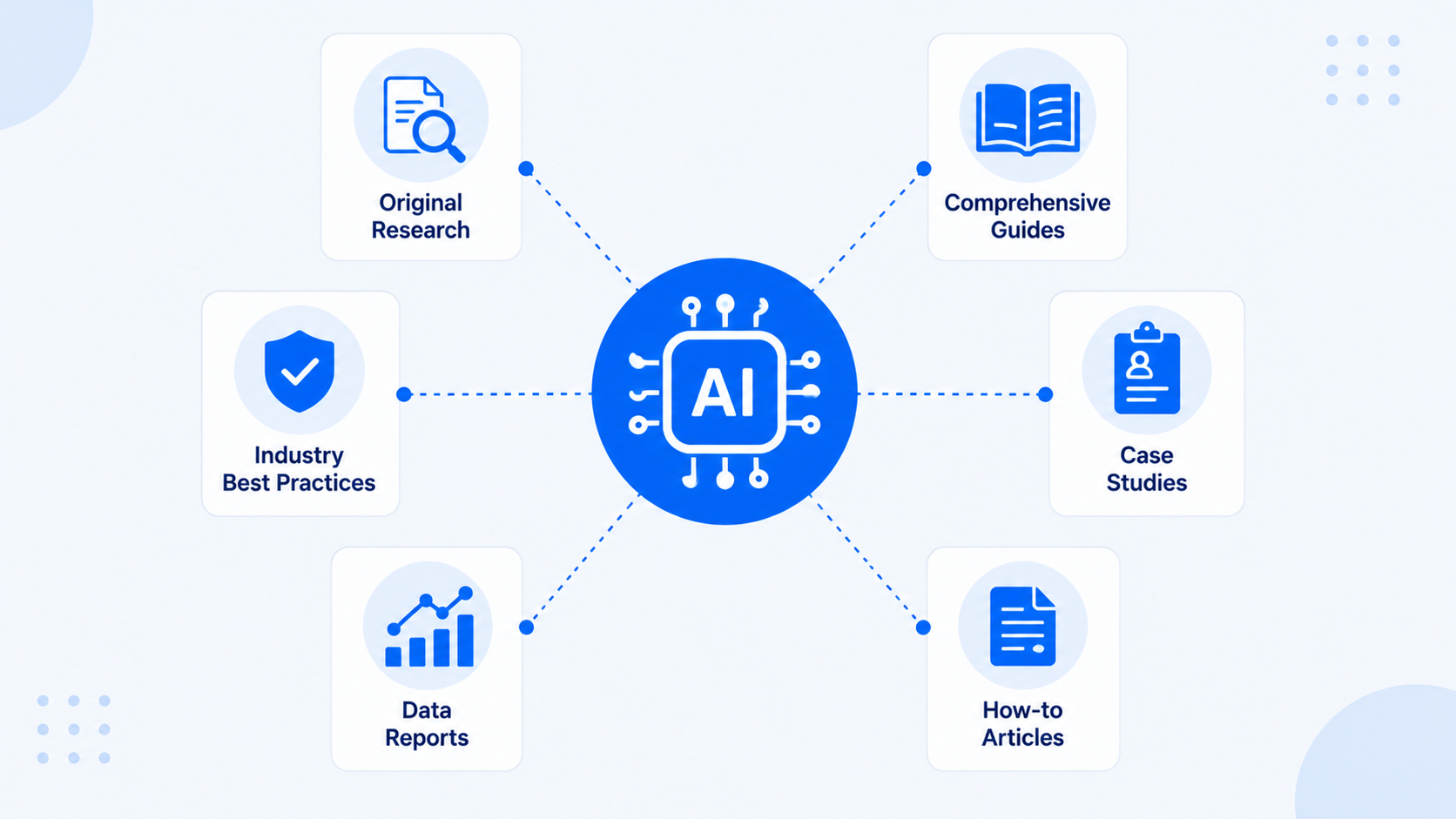
Authoritative, data-driven, comprehensive content wins the source slots. Generative AI reaches for material that answers a complete question, so knowing which formats tend to feed these summaries helps you prioritize and spend your resources where they count. Definitional and explanatory content does well here. Comprehensive guides on complex topics, detailed how-to articles, thorough educational pieces get synthesized into AI summaries again and again. From the AI’s side that makes sense. These formats carry the structured information a coherent summary needs.
High-Performance Content Formats for Generative Visibility
Original research and data-backed articles get cited often too. Primary research, statistics, case studies, unique data analysis, any of these makes a generative result more likely to reference your work by name. Large language models weigh authoritative sources with original insight above general aggregators. Publish original survey data or research findings and you’ll get cited more than the site republishing what already exists.
Industry guides and best-practice articles show up as source material regularly. Content that sets benchmarks, describes processes, or lays out best practices in your field carries the structured, reliable information generative AI prefers. Long-form pillar content that covers a topic from several angles is ideal raw material. Build content across a whole topic ecosystem (foundational concepts, advanced applications, specific use cases) and you raise the odds that at least one of those resources gets pulled as a source.
List-based content and comparisons appear a lot in generative summaries.
Ask an AI “What are the best tools for X?” and it often pulls from comparison articles and curated lists. The catch: it summarizes those resources into its own new list instead of sending users to click the original. Opinion pieces, narrow case studies, and highly specialized content get selected less. They may rank fine organically, but they read as individual perspectives rather than broad overviews, so the AI passes them over for synthesis. The takeaway is that mixing original, unique insight with broader educational coverage is what earns visibility in both generative and traditional search.
Why SEO Automation Tools Are Becoming Essential for AI Search Optimization
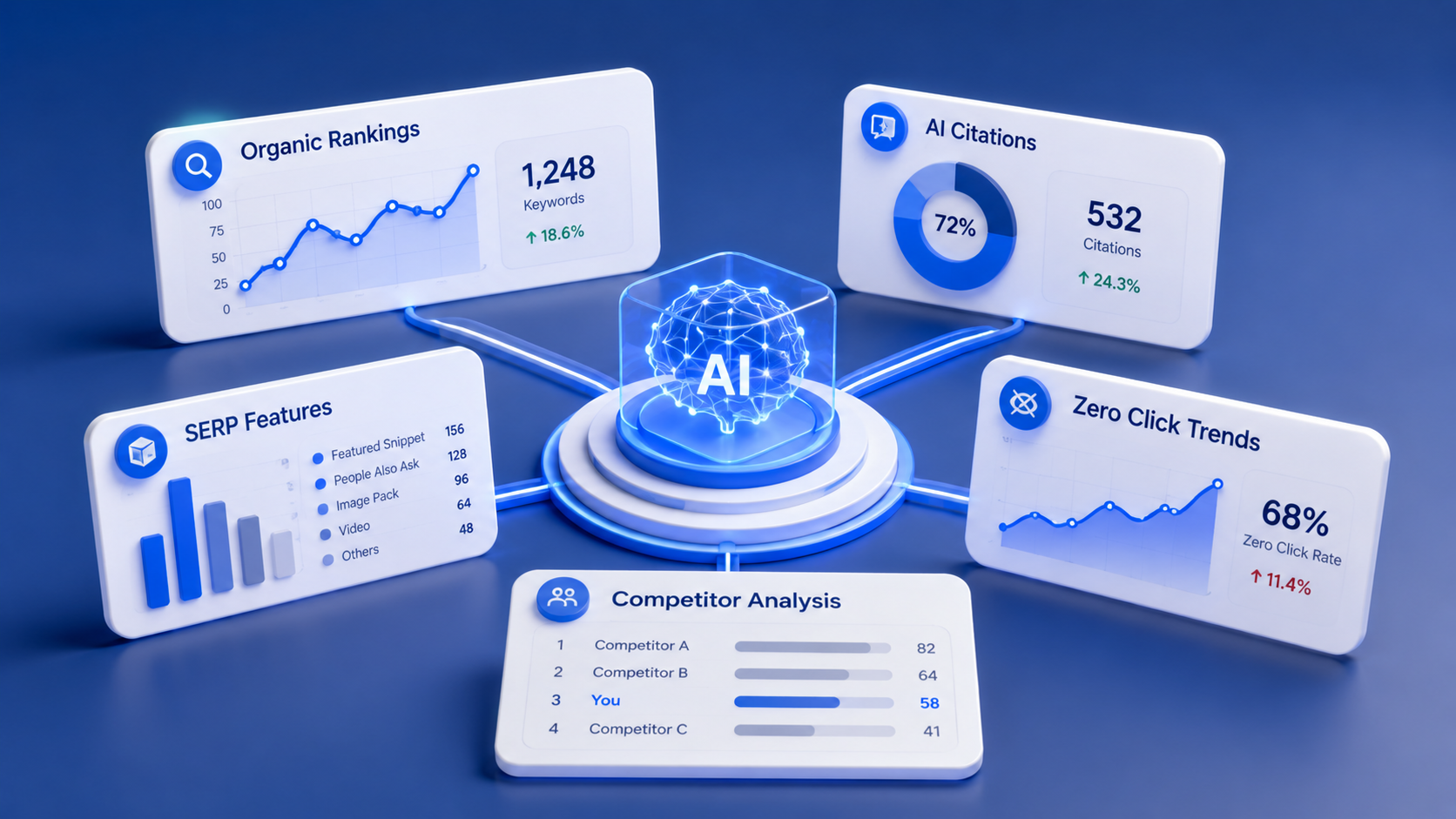
Optimizing for organic results and generative features at the same time got complicated fast, and that complexity is why SEO automation matters more now. You’re facing two ranking systems in parallel: traditional organic rankings and the odds of being cited in a generative result. Optimizing for both takes sharper analysis, content strategy, and monitoring than the old playbook ever needed. Manual processes can’t keep up with reading generative result patterns, spotting citation openings, and reworking content on a continuous basis.
SEO automation software helps marketers address this challenge by folding generative-result impact into keyword research, analyzing which content feeds AI summaries, and finding gaps where new content could win generative visibility.
Core Capabilities of AI-Powered SEO Automation
AI SEO tools show you which competitor content gets cited in generative results, and why. Feed them the sources chosen for AI summaries across dozens of queries and they surface the patterns in source selection: topics, content depth, data types, whatever tends to turn a page into source material. That intelligence tells you what to create, expand, or optimize to improve your generative visibility. AI makes the analysis work at scale, chewing through hundreds or thousands of queries and their generative patterns to surface something you can act on.
Keyword research for generative search isn’t the same job as the traditional version. You’re not just hunting high-volume keywords with manageable competition. You’re identifying which queries trigger generative results and studying what source material the AI picks. AI-powered keyword tools automate that across thousands of queries and reveal where your expertise could feed a generative summary. Research shifts from search volume alone to generative-result likelihood and source-selection patterns.
Content optimization for generative visibility takes different techniques. Instead of optimizing for snippet selection, you’re pushing for comprehensiveness, accuracy, original data, and clear structure. AI tools for SEO automate the analysis of what makes content suitable for generative synthesis and suggest changes aimed at citation likelihood rather than ranking alone. Monitoring generative performance has turned critical and messy at once. Automation tools track which queries now show generative results, whether your content gets cited, and how click patterns move as the features spread. Rather than checking dozens of queries by hand, the tools watch your position in both organic and generative search continuously and flag changes when they happen.
How Should Content Strategies Adapt to Generative Search?
Generative results force a real change in how marketers plan content. Organic rankings still matter, but they’re no longer the only road to visibility on the SERP. A working strategy now covers generative-result openings alongside organic optimization, which means new ways to plan, create, and distribute. Nobody’s asking you to abandon traditional SEO. You’re expanding it to compete in a search environment that got more complicated.
Content depth matters more than it did. Generative models lean toward comprehensive, well-researched pieces that cover a topic thoroughly. Thin pages built for a featured snippet or quick keyword placement don’t give generative results what they want. Longer, authoritative content that works a topic from several angles raises the odds your page contributes source material to an AI summary. In practice that means moving resources toward deeper pieces.
Strategic Positioning for Dual Visibility
Original research and unique data give you an edge in generative search. Original findings, proprietary research, exclusive data, any of these makes a generative result more likely to cite you specifically instead of blending generic information from a crowd of sources. That’s a reason to invest in surveys and data collection as part of your content plan. The return runs past generative visibility too. Original data pulls links, builds brand awareness, and establishes thought leadership.
Your content should speak directly to the intent behind queries that trigger generative results. If a summary is answering the query, your page needs to read as an authoritative source that covers that intent fully. Often that changes the structure: clear definitions first, detailed explanations next, supporting data after. Structure carries as much weight as substance when you’re optimizing for generative visibility.
Topical authority is getting more important. Generative AI recognizes domains and authors that show consistent expertise across related topics. A site that covers a full topic cluster (foundational concepts, advanced applications, case studies, best practices) gets cited as a trusted source more readily than a site of scattered, unrelated posts. So organize content into coherent topic maps instead of chasing arbitrary keyword targets. Develop deep expertise across an area and both organic search and generative AI reward it.
Frequency and freshness count for more here. Generative results synthesize current information, so stale content drops out of the running. Update existing pages with new data, recent examples, and current context, and your citation odds climb. That builds an ongoing maintenance job into the strategy, well past the initial publish date. Your content plan has to include regular refreshes to stay competitive for generative visibility.
What Metrics Should Marketers Track for Generative Result Performance?
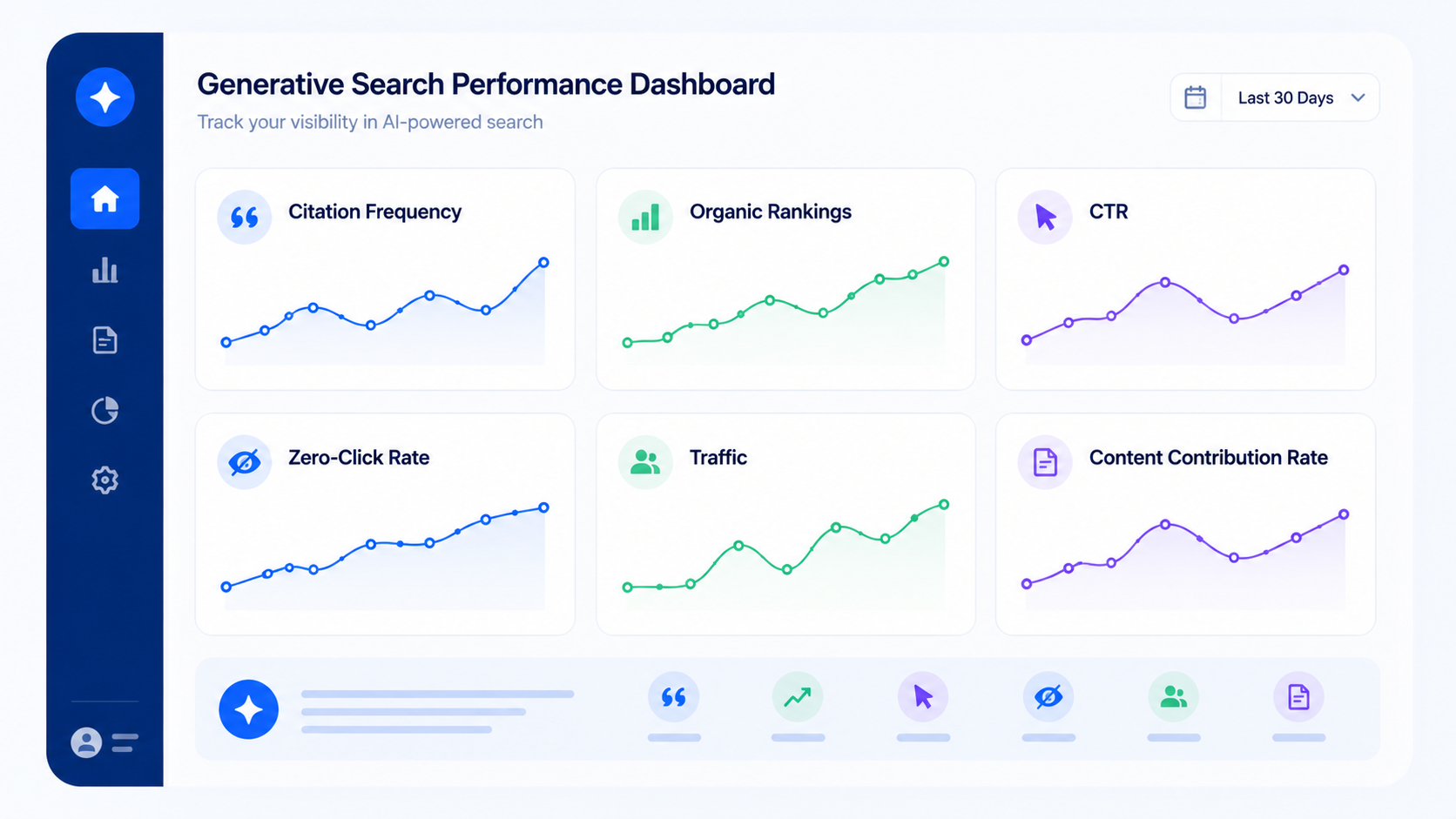
Rankings, clicks, impressions. Those traditional metrics only tell part of the story in generative search. You need new metrics built to measure visibility inside AI summaries, running alongside the old SERP numbers. That means widening your analytics framework and your monitoring to capture generative-specific data.
Generative result appearance frequency is the foundation. Track how often your content shows up as source material in AI summaries across your target keyword set and you get a read on your visibility in this feature. It takes watching specific queries over time to see which content gets cited and how the patterns move as you optimize. Organic rankings give you one position. Generative citations show visibility apart from ranking, and some queries cite your content even when you’re sitting at organic positions 5-10.
Performance Indicators for AI Search Visibility
Click-through rates from generative results read differently than organic CTR. When your content gets cited in a summary, tracking how many clicks that citation produces tells you about qualified traffic from AI-driven recommendations. Some analytics platforms and SEO tools now separate clicks by SERP feature, so you can measure generative performance more precisely. That split matters for knowing which content pulls actually engaged users versus which content merely shows up in summaries.
Content contribution rate measures what share of your content gets used as source material. Publish 20 articles aimed at queries with generative results and you’ll want to know: are 5 cited (25%) or 15 (75%)? The ratio shows how well your content matches what generative AI selects and flags which topics are lagging. Watch it over time and you’ll see whether your optimization is actually moving generative visibility.
Source citation consistency tracks whether your content gets cited for the same queries reliably or only now and then. Consistent citation on the queries you care about suggests your content clears the AI’s bar for that topic. Sporadic or fading citation might mean competitors improved their content or yours is going stale. This one separates a temporary wobble from a real trend.
Zero-click rate trends show how many searches get fully satisfied by generative results with no click to any site.
Reading those trends for your own queries tells you whether falling clicks come from waning interest in a topic or rising satisfaction with the generative answer. Some queries drift toward zero-click by nature. Others still send qualified traffic despite the summary sitting on top.
Organic ranking correlation with generative citation shows whether a citation also lifts your organic ranking. Research says the two aren’t perfectly linked. Some content ranks high organically without ever appearing in a generative result, and some feeds AI summaries without a top organic spot. Tracking the relationship tells you whether your work is paying off across both dimensions.
How Does AI Search Optimization Differ from Traditional SEO?
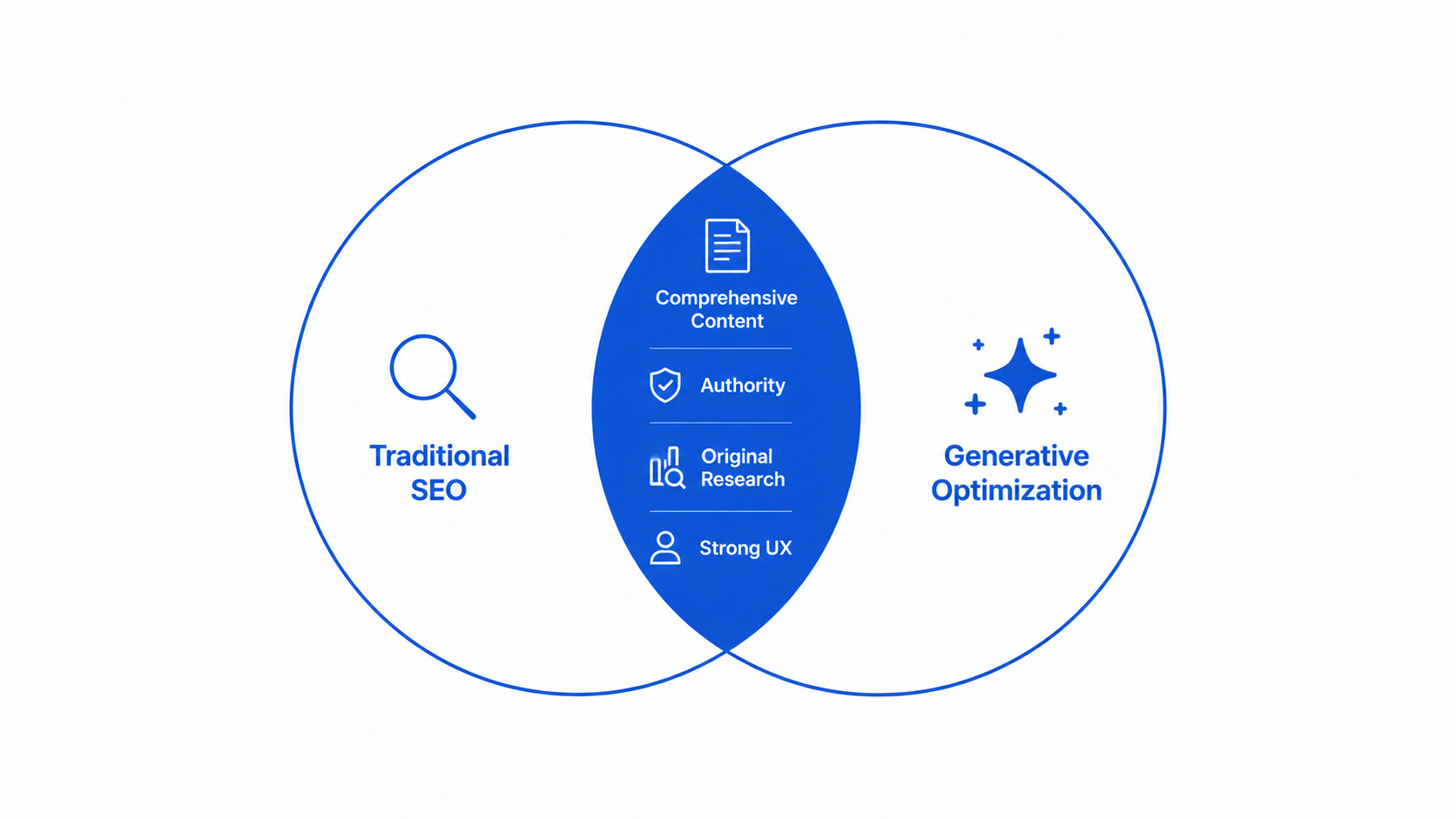
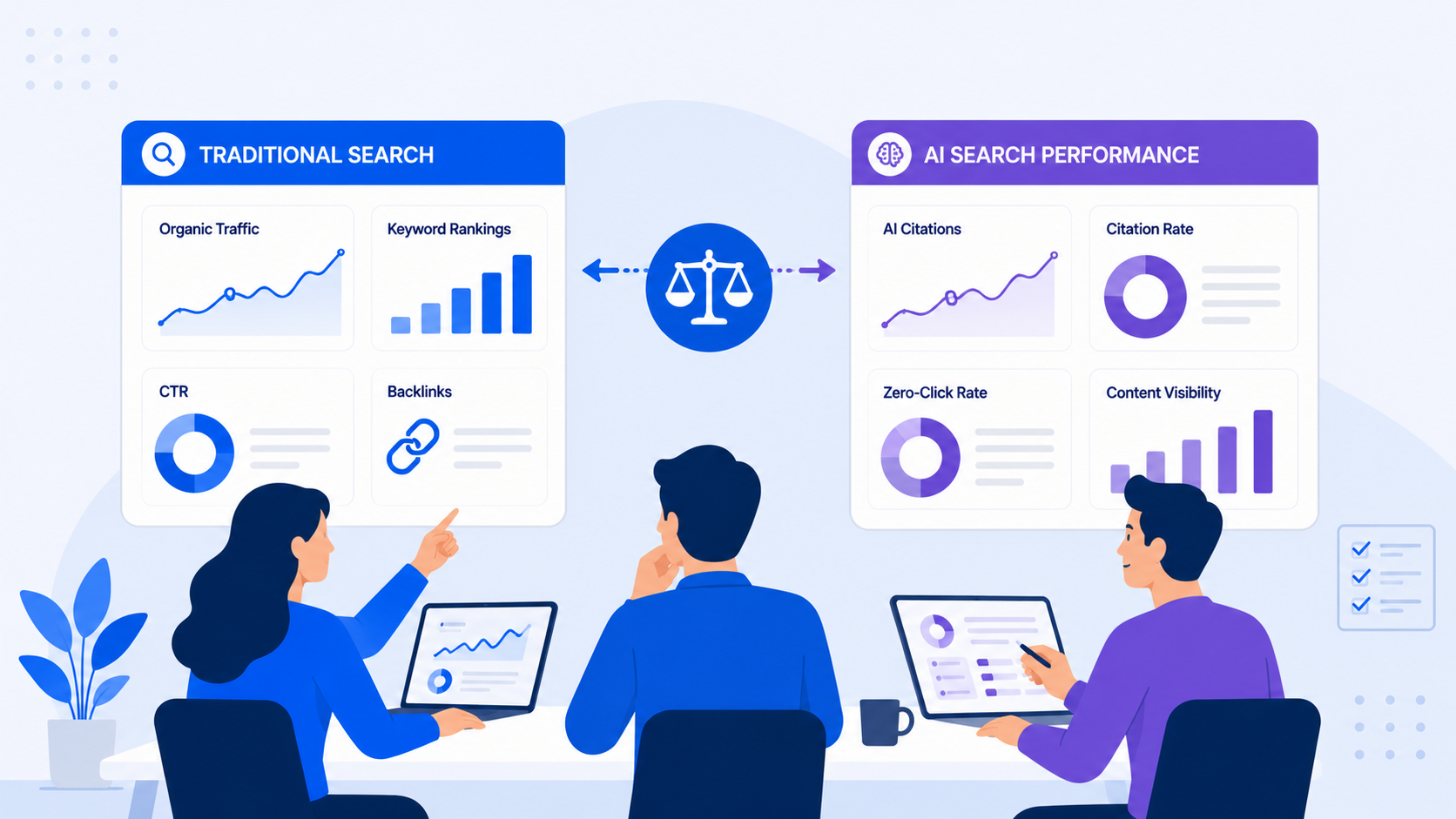
AI search optimization and traditional SEO share a foundation, then split on tactics and priorities. Knowing where they diverge helps you spend resources well and skip approaches that lift organic rankings but do nothing for generative visibility. Both demand quality content. What “quality” means changes between the two.
Traditional SEO leans on keyword density, on-page optimization, and backlink authority. Those still matter for organic ranking. AI search optimization puts comprehensiveness, factual accuracy, original data, and structural clarity first. An article tuned purely for traditional SEO, heavy on target keywords and internal links and technical fundamentals, might rank and still miss every generative citation if it lacks depth or original insight. That’s a real change in how you approach content.
Optimization Tactics for Generative Visibility
Content structure works differently for generative search. Traditional SEO prizes keyword prominence in headings and early paragraphs. Generative optimization wants clear logical flow so the AI can extract and synthesize easily. Organize around clear questions and answers, keep formatting consistent, make topic relationships obvious. You’re trying to make your content easy for AI systems to parse and fold into a summary.
Backlink profiles still matter for organic authority but don’t directly move generative citation. What moves it is whether the content itself shows authority through accuracy, comprehensiveness, and data quality. A page with moderate backlinks but excellent content and original research can get cited more often than a page with strong backlinks and thin content. So link building alone won’t buy you generative visibility. Content quality becomes the deciding factor.
Keyword targeting for generative optimization needs different research. You’re not just after high-volume keywords with manageable competition. You’re finding searches that trigger generative results and working out what the AI is synthesizing. That means checking which queries display generative features and studying source-selection patterns. Your keyword strategy has to carry that generative dimension to stay competitive.
Content length recommendations shift too. Traditional SEO favors comprehensive content of 2,000-plus words. Generative optimization rewards even longer, more thorough treatment. Guides of 3,000-5,000 words that cover a topic from multiple perspectives and include original data get selected as source material more often. That’s the difference between content built for a reader and content built as raw material for AI synthesis.
Internal linking differs as well. Traditional SEO uses internal links to spread authority and help crawlers. Generative optimization gains from links that clearly show topical relationships and content hierarchy, helping the AI grasp your organizational logic and the scope of your authority. Your internal linking should mirror your topic architecture and your expertise clusters.
What Are the Risks of Over-Relying on Generative Result Visibility?
Betting everything on generative citations carries real business risk. The summaries open new visibility, sure, but leaning on them too hard leaves you exposed. Balance generative optimization against your traditional organic strength so your SERP visibility stays diversified and resilient. A strategy that names both the opportunities and the risks lasts longer than one wagered entirely on generative prominence.
Generative results are changing fast, and today’s citation patterns may look nothing like next year’s as Google refines the features. Prioritize generative visibility while letting organic rankings slide and you’re exposed the moment Google adjusts how it picks source material. Strong organic positions give you a stable base no matter how the generative side evolves. This comes down to risk diversification. Don’t put every SEO egg in one basket.
Mitigating Risk Through Balanced Strategy
Attribution gets murky when traffic sources blur together. Your content gets cited in a generative result, the user clicks through to your page, and analytics may log that click as Google organic search rather than the generative feature. Measuring ROI from generative work turns hard. A sound measurement strategy accounts for that ambiguity instead of treating every organic click as equal. You have to find ways to tell direct organic visits from the ones a generative citation drove.
Competition adds another risk. As more rivals optimize for generative visibility, the selection gets tighter. Organic search shows clear positions. Generative citation is binary: cited or not, which makes iterative optimization harder. An article can be perfectly built for generative synthesis and still lose the slot because a competitor published better source material. This winner-take-most dynamic means standing out takes genuinely superior content, not a round of incremental tweaks.
You lose some brand control when your content feeds a generative result. The summary might misrepresent your information, strip nuance from a context-dependent claim, or set your content beside a competitor’s in a framing you never chose. So think carefully about what you’re willing to have synthesized and displayed by generative AI. Some organizations decide to keep certain proprietary information out of the source pool entirely.
Zero-click growth can shrink your overall site traffic even as generative visibility climbs. A citation brings awareness and authority. It doesn’t guarantee a click. If the summary answers the user’s intent, they’ve got no reason to visit. Some businesses find that generative citation delivers brand visibility without matching traffic growth, which calls for different success metrics. You may need to track brand awareness alongside traffic to see the real value of generative visibility.
How Can Marketers Maintain Traditional Organic Visibility While Optimizing for Generative Results?
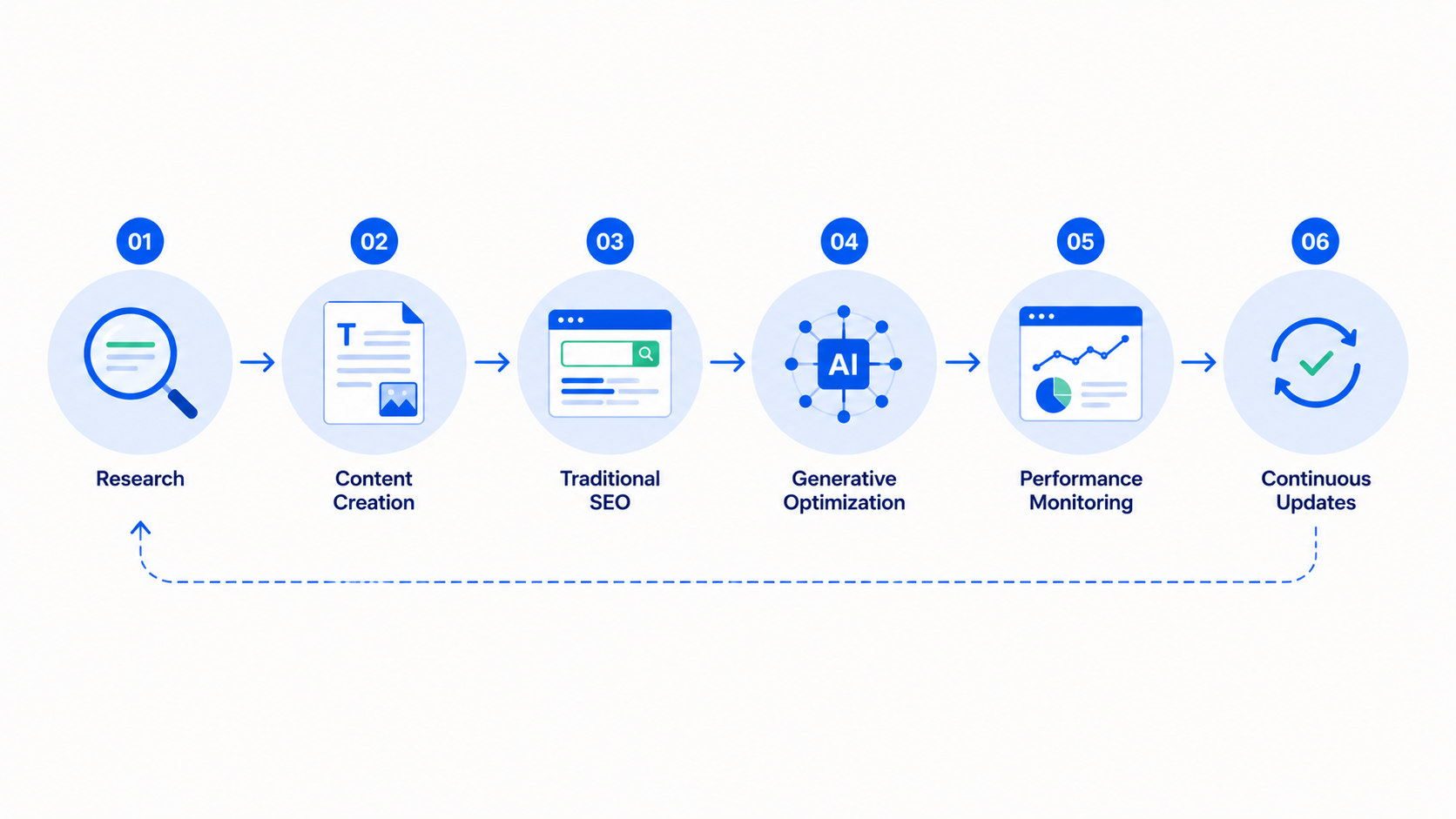
Generative optimization and traditional SEO aren’t rivals. Treat them as complementary and the whole thing works better. Content built for generative visibility usually ranks well organically too, even though the specific tactics differ a little. You can optimize for both at once with a thoughtful, integrated approach. Done right, optimizing for generative visibility strengthens your traditional SEO, and the reverse holds as well.
Content that serves both aims for comprehensive, authoritative coverage with strong keyword integration. Start with the goal of becoming the definitive resource on a topic, which is what appeals to generative AI. Then pursue that goal in language and structure that also handles traditional SEO: clear headings with keywords, logical topic progression, proper internal linking, readable formatting. Your writers need to understand both systems rather than serving one and ignoring the other.
Dual-Optimization Best Practices
Keyword research that weighs both organic opportunity and generative visibility keeps your effort on the queries where success actually matters. Some keywords carry high generative potential but low organic CTR, and those might rank lower on your list. Others bring both strong organic opportunity and generative upside, and those earn primary focus. A tiered read like this guides where you invest. Understanding search intent for both organic users and generative systems is critical to getting the priorities right.
Content updates should serve both concerns at once. When you refresh a page for organic performance, ask whether the same refresh improves its citation odds in generative results. That usually means adding new data, expanding coverage, sharpening clarity, and restructuring for easier AI synthesis, all of which help organic users and generative AI together. Instead of running separate update calendars, fold both purposes into one pass.
Technical SEO stays foundational for both. Clean site structure, fast load times, mobile optimization, proper markup, these help traditional crawlers and generative AI understand and value your content alike. There’s no special generative-specific technical work to do. Strong fundamentals carry visibility across both environments. The basics stay the basics.
Building topical authority through content clusters pays off in both places. Cover a topic ecosystem end to end (foundational content, advanced applications, specific use cases) and both organic search and generative AI read your domain as an authoritative source. It’s harder to pull off, and the returns compound across both systems. You’re building a knowledge base that does several jobs at once.
Monitor across both dimensions to keep the optimization balanced. Track organic rankings next to generative citations and you’ll see whether the work is landing in both places. Content that ranks well organically but rarely surfaces in generative results points you toward comprehensiveness and originality. Content cited generatively but ranking lower organically points toward traditional SEO fixes. Dual monitoring keeps you from optimizing for one system while quietly starving the other.

What Do Forward-Looking SEO Strategies Look Like in the Generative Search Era?
Generative results keep evolving and expanding, so a forward-looking strategy has to anticipate how search engines will present information next and how users will interact with it. Successful marketers are already shifting to position for that. Adapt fastest and the advantages compound over time.
Content strategy is turning more research-driven and data-centric. Rather than writing purely for reader consumption, sharp businesses are investing in original research, surveys, and data collection that generative results will cite. That casts them as authoritative sources instead of aggregators and builds a moat that’s hard for others to copy. Publish original research nobody else has and you become the source generative AI has to cite.
Emerging Patterns in Generative Search Strategy
Expertise and E-E-A-T (Experience, Expertise, Authoritativeness, Trustworthiness) signals matter more every quarter. As generative systems mature, they get better at spotting trustworthy sources. Sites that show clear expertise through author credentials, consistent publication, and accurate information get preferred for citation over sites with merely adequate content. Building E-E-A-T signals is critical for both traditional SEO and generative visibility.
Engagement metrics beyond clicks are gaining value. Zero-click searches keep rising, which makes traditional CTR less useful as a scorecard. Forward-looking strategies track brand search volume, social mentions, and other engagement signals that show whether your content creates awareness and influence even when nobody clicks through. Your success metrics have to reach past traffic into brand metrics.
AI tools are becoming standard in content workflows. Instead of hoping to intuit generative optimization, strong teams run AI SEO tools that analyze generative patterns, surface openings, and monitor performance. Call it the professionalization of SEO past the old manual approach. The most competitive organizations are already using automation to stay ahead of hand-tuned optimization.
Content velocity is climbing. Generative results synthesize current information, so stale pages lose their citation potential.
Forward-looking strategies push regular updates, continuous freshness, and fast response to new developments in a topic. That’s a different resource pattern than traditional SEO, where you could publish once and hold the ranking. Plan for ongoing maintenance as part of your baseline.
SEO and broader content marketing keep converging. SEO isn’t a standalone discipline anymore. It sits at the center of content strategy, PR, and brand building. Content made to attract links, build awareness, and establish thought leadership also lifts generative visibility, which aligns functions that used to sit apart. The walls between departments are coming down because optimization now takes integrated thinking.
Generative results are a genuine transformation in how search engines present information and how people find answers online. The AI summaries cut traditional click-through rates and, at the same time, open visibility that runs independent of organic ranking. For marketers, adapting means balancing traditional SEO with strategies built specifically for generative visibility: deeper, more authoritative content, real investment in original research, and monitoring that watches both organic rankings and generative citation patterns.
Search is getting more complex. Businesses that understand how generative results work and optimize for them will hold visibility and keep driving traffic. Forward-thinking marketers don’t read generative results as a threat to traditional SEO. They read them as an evolution that calls for an updated strategy. Companies that build integrated approaches, optimizing content for organic search and generative visibility at once, gain a real competitive edge. Cover both dimensions of modern search optimization and your content stays visible however the results page keeps changing.
Ready to adapt your SEO strategy for generative search? Book a demo with SEOBrain to see how AI-powered SEO automation can help you optimize for both traditional and generative visibility. Our platform helps you track generative result performance, identify optimization opportunities, and build content strategies that work in this new search environment.
Frequently Asked Questions
What are generative results on Google?
Generative results are AI-generated summaries that sit at the top of Google search results pages. Featured snippets pull exact text from an existing page. These don’t. They synthesize information from multiple sources into new, AI-created answers. The summaries give instant answers to a query, often satisfying the user’s intent before they ever click through to an individual website.
How do generative results affect SEO and click-through rates?
They’ve hit traditional SEO performance hard. Studies put queries showing generative answers at 18-27% lower click-through rates to organic results compared to searches without the feature. There’s an upside though. Getting cited as source material inside a generative result can drive qualified traffic independent of ranking position, which opens new visibility for content that feeds AI summaries.
How can I optimize my content for generative results?
Build comprehensive, authoritative content with original research and data. Structure it clearly with a logical flow, establish topical authority across related topics, and keep it fresh with regular updates. Content that answers questions thoroughly, carries unique insight, and shows real expertise is the content most likely to get selected as source material for generative results.
Are traditional SEO rankings still important with generative results?
Yes. Organic rankings still matter even with generative results in play. The summaries create new visibility pathways, but a balanced strategy covers both organic ranking and generative citation. Content optimized for generative visibility usually ranks well organically anyway, and holding strong organic positions gives you resilience if Google changes how generative results pick source material.
What metrics should I track for generative result performance?
The key ones are generative result appearance frequency (how often your content gets cited), click-through rates from generative citations, content contribution rate (the share of your content that gets cited), source citation consistency, and zero-click rate trends. Together they tell you whether your content is being selected as source material and whether that citation actually drives engaged traffic.
Why is SEO automation important for generative search optimization?
Automation handles the complexity of optimizing for traditional and generative search at once. The tools track generative patterns across thousands of queries, surface optimization openings, analyze competitor sources, and monitor performance. That lets marketers scale their effort and make data-driven calls about which content to create and optimize.
What content types perform best in generative results?
Comprehensive guides, original research, industry best practices, and detailed how-to articles perform best. Content with original data, statistics, and unique insight gets cited often by generative AI. List-based content and comparisons show up frequently too, though the AI may fold them into a new summary rather than sending users to click the original article.
Can I maintain organic ranking while optimizing for generative results?
Yes, an integrated strategy lets you optimize for both at once. Content that’s comprehensive and authoritative enough for generative visibility usually ranks well organically as well. Focus on depth, clear keyword integration, strong topic authority, solid technical SEO, and internal linking that serves both systems. What you’re avoiding is any tactic that helps one system while starving the other.
