

Weeks of keyword research and manual writing used to be the cost of ranking. AI changes that math. AI-powered platforms research, write, optimize, and publish ranking-ready content in hours instead of weeks, and organizations built their organic marketing around that speed. The number teams keep landing on is an 80% cut to the content creation timeline, with quality and SEO consistency holding steady. This guide covers the practical side: how to put AI-driven SEO content creation automation to work, which tools actually deliver, the specific steps to build your workflow, and how to measure what you get. Fast-growing startup or an enterprise scaling across teams, the path is the same. You’ll move your SEO strategy off manual effort and onto automated efficiency.
What is SEO Automation and Why Does It Matter?
SEO automation means handing the repetitive, time-heavy optimization work to AI technology and software instead of a person. Keyword research, content gap analysis, content generation, on-page optimization, meta tag creation, performance tracking. Rather than researching keywords for hours, drafting from scratch, and optimizing each page one at a time, automated SEO tools run these processes at scale. Your team gets its hours back for strategic decisions instead of grunt work.
Why does the shift matter so much? Google favors sites that publish fresh, relevant, optimized content on a steady cadence. Most organizations can’t hold that pace because content creation drains resources. It needs skilled writers, SEO experts, and real time. Research on content marketing productivity puts teams without automation at 10 to 15 hours per piece, from first idea to publish. Call it two full business days per article.
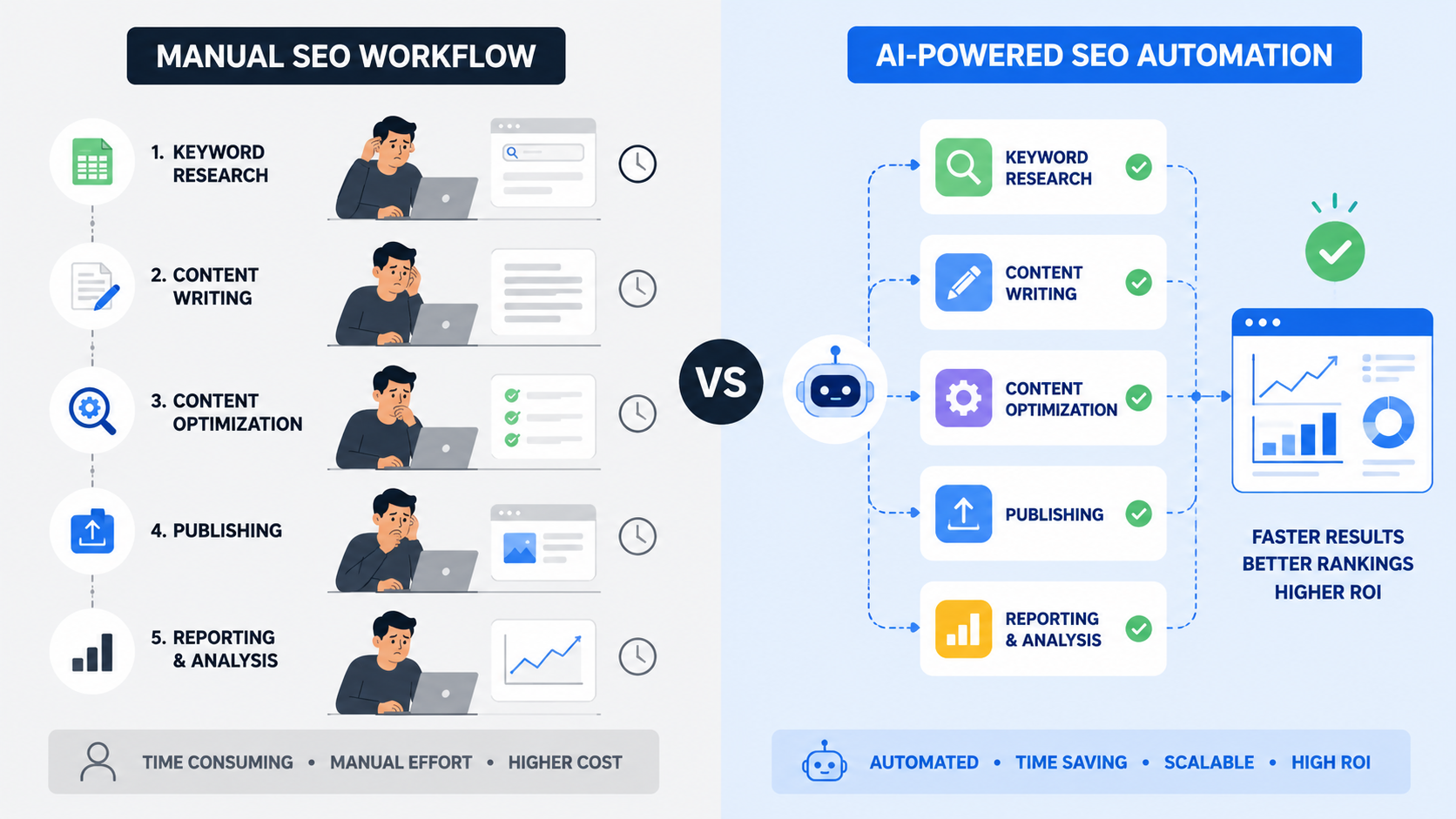
AI-driven SEO automation rewrites that equation. Automate the keyword research, generate the first drafts, surface the optimization recommendations, and your team shifts to strategy, refinement, and quality control. You publish more, rank for more keywords, and pull more organic traffic, and your headcount and budget don’t have to grow to match.
How Does AI-Driven SEO Content Automation Work?
Know the workflow before you build on it. It’s what separates a clean rollout from a frustrating one. The process copies what a seasoned SEO professional does by hand, then finishes it in a fraction of the time.
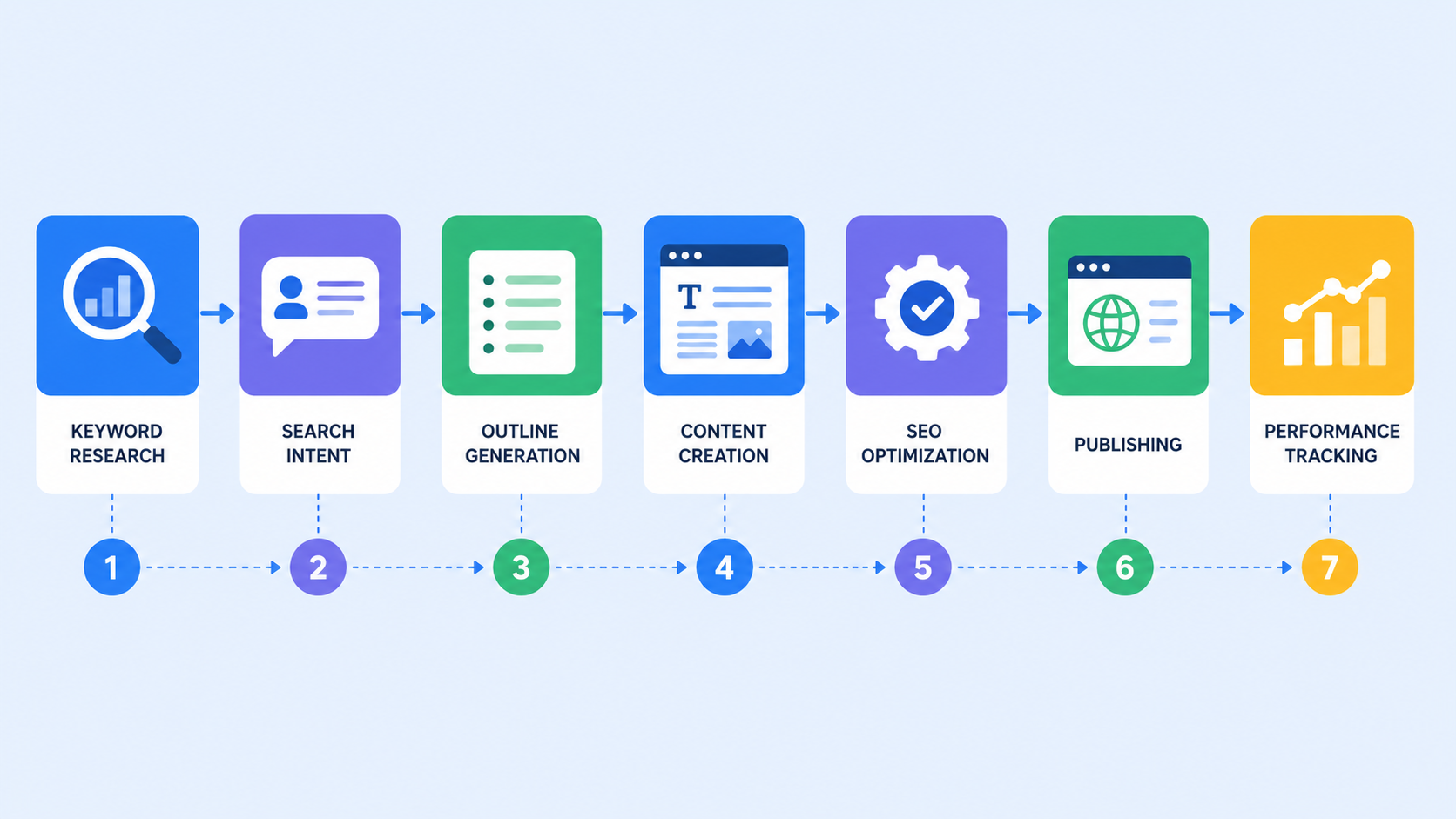
It usually opens with AI technology reading your target keywords and working out search intent. Feed in a primary keyword or topic, and the system queries search engines to see what ranks now, which topics Google treats as relevant, and what questions the results answer. This runs in seconds. A human SEO specialist would spend hours on the same research inside tools like Google Search Console.
From Research to Outline to Article
The AI turns that research into a content outline or brief. It maps the key sections your article needs, the questions to answer, and the subtopics that satisfy user intent. Better tools cross-reference your existing content to catch gaps and dodge duplication. Don’t underrate this stage. A weak outline is where generated content drifts away from what people are actually searching for.
With the outline set, the AI writes the article body, building out each section in depth. Modern language models trained on millions of high-ranking articles produce coherent, structured content that carries your brand voice and folds keywords in naturally. This is not thin, keyword-stuffed copy that breaks SEO best practices. It’s comprehensive work that holds its own against articles from skilled writers.
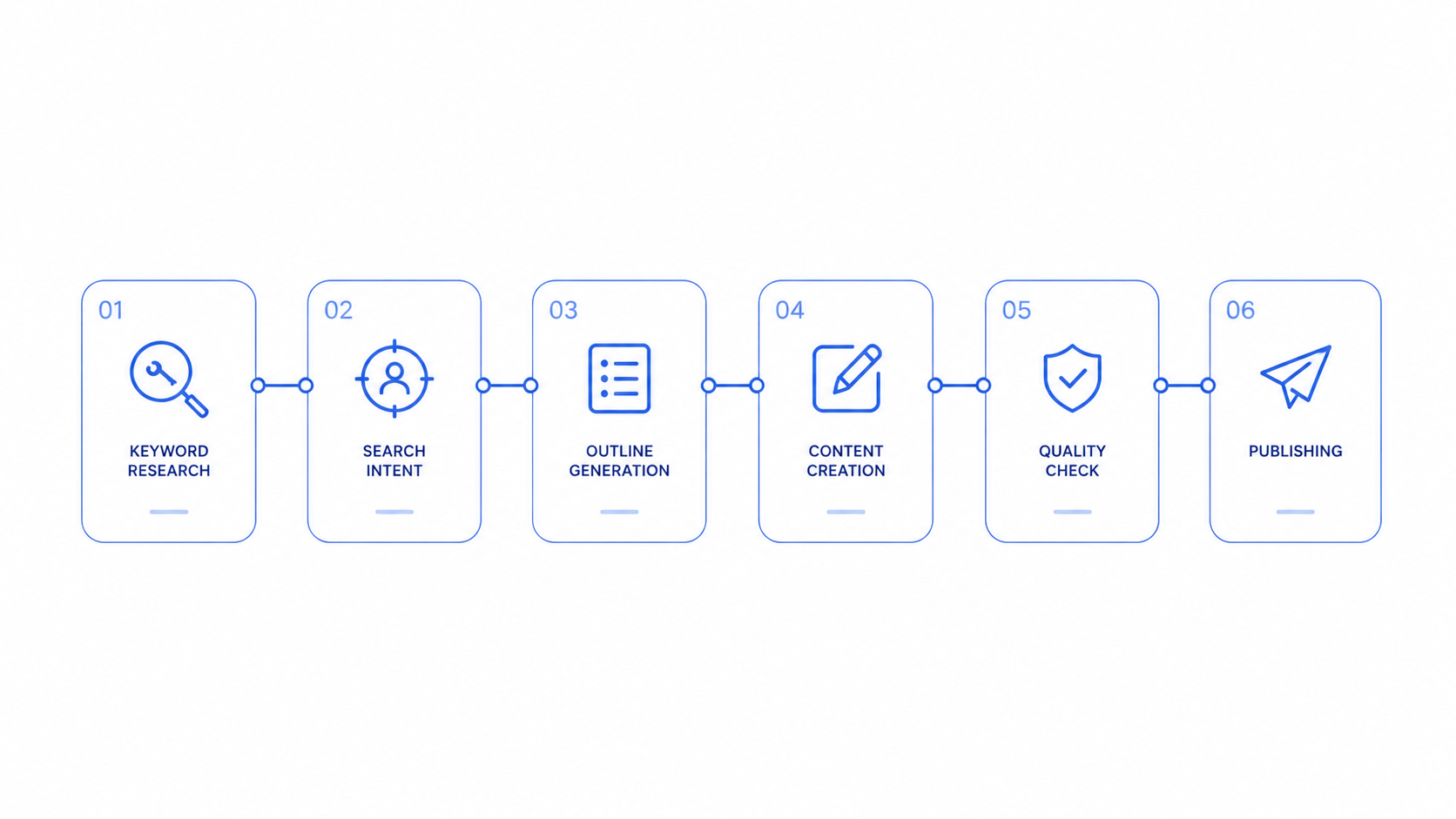
Then comes on-page optimization. The tool checks keyword density, confirms the primary keyword lands in the title and the first 100 words, enforces proper heading hierarchy across H1, H2, and H3, drafts meta descriptions, and points out internal linking opportunities. It verifies readability and makes sure the piece carries enough supporting detail to compete in a crowded search result.
Integration and Publishing
Last, the optimized content flows into your CMS (Content Management System) or publishing platform. Many platforms connect straight to WordPress, HubSpot, Webflow, and others, so the finished article publishes on its own or drops into a queue for final human review. Across the whole workflow, AI technology absorbs the research-heavy, repetitive tasks and leaves the strategic calls and quality assurance to your team.
The point worth holding onto: AI automation doesn’t replace human expertise, it stretches it further. Your team keeps strategy, quality control, and brand consistency. The AI takes the slow research and drafting that never needed human judgment anyway. That split, human strategy over AI execution, is what gives automated SEO tools their edge.
What Are the Key Benefits of Automating Your SEO Content Strategy?
Automating SEO content creation pays off in ways you can measure against real business goals. Knowing the specific gains makes the investment and the setup effort easier to justify.

Speed, Cost, and Scale Benefits
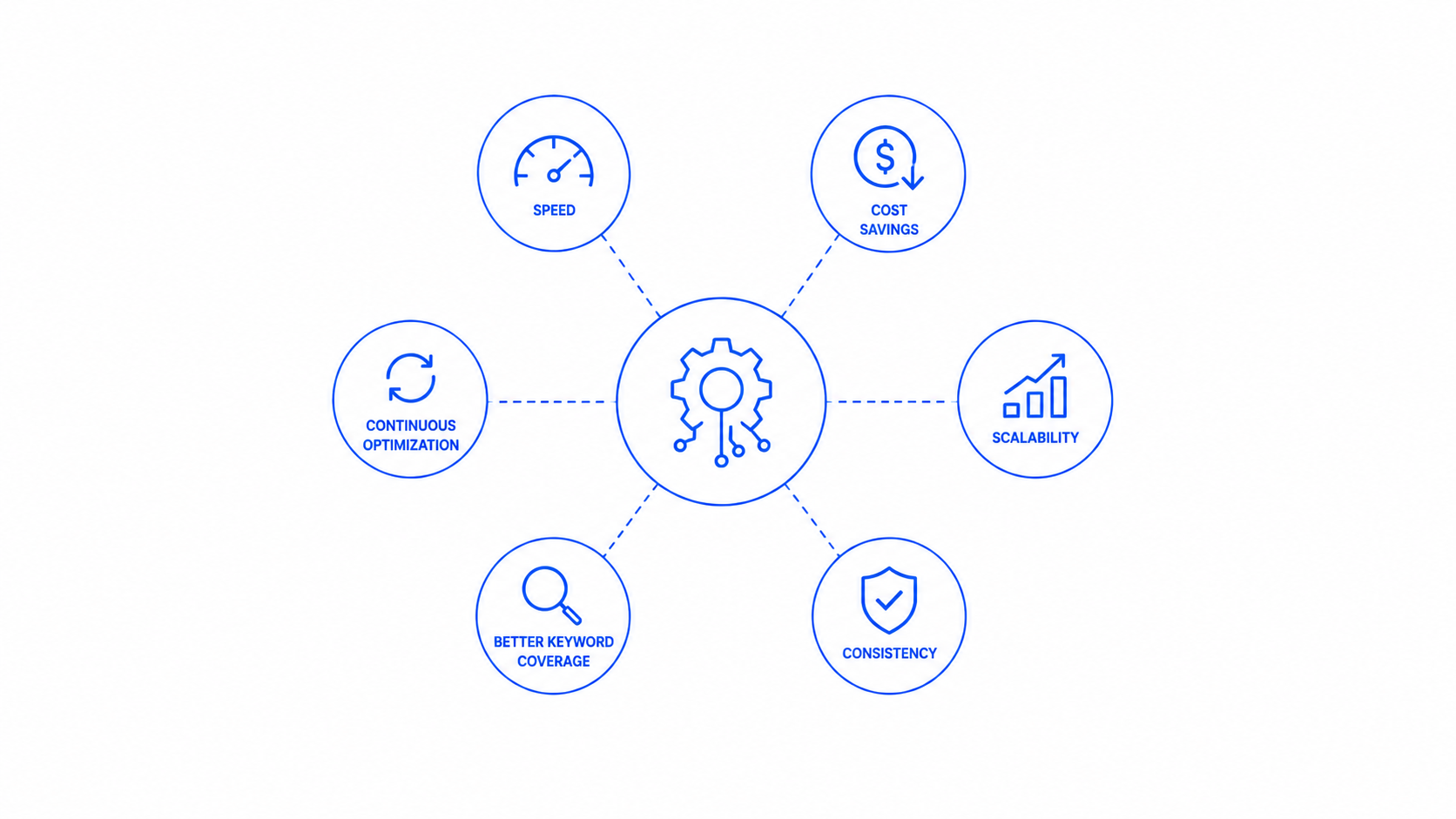
- Increased Publishing Velocity: The most immediate benefit is sheer speed. What takes a human writer 15 hours now takes 2-3 hours, including human review and refinement. This means you can publish more pieces monthly without hiring additional staff. Increased publishing frequency directly correlates with increased organic traffic, as you’re ranking for more keywords and capturing more search queries from your target audience.
- Consistent Quality and SEO Standards: AI systems apply the same optimization rules to every piece. There’s no variation in heading structure, keyword placement, or content length across your site. This consistency improves your site’s overall SEO performance and makes scaling content production predictable and reliable. Your team knows exactly what to expect from each generated piece.
- Reduced Content Costs: Automating SEO content creation cuts your per-article cost. You’re not paying for 15 hours of skilled writing time. Instead, you’re paying for AI processing time and minimal human oversight. For teams creating 50+ pieces monthly, this represents substantial cost savings, often a 40-60% reduction in content production costs.
- Better Keyword Coverage: AI systems identify keyword opportunities at scale that humans would miss. Instead of your team researching 20 target keywords quarterly, automated SEO strategies can identify hundreds of relevant, lower-competition keywords across your industry. This means you’re not leaving ranking opportunities on the table that competitors could capture.
- Faster Content Iteration: With automation, you can test more content variations and topics quickly. If an article underperforms, you can rapidly create alternative versions targeting related keywords or adjusted angles without significant time investment. This experimentation is difficult with manual content creation but becomes practical with automated SEO tools.
How Do You Choose the Right AI SEO Automation Platform?
Platform choice matters because these tools differ at the root, in strengths, limits, and how long they take to learn. Before you compare specific products, get clear on what your organization actually needs from automation. Most teams skip that step and regret it during onboarding.
Key Selection Criteria
Content volume comes first. Are you shipping 10 pieces a month or 100? Platforms built for high-volume publishing carry different pricing and different capabilities than the ones aimed at smaller teams. High-volume operations lean on smooth CMS integration and advanced scheduling, while smaller teams tend to care more about ease-of-use and customization.
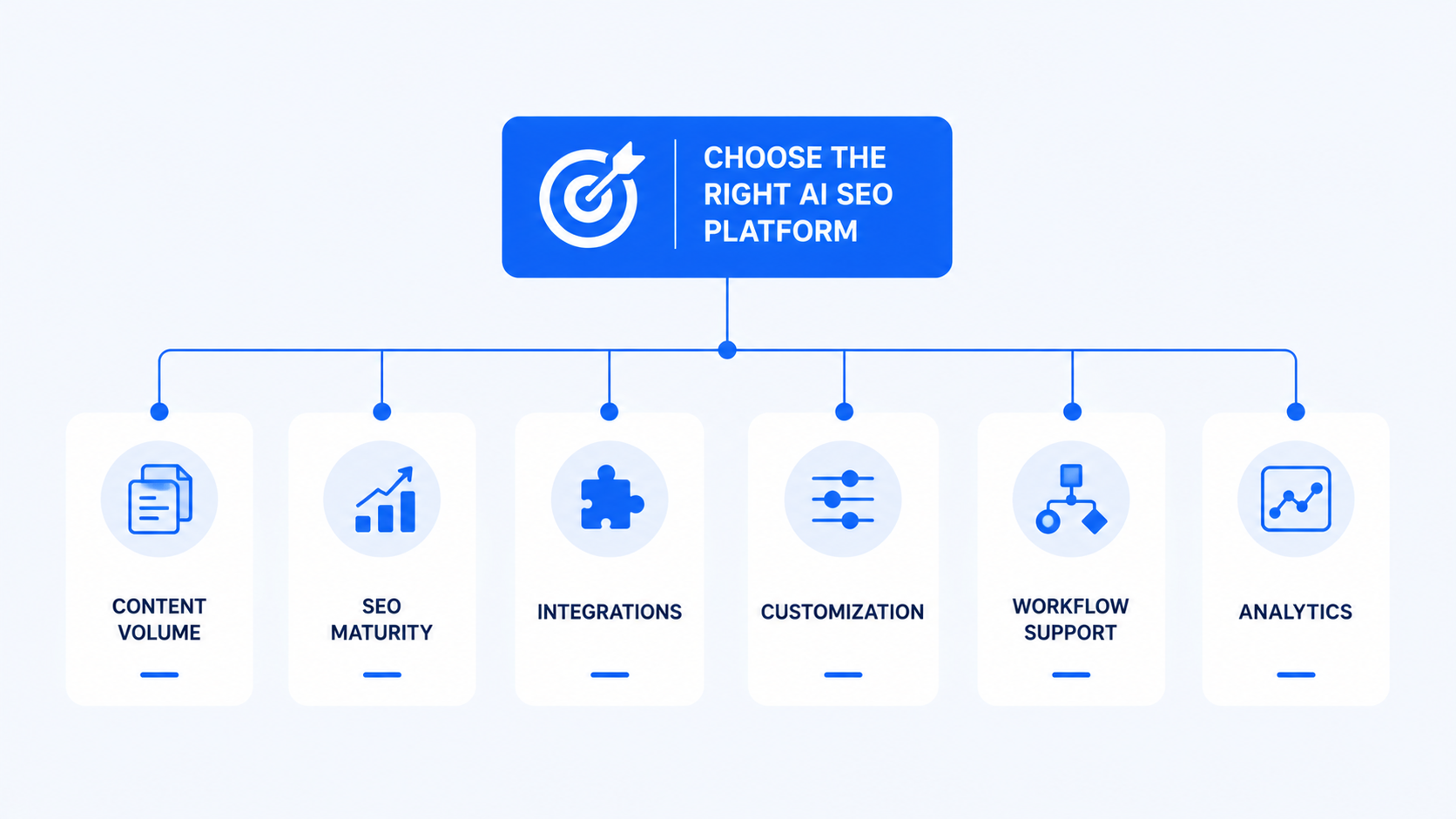
Next, gauge your current SEO maturity. Do you already run keyword research with target keywords in hand, or do you need the AI to find the opportunities for you? Some platforms are built for deep keyword research, others center on content generation. Semrush and Moz bring strong keyword research to the table, while a platform like MarketMuse specializes in content optimization and gap analysis.
Integration is the third test, and it’s where good tools quietly earn their price. Can the platform connect to your CMS, content calendar, and analytics? Disconnected tools breed workflow friction, and that friction eats the efficiency you bought automation for. Running WordPress with custom plugins? You’ll want software with native WordPress integration or dependable API connections.
Customization and brand voice control come fourth. Can the AI match your writing style and tone? Some platforms hand you deep control over voice and structure. Others barely let you touch it. If brand consistency is core to your organization, hunt for platforms that support voice training or detailed settings tied to your brand guidelines.
Evaluation Best Practices
Test the output. Nothing else tells you what you actually need to know. Use free trials to run sample topics from your industry. Does the content need heavy editing, or does it publish with a light pass? Do the outlines cover the ground or skip important subtopics? Some AI-driven SEO platforms produce sharper first drafts than others, and that gap lands directly on your team’s review time.
Read independent reviews on G2 and Capterra to see how other organizations rate these tools. Zero in on feedback from teams close to yours in size and industry. Lean on free trials or freemium versions to judge real-world performance before you pay for anything.
The right platform will shrink your manual SEO content creation timeline and still produce content that clears your quality bar and serves your business goals. Don’t rush it. Two to four weeks of thorough evaluation saves months of frustration later.
What is the Step-by-Step Process for Setting Up SEO Automation?
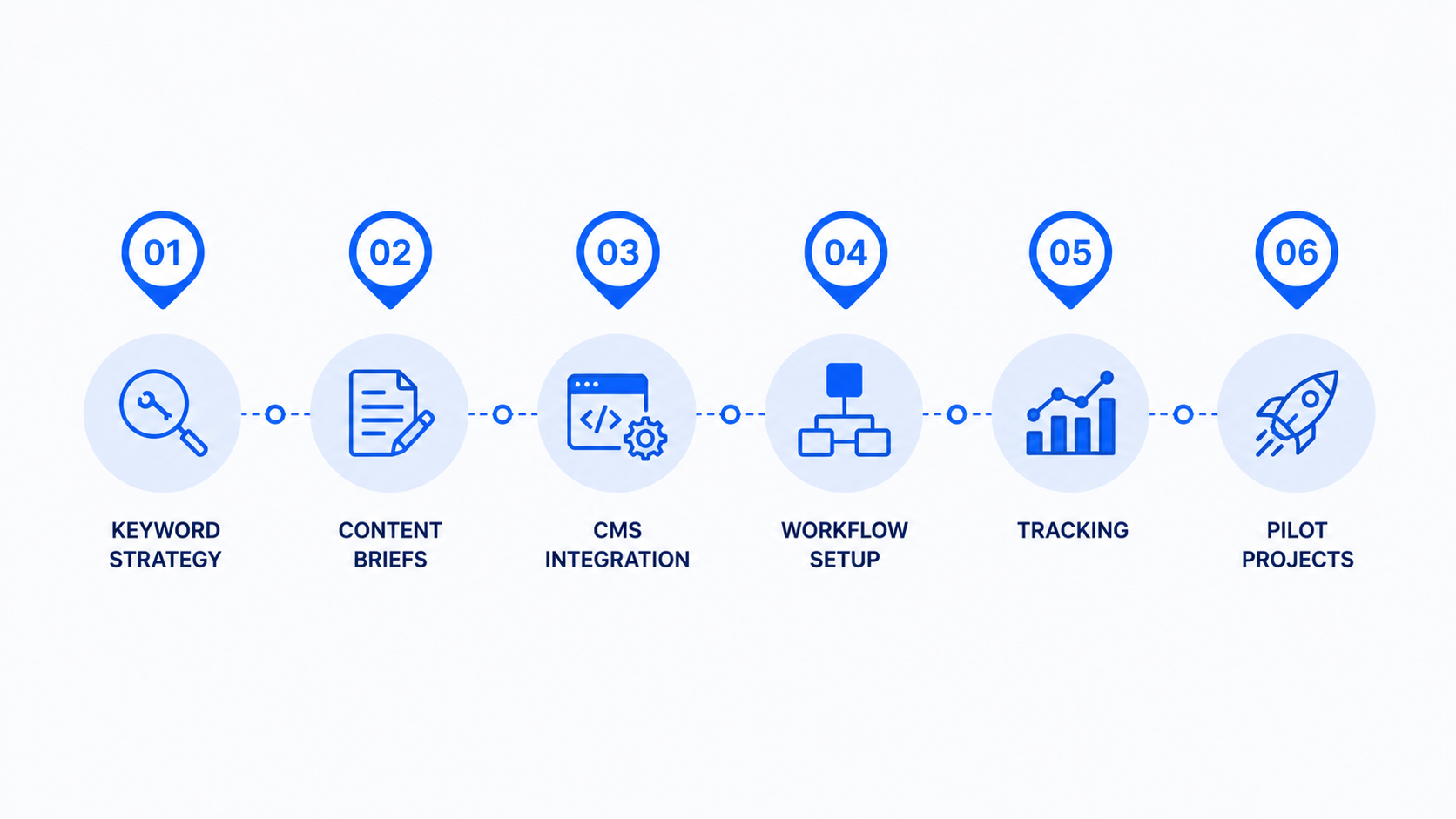
Setting up automated SEO content creation takes planning and steady execution, but a structured approach keeps it straightforward. Here’s how the organizations that get it right build their workflow.
Step 1: Define Your Keyword Strategy
Start by identifying your target keywords or having your AI platform conduct keyword research for you. Use Google Search Console to analyze your current rankings and identify keyword gaps where you could be capturing traffic but currently aren’t. Document 50-200 target keywords across different search intent categories (informational, transactional, commercial).
Your AI system will use these keywords as input for content generation, so spend adequate time ensuring they’re relevant and achievable for your domain authority level. A new domain shouldn’t chase highly competitive keywords. Start with low-to-medium competition terms where you can realistically rank.
Step 2: Configure Your Content Brief Template
Most platforms let you build content briefs that steer AI generation and hold consistency. Set a standard template that spells out the target keyword, secondary keywords to work in naturally, desired length, tone and voice, brand guidelines, competitor analysis depth, and any required sections. That consistency keeps generated content aligned with your standards across every piece. The brief doubles as a quality control document. The more detailed and specific it is, the better your results.
Step 3: Connect Your CMS and Analytics Tools
Integrate your content management system with your automation platform. This allows AI-generated content to flow directly into your publishing workflow without manual data transfer. Additionally, connect Google Analytics and Google Search Console to give the AI system visibility into your current performance. This visibility helps it generate more targeted, effective content that addresses your current ranking gaps.
Step 4: Set Up Your Publishing Workflow
Decide whether AI-generated content goes straight to publication on an automated schedule or into a review queue for human approval. Most organizations start with review queues to hold quality control, then move to automated publishing once they trust the output. Set clear review guidelines for your team. They usually center on fact-checking, brand tone, and strategic fit rather than heavy rewriting.
Step 5: Establish Performance Tracking
Configure dashboards that track key metrics: pieces published monthly, average time-to-publish, cost per piece, organic traffic gained, keyword rankings achieved, and content performance by topic. This data helps you optimize your strategy over time and demonstrates the ROI of automation to stakeholders who approved the investment.
Step 6: Run Pilot Projects
Don’t automate everything at once. Run pilots with 10-20 articles in a single topic area first. Watch how they perform in search, collect team feedback on the workflow, and fix what’s broken before you scale to the whole operation. Pilots surface integration issues and workflow bottlenecks while they’re still small enough to fix cheaply.
Setting up AI-driven SEO automation is not a set-and-forget job. Most organizations spend 2-4 weeks tuning the setup, training people on the new workflow, and refining content briefs against early results. That upfront investment pays back hard as your team gets faster and your content library grows.
How Should You Structure Your AI-Generated Content for Maximum SEO Impact?
AI generates content fast, but structure decides whether it ranks and whether it turns visitors into customers. Get the structure right and your AI-generated content meets Google’s ranking criteria and answers what the searcher came for.
On-Page SEO Structure Essentials
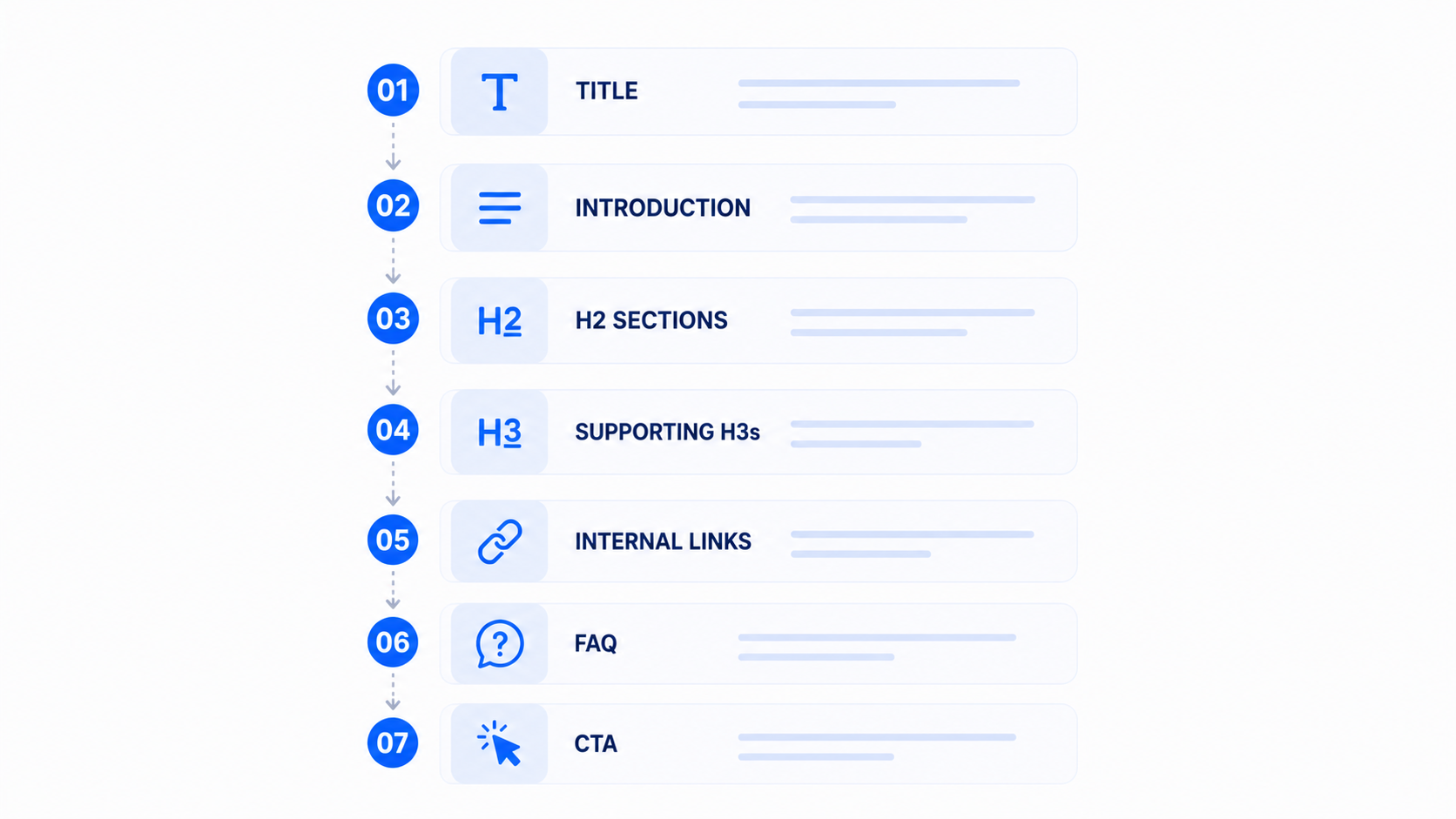
Your primary keyword has specific homes: the title, ideally near the front, the first 100 words of the introduction, at least one H2 subheading, and the conclusion. AI systems usually place these on their own, but knowing the requirements lets you review and approve with confidence. Secondary keywords should spread naturally through the piece, never forced.
Heading hierarchy comes second. Content should run a logical H1 (title) into H2 (major sections) into H3 (subsections). That structure tells search engines how your content is organized and lets readers scan for what they need. Many automated SEO tools build correct heading structures on their own, but verify it during review to keep things consistent.
Third, work in multimedia with intent. AI-generated text is strong, but comprehensive content also carries images, infographics, and sometimes video. Automated SEO platforms increasingly connect to image libraries and suggest relevant visuals. Write alt text around your target keywords and user intent, which lifts accessibility and supports your SEO at the same time.
Featured Snippets and Advanced Optimization
Fourth, shape content for featured snippets. Google often pulls a brief answer to a common question into a snippet box above the results. Your AI-generated content should carry 40-60 word answer sections that respond directly to the questions searchers ask. Drop those quick-answer blocks where they fit the surrounding questions.
Fifth, run internal linking with purpose. Your AI system should spot chances to link to existing content using relevant anchor text. Internal links move authority across your site, help Google map topic relationships, and pull readers deeper into your content. Automated SEO tools can generate the linking recommendations, but your team should check that each one is contextually relevant and useful.
Sixth, optimize for readability and user experience. Content with proper paragraph breaks, bulleted lists, and varied sentence length performs better than dense text blocks in both user engagement and search performance. Modern AI systems understand this and generate readable content, but review pieces to ensure they maintain good scanability. Short paragraphs (3-4 sentences) and strategic use of lists improve both user experience and search engine performance.
Depth and Competitive Positioning
Depth has to match the competition, and this is where a lot of pieces quietly lose. Highly competitive keywords call for longer, fuller content at 2,000+ words. Lower-competition keywords can rank on 800 to 1,200 word pieces. Your AI system should scale length to keyword competition, but confirm the depth lines up with what’s already ranking. Outranked by 3,000-word articles? Your 1,200-word piece won’t compete.
How Can You Integrate AI-Powered Tools with Your Existing SEO Tech Stack?
Automated SEO content creation doesn’t live in a vacuum. It works through your existing tools and workflows. Get the integration right and automation compounds, while the friction points that slow your team down disappear.
Mapping and Evaluating Your Tech Stack
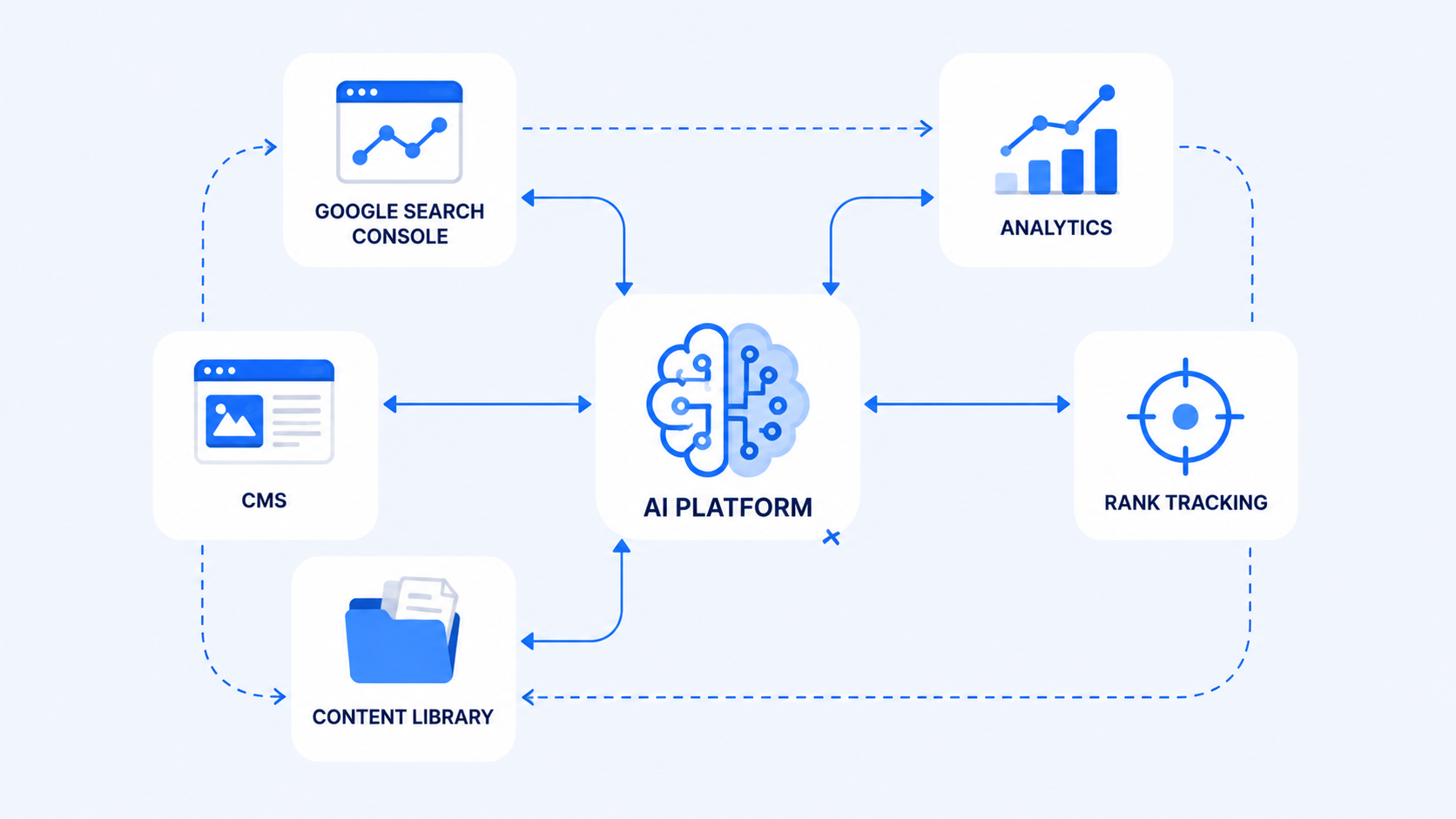
Map your current SEO tech stack first. Write down your CMS (WordPress, HubSpot, Webflow, and so on), analytics tools (Google Analytics, Adobe Analytics), keyword research platforms (Semrush, Ahrefs), rank trackers, and any other SEO or marketing software you run. That picture surfaces integration opportunities and possible conflicts before you implement anything.
Then dig into your automation platform’s integration capabilities. Most modern platforms ship APIs, webhooks, or native plugins for popular CMS systems and tools. Confirm your chosen software connects to your CMS, ideally through native plugins rather than manual data transfer. Native integration keeps content moving from generation to publication with no hand-off steps.
Third, connect your analytics and keyword tracking tools to the platform. When it can see your current rankings, traffic patterns, and user behavior, it generates better-targeted content. Ties into Google Analytics, Google Search Console, and rank trackers give your AI system a clear view of what’s working and what isn’t.

API Connections and Automation Setup
Fourth, wire up API connections for custom tools or internal systems. Got internal content calendars, project management systems, or custom analytics? Many automation platforms offer API access for data exchange. Those connections cut manual work and keep every system in sync.
Fifth, set up automated reporting dashboards. Many platforms push data to Google Sheets, Data Studio, or other business intelligence tools. Automated dashboards kill manual report generation and give your team real-time visibility into content performance and production metrics. That visibility helps leadership see what the automation investment is actually returning.
Sixth, fold your CMS publishing workflow into the automation. Decide whether content goes straight to publication on an automated schedule, into a review queue for approval, or onto your content calendar for manual scheduling. Most teams open with a review queue, then move to automated scheduling once they trust the output and the system runs clean.
What Best Practices Should Guide Your Long-Term Automation Strategy?
Automating SEO content creation for the long haul takes more than picking tools and letting them run. It takes strategic thinking and steady refinement of your approach.
Implementation, Strategy, and Human Oversight
Phase the rollout. Don’t automate everything at once. Start with one content type or topic area where your targets are clear and your keyword data is solid. Master that workflow, measure the results, and expand from there. A phased approach builds team competence and keeps a single mistake from spreading across your whole catalog.
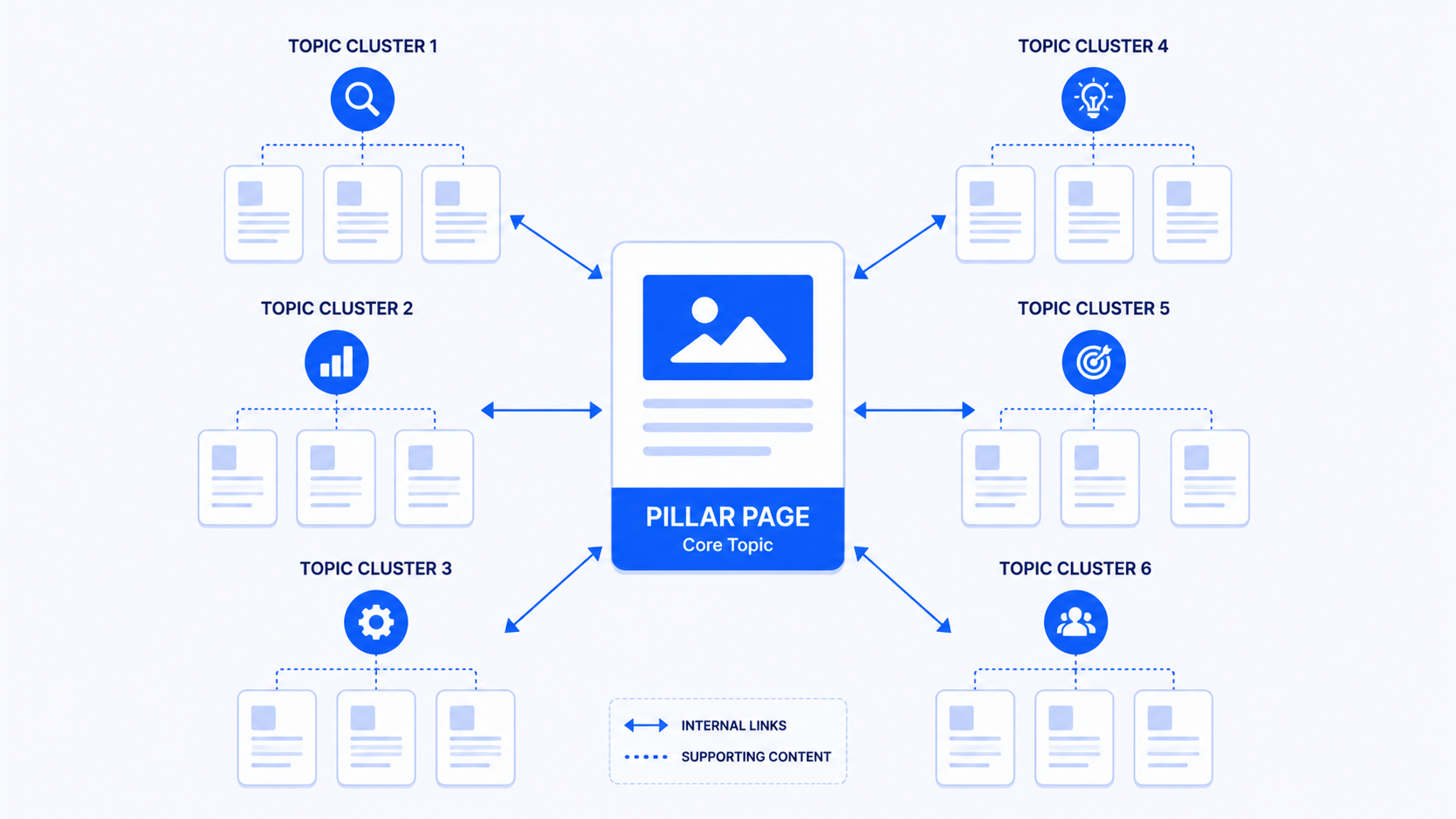
Second, pour real effort into keyword strategy upfront. The quality of your automated content tracks the quality of your keyword targets. Build a comprehensive keyword map across your industry, its competition levels, and your strategic priorities. Strong keyword work multiplies the payoff from automation. Weak keyword work spends automation on low-value content.
Third, keep human oversight and strategic direction front and center. Automation runs execution, humans own strategy. Review your results often, update the plan around what’s working, and adjust. The best automated SEO content creation pairs AI efficiency with human judgment and industry expertise.
Content Updates, Feedback Loops, and Evolution
Fourth, treat content freshness as real work. As the library grows, put resources into updating your high performers. AI tools can flag update opportunities, catch outdated statistics, and suggest refreshes. Take updates as seriously as new pieces and you strengthen your position while extending the life of content you already paid for.
Fifth, build feedback loops from your sales and customer service teams. They hear the questions prospects ask, the objections they raise, and the content that would move a deal. Feed that into your automation strategy and content briefs so the output serves business goals, not just search.
Sixth, stay current with SEO best practices and algorithm changes. Subscribe to authoritative sources, follow the people who know the space, and adjust as the landscape moves. AI technology is shifting fast too, so keep checking whether new capabilities could sharpen your results.
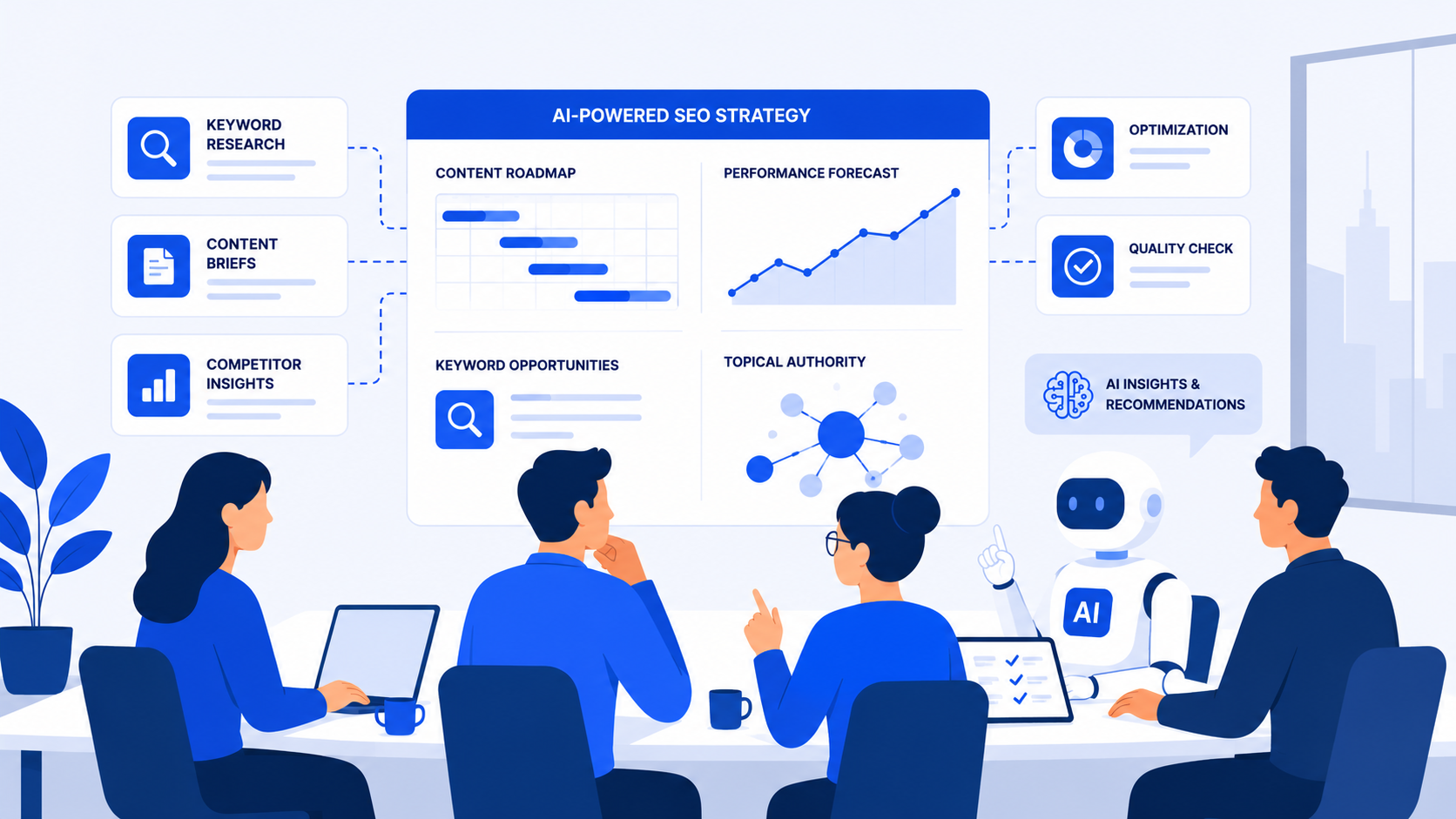
Authority Building and Quality Focus
Seventh, chase topical authority through comprehensive coverage. Rather than one piece per topic, use automation to build content clusters around your strategic topics. Clusters signal expertise to Google and open room for internal linking and featured snippets. Google rewards sites that cover important topics thoroughly.
Eighth, hold speed and quality in balance. Automation buys speed, but speed without quality damages your reputation and your rankings. Set quality standards for automated content and review against them. You want fast and good, not fast and mediocre content that needs a full rewrite anyway.
Last, measure business impact, not just rankings and traffic. Automated SEO content creation should drive leads, customers, and revenue. Track those alongside your SEO metrics to see whether the strategy lines up with business goals and returns what you expected.
Automating SEO content creation isn’t a one-time project. It’s an ongoing practice. The organizations that keep refining, learning from results, and evolving their strategy pull the biggest long-term gains from the technology.
Automating SEO content creation with AI is a practical reality now, not a someday idea, and organizations of every size are already doing it to scale organic marketing. Automate keyword research, content generation, and optimization, and you publish more, rank for more keywords, and pull more organic traffic without growing your team or budget to match.
The path is clear when you follow a structure: pick the right automated SEO tools, set clear workflows, keep human review and strategy in the loop, and measure continuously. Organizations that implement automated SEO content creation typically see 40-60% increases in organic traffic within six months, plus real gains in publishing efficiency and content consistency.
Start with pilots in one content area, master the workflow, then scale. The businesses that pair AI technology with sharp human judgment are the ones that win in organic search. The move in front of you is simple: put this proven approach to work and shift your content operation from manual effort to automated efficiency.
Ready to automate your SEO content strategy and change how you publish? See how leading organizations ship optimized, ranking-ready content in hours instead of weeks with AI-powered automation. Start with a free trial and watch how automated SEO content creation drives 40-60% organic traffic growth for your business
