

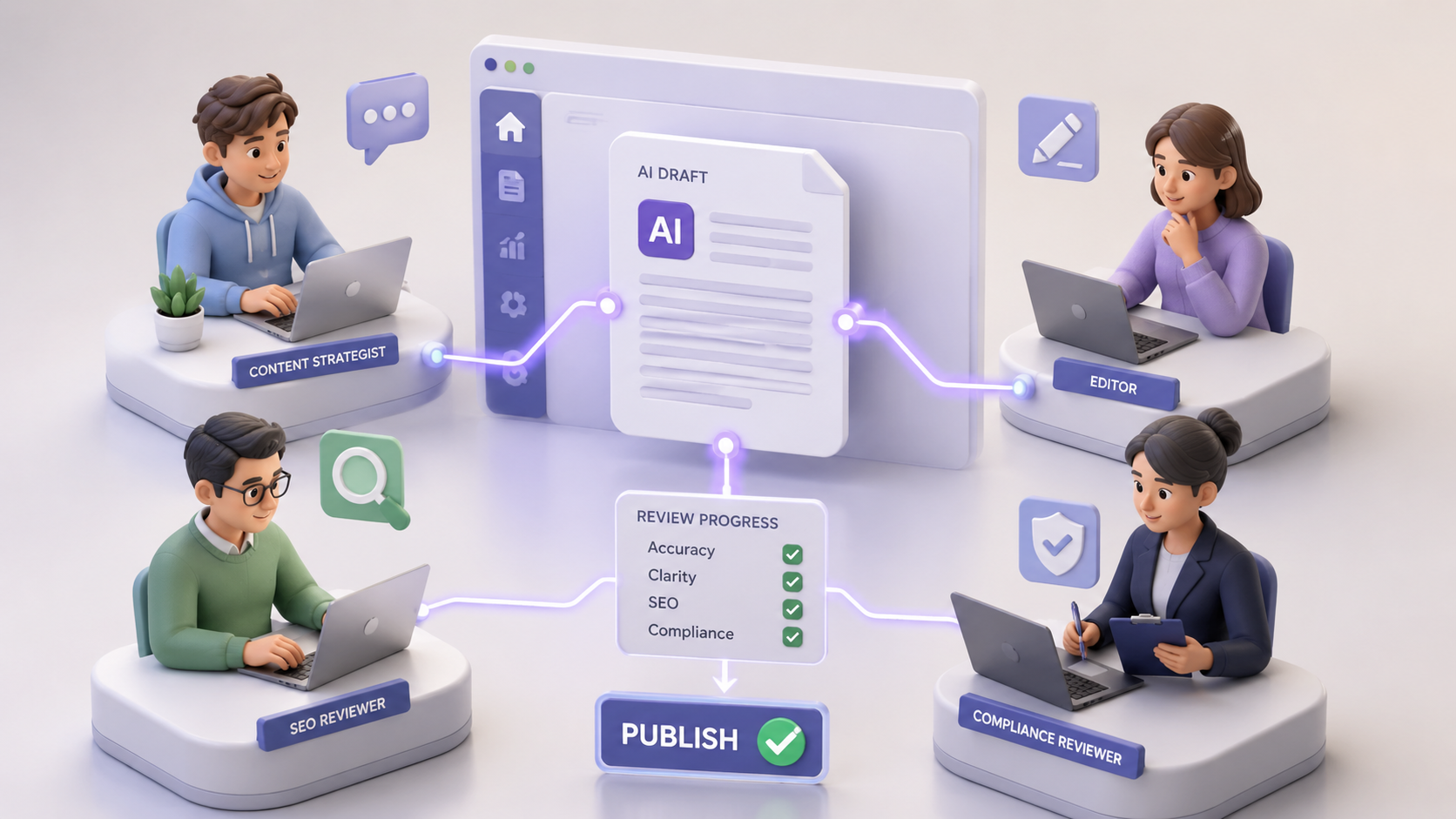
Human review of AI-generated content isn’t optional anymore—it’s foundational to responsible, high-quality content production in 2026. While AI tools can generate content at scale, human oversight ensures accuracy, brand alignment, compliance, and the expertise signals that search engines reward. Think of it this way: AI provides speed and consistency; humans provide judgment, credibility, and accountability.
Human review involves editorial staff, subject matter experts, and quality assurance teams evaluating AI-generated drafts against established standards before publication. This guide covers the essential practices, workflows, and compliance checkpoints that help teams maintain content quality while scaling production. Whether you’re using AI for blog posts, product descriptions, or marketing copy, implementing these best practices protects your brand reputation and search visibility. We’ll walk you through everything from workflow design to team structure to the specific metrics that prove your review process is working.
Why Is Human Review Essential for AI-Generated Content?
Here’s what many teams discover too late: AI excels at speed and pattern matching, but it can’t replicate human judgment, industry expertise, or brand integrity. Without human review, AI-generated content often contains factual inaccuracies, outdated information, or tonal inconsistencies that damage credibility. That’s not a failure of AI—it’s a limitation of the technology. AI works with patterns from its training data; it doesn’t verify facts or understand current industry context the way a human expert does.
Search engines, particularly Google, prioritize expertise, authoritativeness, and trustworthiness (E-E-A-T) in rankings. Google’s Search Quality Rater Guidelines emphasize the importance of human expertise and content quality, making human oversight critical for SEO performance. When Google’s algorithms evaluate your content, they’re looking for signals that an actual expert reviewed it—not just that a tool generated it. Human review creates those signals.
Beyond SEO, human review protects against compliance risks. Content may inadvertently reference outdated regulations, make unsupported claims, or violate industry standards. A marketing manager or compliance officer reviewing AI drafts catches these issues before publication, preventing costly mistakes. Human reviewers also ensure brand voice consistency—AI might generate grammatically correct content that sounds nothing like your brand.
The Role of Human-in-the-Loop Systems
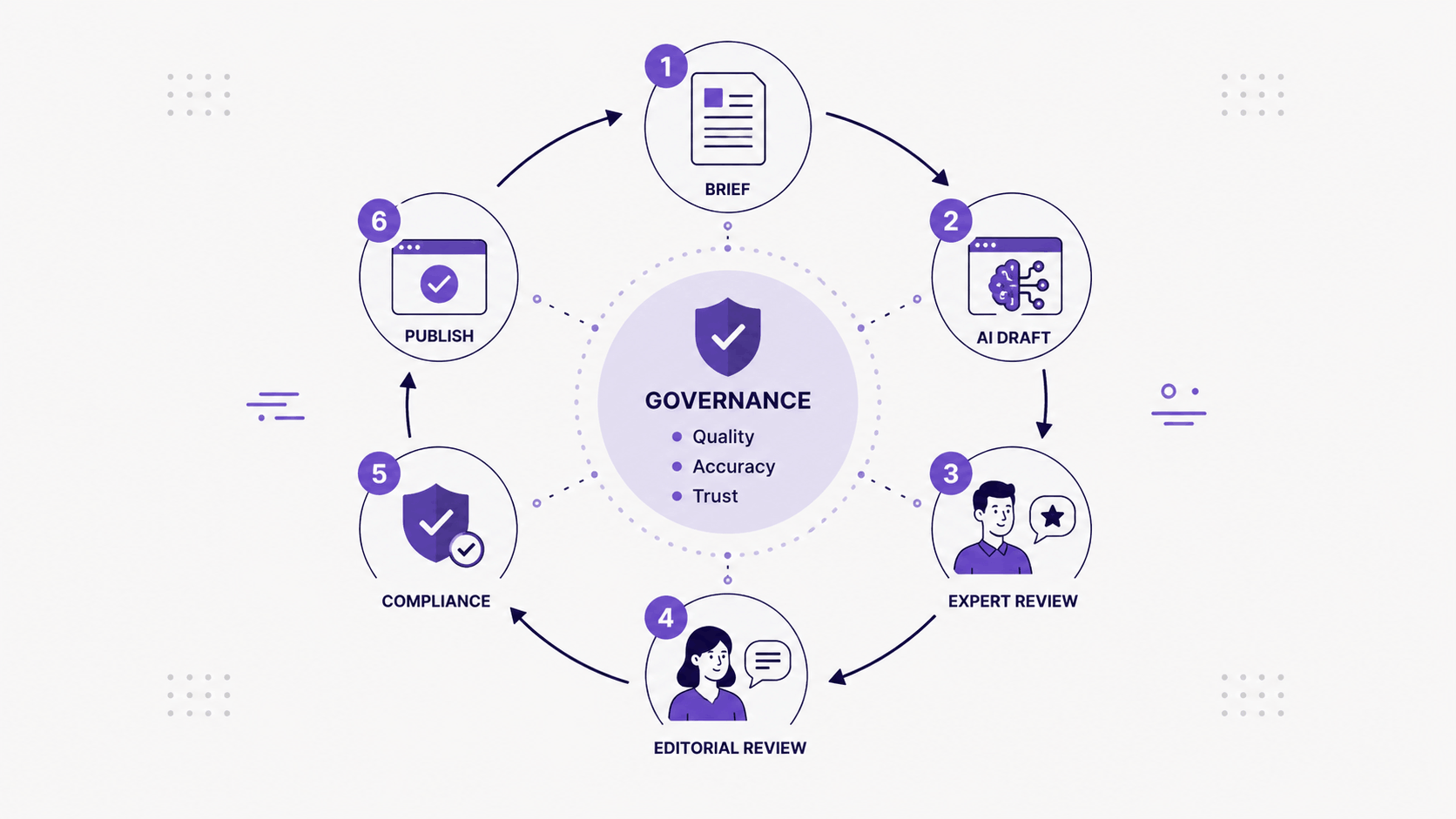
Human-in-the-loop (HITL) systems embed human review into the content creation workflow at strategic checkpoints. Rather than reviewing finished content, HITL systems allow reviewers to guide AI at multiple stages—from prompt refinement to final quality assurance. This approach is more efficient than post-production review alone and produces higher-quality output.
Studies from Content Marketing Institute show that organizations combining AI generation with human editorial oversight achieve higher engagement and conversion rates than those relying solely on AI output. The human element adds contextual judgment, creative refinement, and accountability that AI cannot provide independently. When you publish content that’s been enhanced by human expertise, readers sense that difference—the content feels more authoritative, more relevant, and more trustworthy.
Think about the last piece of content that genuinely impressed you. Chances are, a skilled human had a hand in shaping it. That’s not because humans are slower (though sometimes they are)—it’s because humans understand context, nuance, and what actually matters to your specific audience. AI generates content; humans make it matter.
What Are the Core Components of an Effective Review Workflow?
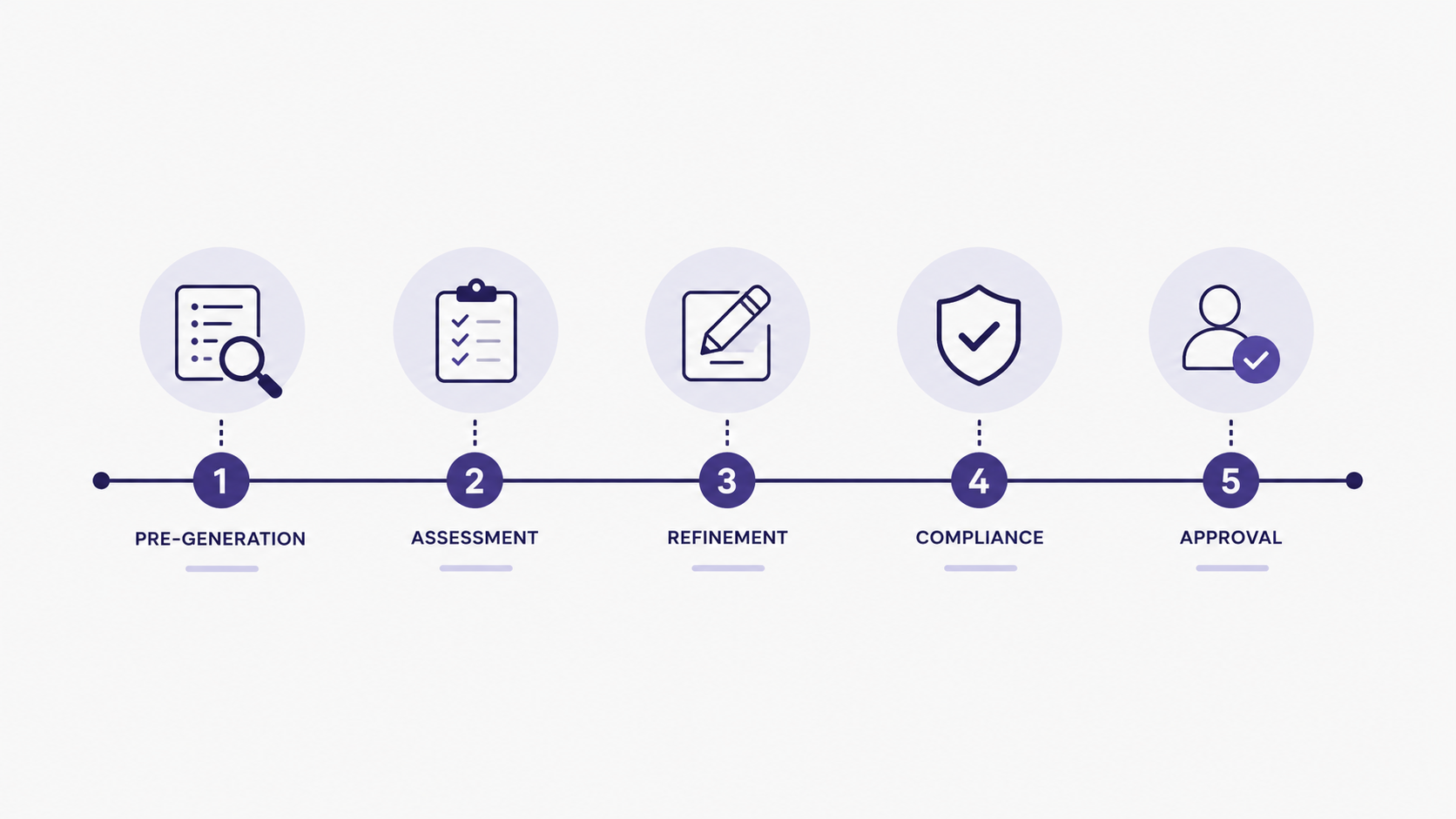
A structured human review workflow includes five key stages: pre-generation setup, AI output assessment, editorial refinement, compliance verification, and final publication approval. Each stage serves a distinct purpose and involves specific team members. Think of it like a quality control system in manufacturing—each station checks for different issues and passes the work along only when it’s ready.
Understanding Each Workflow Stage
Pre-Generation Setup defines success before the AI tool runs. This involves creating detailed briefs, setting content parameters, and establishing review criteria. A content strategist or editor writes a comprehensive prompt that includes target audience, key messages, tone preferences, and content structure. Clear briefs reduce the likelihood of off-target AI output and make review faster. When your brief is vague, AI defaults to generic content. When your brief is specific, AI generates something much closer to what you actually need.
AI Output Assessment happens immediately after generation. A subject matter expert or senior editor reads the raw AI output and evaluates it against the original brief. Does it answer the intended question? Is the tone appropriate? Are there obvious factual errors? This stage identifies major issues that require substantial rewrites versus minor polish. An expert eye catches what non-experts miss—oversimplifications, technical inaccuracies, or assumptions that don’t hold up in your specific industry.
Editorial Refinement involves correcting grammar, improving flow, adding missing information, and adjusting tone. An experienced editor works through the content line-by-line, making improvements while preserving the AI’s core structure. This stage also includes fact-checking claims, verifying statistics, and ensuring citations are accurate. The editor might strengthen weak transitions, replace jargon with plain language, or add examples that illustrate key points. Every change should make the content better for your specific audience.
Compliance Verification applies industry-specific and legal standards. A compliance officer or subject matter expert confirms that content meets regulatory requirements, uses correct terminology, and doesn’t make unsupported claims. For healthcare, finance, or legal content, this stage is non-negotiable. Your legal team needs to sign off before your finance content goes live. Your medical advisor needs to review health claims. This isn’t bureaucracy—it’s risk management.
Final Publication Approval is the last checkpoint. A senior team member (editor-in-chief, marketing manager, or content director) approves content for publication, ensuring it meets all quality standards and aligns with brand strategy. This person takes accountability for what’s published, which matters psychologically—people review more carefully when they know their name is attached to the output.
Sample Workflow Timeline
Here’s how these stages might play out in a typical day:
- Prompt Creation: Content strategist drafts detailed brief (30 minutes)
- AI Generation: Tool generates draft (2-10 minutes depending on length)
- Initial Review: Subject matter expert assesses output (20-30 minutes)
- Editorial Revision: Editor refines content and checks facts (45-90 minutes)
- Compliance Check: Specialist verifies accuracy and compliance (20-30 minutes)
- Final Approval: Senior stakeholder approves (15-20 minutes)
This workflow ensures multiple perspectives review content while maintaining reasonable timelines. Tools like project management platforms can automate routing and approvals, reducing manual coordination overhead. The beauty of this approach? You get AI’s speed (2-10 minutes to generate a draft) combined with human quality assurance (2-3 hours total). That’s still far faster than writing from scratch, but infinitely better than publishing unreviewed AI output.
How Do You Build an Effective Editorial QA Checklist?
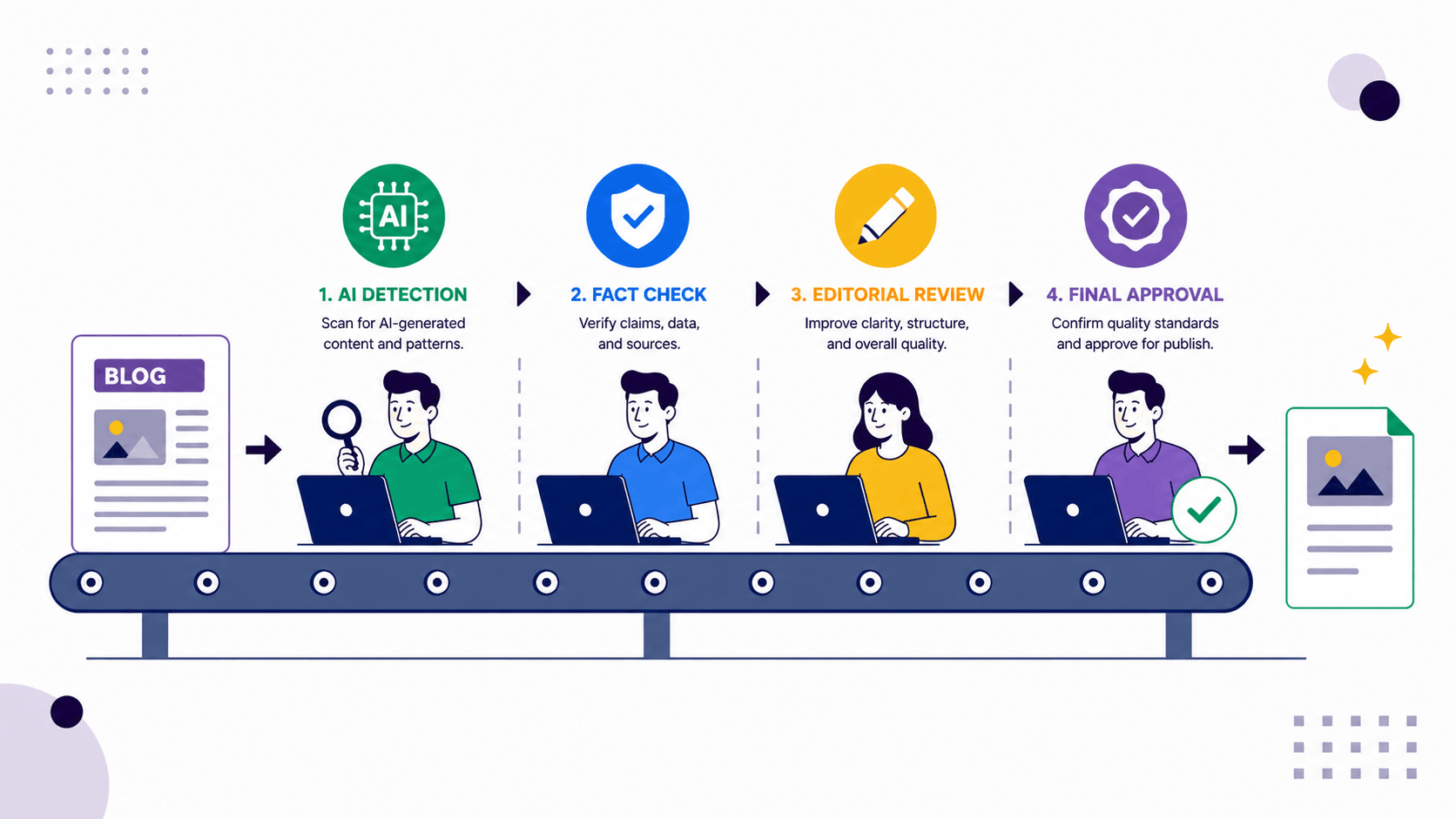
An editorial QA checklist standardizes the review process and ensures consistency across all reviewers. A well-designed checklist covers accuracy, brand fit, compliance, formatting, and SEO optimization—reducing subjective judgment and catching common issues systematically. Without a checklist, reviewers miss things. With a good checklist, you catch 95% of problems before publication.
Key Checklist Categories
Accuracy Verification starts the checklist. Reviewers confirm that facts, statistics, and claims are verifiable and current. This includes checking that sources are cited, numbers are accurate, and information reflects the latest standards in your industry. For technical content, this means verifying that instructions are correct and complete. If you cite a study, the reviewer actually checks whether that study exists and whether your representation is accurate. No shortcuts here.
Brand Voice and Tone items ensure content sounds like your organization. Reviewers check whether vocabulary, sentence structure, and perspective align with brand guidelines. Does the content use first person or third? Is it conversational or formal? Does it match sample approved content? These details matter for consistency. Your audience should feel like they’re reading content from your brand, not from a generic AI tool.
Compliance and Legal sections address industry-specific requirements. For healthcare, this might include ensuring claims are not misleading. For finance, it confirms language complies with SEC or FCA regulations. For legal services, it verifies advice doesn’t constitute unauthorized practice. Customize this section to your industry. What compliance risks matter most in your space? Those go on your checklist.
Formatting and Structure items verify that content follows your publishing standard. This includes checking that headings are consistent, lists are formatted correctly, images have alt text, and links work. Proper formatting improves both readability and SEO performance. A well-formatted article ranks better in search results and is easier for humans to read. That’s not coincidence—Google rewards formatting that helps users.
SEO Optimization ensures content ranks. Checklist items include confirming primary keywords appear naturally in the title, introduction, and subheadings; verifying meta descriptions are compelling and within character limits; checking that internal links point to relevant content; and confirming that the content answers user intent fully. Your content can be brilliant, but if it’s not optimized for search, fewer people will find it.
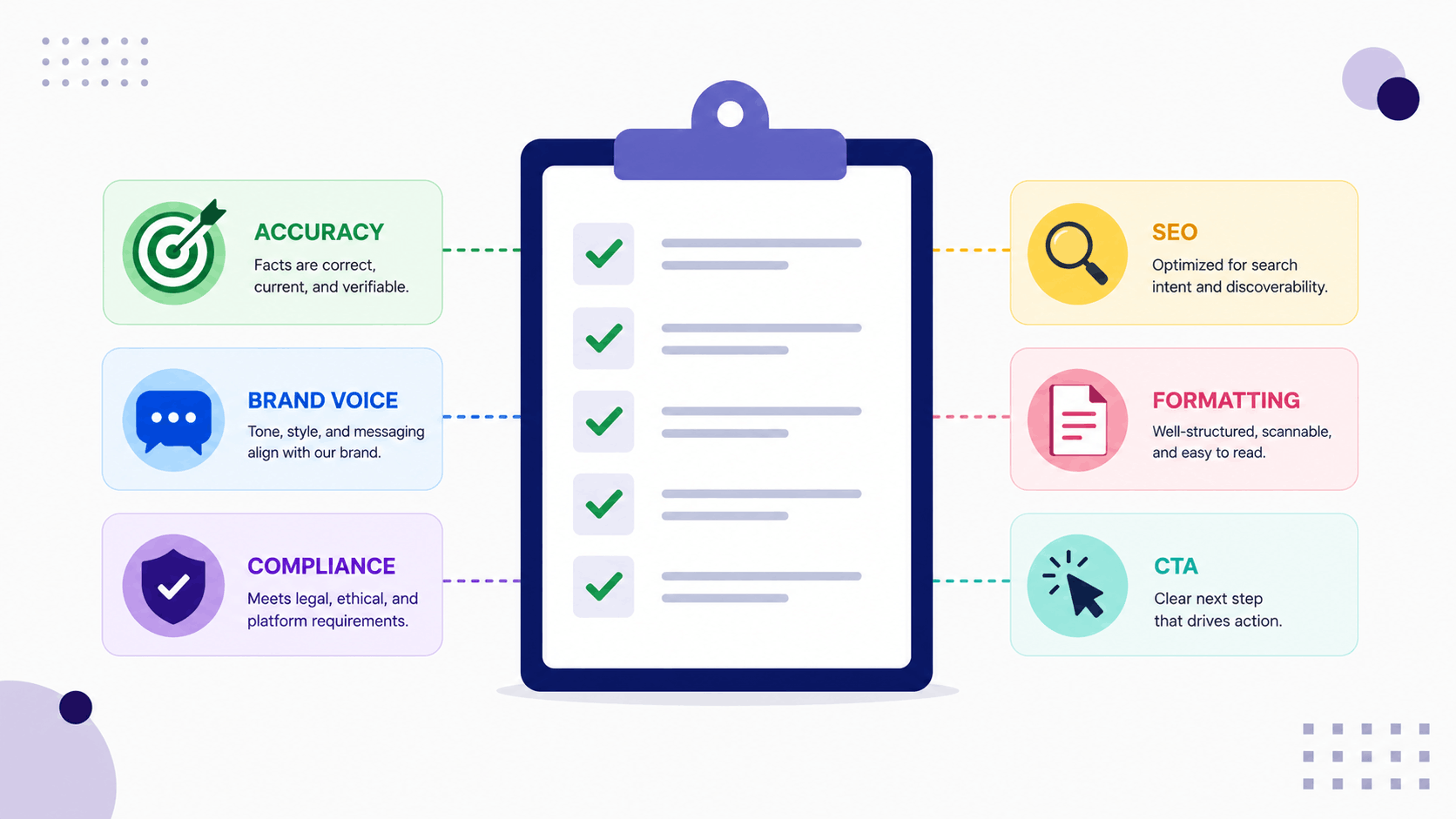
Sample Editorial QA Checklist Template
- Factual Accuracy: All claims verified with credible sources
- Data Currency: Statistics and studies are from the last 24 months (where applicable)
- Brand Voice: Tone, vocabulary, and perspective match approved guidelines
- Compliance: Content meets legal, regulatory, and industry standards
- Readability: Sentences average 15-20 words; paragraphs are 3-5 sentences
- Structure: Headings are clear, lists are formatted correctly, flow is logical
- SEO Fundamentals: Primary keyword appears in title, intro, and subheadings naturally
- Links Quality: All hyperlinks are working and relevant to reader needs
- Visual Elements: Images have alt text, captions are descriptive and accurate
- Call-to-Action: CTA is clear, compelling, and aligns with business goals
Teams should customize this template to reflect their specific risks and standards. A healthcare brand might add “medical claims verified by licensed professional” while an e-commerce brand might add “product information accurate and current.” The principle is simple: if it matters for your business, it goes on your checklist.
What Tools Support Human Review and HITL Systems?
The right tools make human review faster and more consistent. Several categories of technology support human-in-the-loop editorial workflows in 2026: AI content generation platforms with built-in review features, collaborative editing tools, compliance automation systems, and content quality metrics platforms. Tools are multipliers—good tools can cut review time in half while improving quality. Bad tools create bottlenecks that slow everything down.
Core Tool Categories
Modern AI content generation platforms now include review dashboards where editors can flag issues, suggest rewrites, and track changes. These platforms often allow editors to adjust parameters mid-process, refining content without restarting generation. Some tools offer side-by-side comparison views where original AI output and human revisions appear together, making tracking changes transparent. You can see exactly what changed and why.
Collaborative editing tools like Google Docs, Microsoft Word Online, and specialized editorial platforms (such as Contentful or Notion) enable multiple reviewers to work simultaneously, leave comments, and suggest edits. These tools create an audit trail of who changed what and when—useful for compliance verification and quality analysis. When three different people review the same document, you need a system that shows whose feedback led to which changes.
Compliance automation systems flag potential issues automatically. For example, content analysis tools can identify outdated terminology, unsupported medical claims, or non-compliant language patterns. While automation cannot replace expert judgment, it provides a first-pass filter that speeds human review and catches obvious violations. Think of it as a spelling checker for compliance—it doesn’t make judgment calls, but it highlights things that might need judgment.

How Do You Ensure E-E-A-T Compliance in AI-Generated Content?
E-E-A-T—Expertise, Experiential Knowledge, Authoritativeness, and Trustworthiness—is central to Google’s content quality assessment. AI-generated content frequently fails E-E-A-T tests because it lacks genuine expertise, personal experience, and authoritative voice. You can have a perfectly written article that’s completely wrong because it doesn’t demonstrate that an actual expert was involved. Human review is the mechanism that adds E-E-A-T signals to AI content.
Building E-E-A-T Into Your Review Process
Expertise Signals require demonstrating that content creators know the subject deeply. For AI-generated content, this means having a subject matter expert review and enhance the draft. The expert can add context, examples, and nuance that AI cannot generate independently. For instance, an AI might generate a general article about SEO, but an experienced SEO strategist reviewing it will catch oversimplifications and add sophisticated techniques only practitioners know. That’s the difference between commodity content and authoritative content.
Experiential Knowledge means showing that creators have hands-on experience with the topic. Human reviewers can add case studies, real-world examples, and lessons learned from projects they’ve actually worked on. An AI tool might write about conducting keyword research, but a researcher with 10 years of experience can enhance it with specific strategies, common pitfalls, and result data from actual campaigns. Real experience beats theoretical knowledge every time.
Authoritativeness involves demonstrating that your organization is a recognized authority. This includes citing established sources, referencing industry standards, and aligning content with your professional credentials. Reviewers should verify that content cites authoritative sources and positions your organization appropriately within the industry landscape. You’re not making unsubstantiated claims; you’re building on recognized expertise.
Trustworthiness requires transparency about limitations, conflicts of interest, and author credentials. Human reviewers ensure that content doesn’t overstate claims, acknowledges counterarguments, and discloses relevant affiliations. Content should clearly indicate when opinions differ or when more research is needed. Honest content that acknowledges uncertainty is more trustworthy than content that claims false certainty. Google knows the difference.
E-E-A-T Review Checklist
- Expert Review: Is content reviewed by someone with recognized expertise in the topic?
- Real Examples: Does content include specific, real-world examples or case studies?
- Authoritative Sources: Are claims supported by citations to established authorities?
- Credentials Visible: Are author qualifications or organizational expertise clear to readers?
- Limitations Acknowledged: Does content disclose when it’s expressing opinion or when certainty is limited?
- Transparency Clear: Are conflicts of interest or commercial relationships disclosed?
Reviewers should ask themselves: “Would an industry expert consider this authoritative? Would a skeptical reader trust this information?” If the answer is uncertain, the content needs enhancement. E-E-A-T isn’t about perfection; it’s about demonstrating that real expertise and integrity are behind what you publish.
What Are the Most Common AI Content Errors to Watch For?
Certain patterns of errors appear consistently in AI-generated content, and experienced reviewers learn to spot them quickly. Recognizing common failure modes makes review more efficient and prevents errors from reaching publication. These aren’t random mistakes—they’re predictable patterns in how AI systems work.
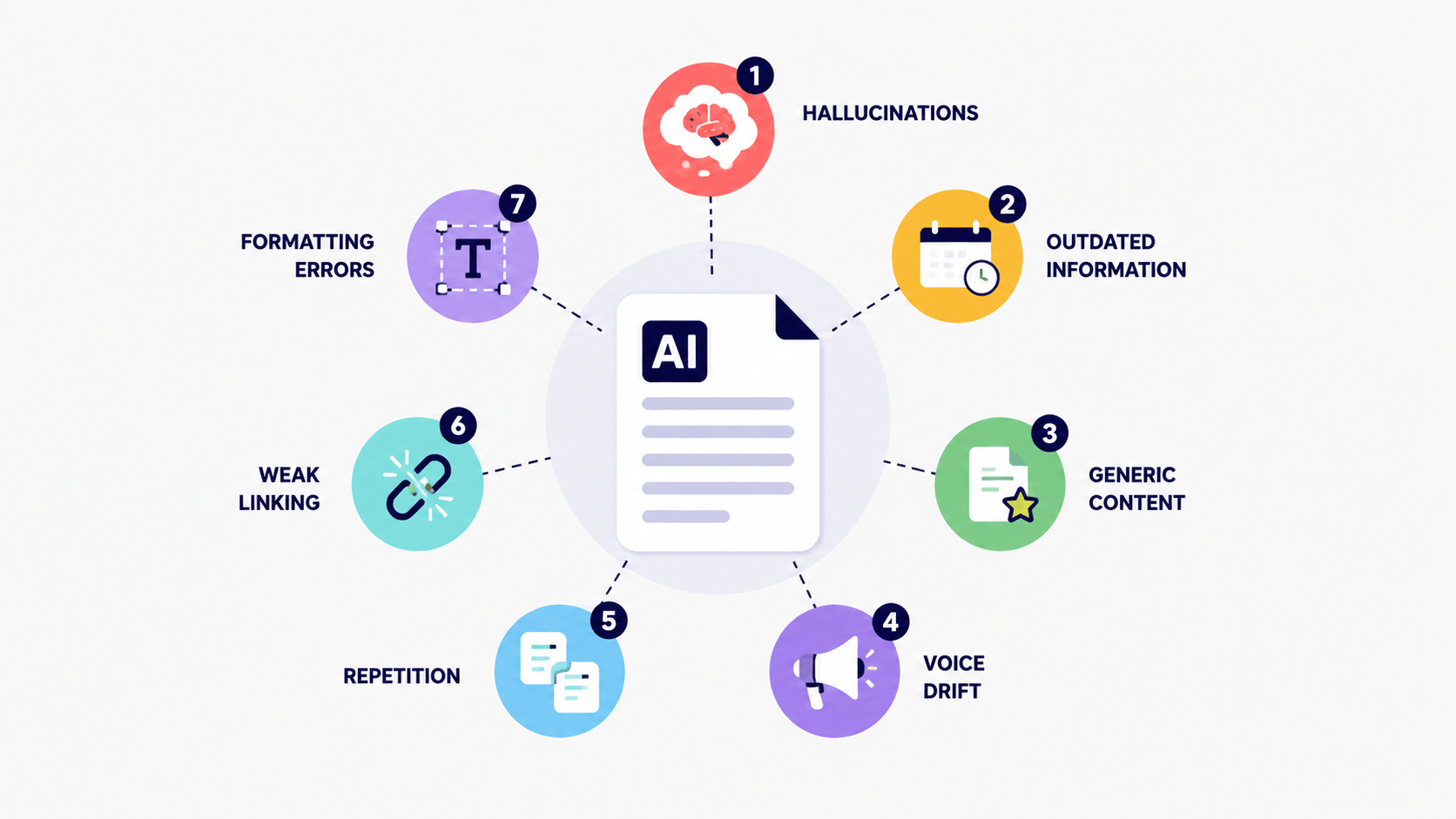
Seven Common AI Content Failures
Hallucinations—where AI invents facts, statistics, or citations that don’t exist—are the most serious risk. An AI might cite a study that doesn’t exist, quote a person out of context, or claim statistics that are fabricated. Reviewers must verify every factual claim, especially statistics and quotes. When in doubt, check the original source. Never trust AI-generated citations without verification. Hallucinations are particularly dangerous because they sound plausible. The AI generates something that reads like real information, but it’s completely made up.
Outdated Information happens when AI training data is older than current reality. AI trained through early 2024 may not know about algorithm updates, regulatory changes, or industry developments from 2025-2026. Subject matter experts catch these gaps because they follow industry news and understand what’s current. Your AI tool doesn’t read tomorrow’s news; your expert reviewers do.
Generic Tone and Surface-Level Coverage result from AI treating topics broadly rather than deeply. Content might be grammatically correct but lack depth, specificity, or insider perspective. This fails E-E-A-T tests because it reads like commodity content. Reviewers should enhance generic sections with specific examples, methodology, or insight that only an expert would include. The difference between good content and great content is often the level of depth and specificity that an expert brings.
Inconsistent Brand Voice occurs when AI generates content that doesn’t match your style. This is particularly problematic if you use AI to generate content for different audiences or purposes—the outputs may sound like they came from different organizations. Reviewers should rewrite sections that don’t align with approved brand voice examples. Consistency matters; your audience should always recognize your voice.
Redundancy and Repetition happen when AI repeats points across sections to reach word count. Reviewers should trim unnecessary repetition and consolidate overlapping paragraphs, ensuring each section adds new information. You’re not paying for words; you’re paying for value. Cut the filler.
Weak or Missing Links occur when AI generates content without sufficient internal linking or external citations. Review should verify that content links to relevant internal pages and cites authoritative external sources. This improves both user experience and SEO performance. Every link should serve a purpose for the reader, not just the algorithm.
Incorrect Formatting includes inconsistent heading levels, improperly formatted lists, or images without alt text. While seemingly minor, formatting issues hurt both readability and search visibility. Reviewers should treat formatting standardization as a core checklist item. Good formatting is invisible to readers—they just enjoy the experience. Bad formatting is immediately obvious and frustrating.
How Do You Structure Teams for Efficient Human Review at Scale?
As content volume increases, human review must scale without compromising quality. This requires clear role definitions, skill development, and process optimization. Most organizations use a tiered review model where different types of content receive proportional review depth. You can’t review everything with the same intensity; you’d burn out your team. You need to invest review effort where it matters most.
The Tiered Review Model
Tier 1: High-Risk Content includes anything affecting legal compliance, health claims, financial advice, or brand reputation. High-risk content receives thorough review from subject matter experts, compliance specialists, and senior leadership. Examples include healthcare articles, financial guidance, product claims, and executive communications. Review time: 2-4 hours per piece. This is where you invest heavily because the stakes are high.
Tier 2: Strategic Content is important for business goals but lower-risk than Tier 1. This includes cornerstone blog posts, key product content, and thought leadership articles. Tier 2 content receives careful editorial review and fact-checking but not extensive compliance verification. Review time: 1-2 hours per piece. You’re still thorough, but you’re not calling in the full team.
Tier 3: Volume Content includes supporting articles, supplementary pages, and routine content. This content is important for SEO but carries minimal compliance or brand risk. Tier 3 receives efficient editorial review with spot-check fact verification. Review time: 30-45 minutes per piece. You’re still reviewing, but you’re streamlined. Think of it as quality control without the full quality assurance.
Role Specialization for Efficiency
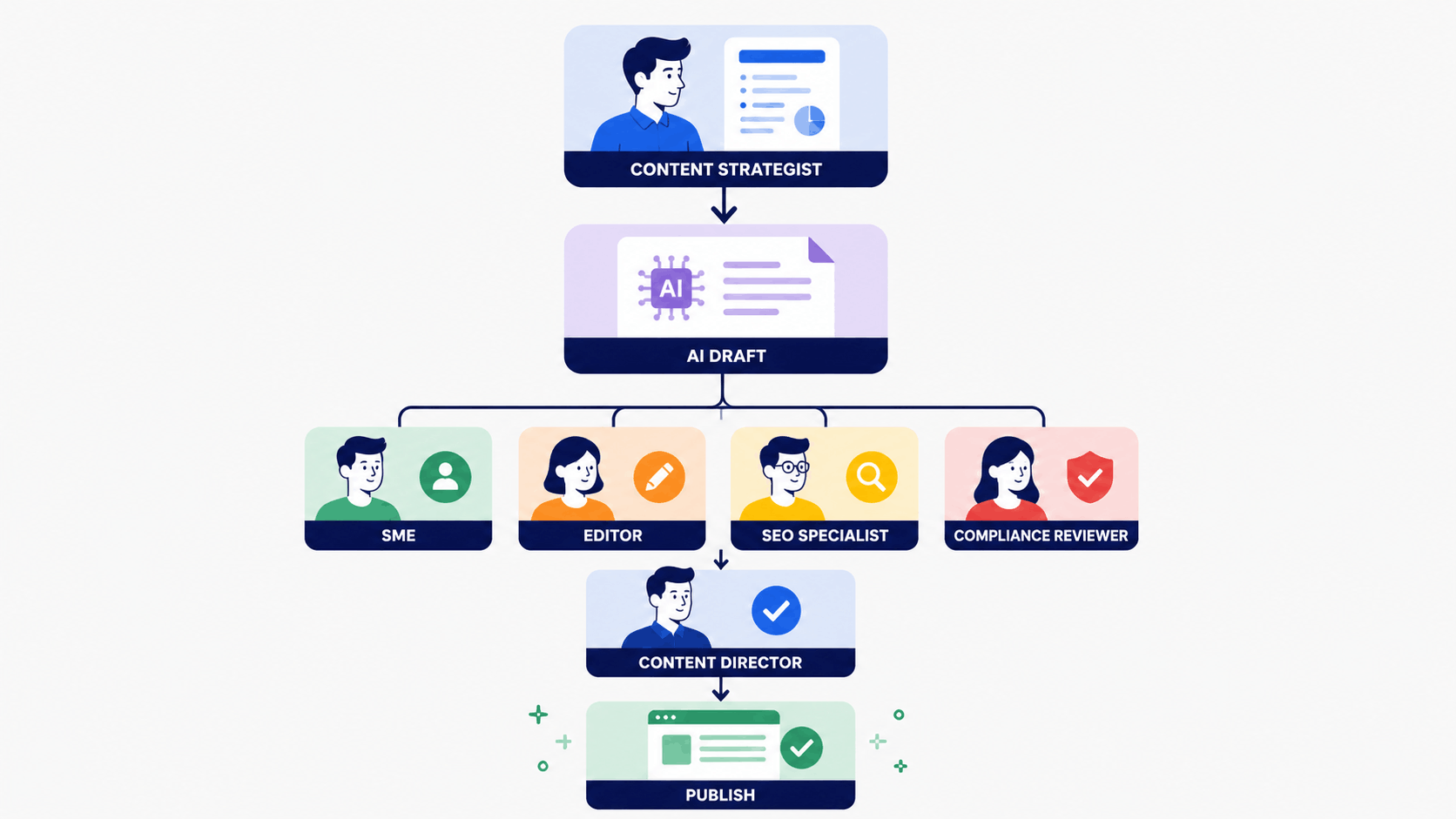
Role Specialization improves efficiency significantly. Assign reviewers based on expertise: subject matter experts focus on accuracy, editors focus on brand voice and readability, compliance specialists focus on regulatory issues, and SEO specialists focus on optimization. Rather than one reviewer handling everything, parallel workflows where different specialists review simultaneously are faster and catch more issues. You’re not waiting for one person to finish before the next person starts; everyone works in parallel.
Process Automation accelerates low-risk review. Use automated tools to flag potential issues (outdated claims, unsupported statistics, formatting errors, SEO gaps), then human reviewers focus on judgment-based decisions. This combines the scalability of automation with the reliability of human expertise. You get the best of both worlds.
Sample Team Structure for Medium-Sized Organizations
- Content Strategist: Creates briefs, defines success criteria, assigns tier levels
- AI Content Generator: Uses tools to generate drafts based on approved briefs
- Subject Matter Expert: Assesses accuracy, adds expertise-driven enhancements
- Editor: Refines writing, ensures brand voice, improves flow
- Compliance Specialist: Verifies regulatory compliance (as needed by tier)
- SEO Specialist: Optimizes for search, ensures keyword integration
- Content Director: Approves content for publication, tracks performance metrics
Smaller organizations might consolidate roles—one person might be both editor and SEO specialist. Larger organizations might split roles further, with dedicated fact-checkers, compliance teams, and quality assurance specialists. The principle is that review happens at multiple checkpoints with clear ownership and accountability.
What Metrics Should You Track to Measure Review Effectiveness?
Measuring review effectiveness helps teams improve processes and justify investment in human oversight. The right metrics balance quality with efficiency, showing that human review produces better content without creating bottlenecks. You’re investing time and money in review; you need to know whether it’s working.
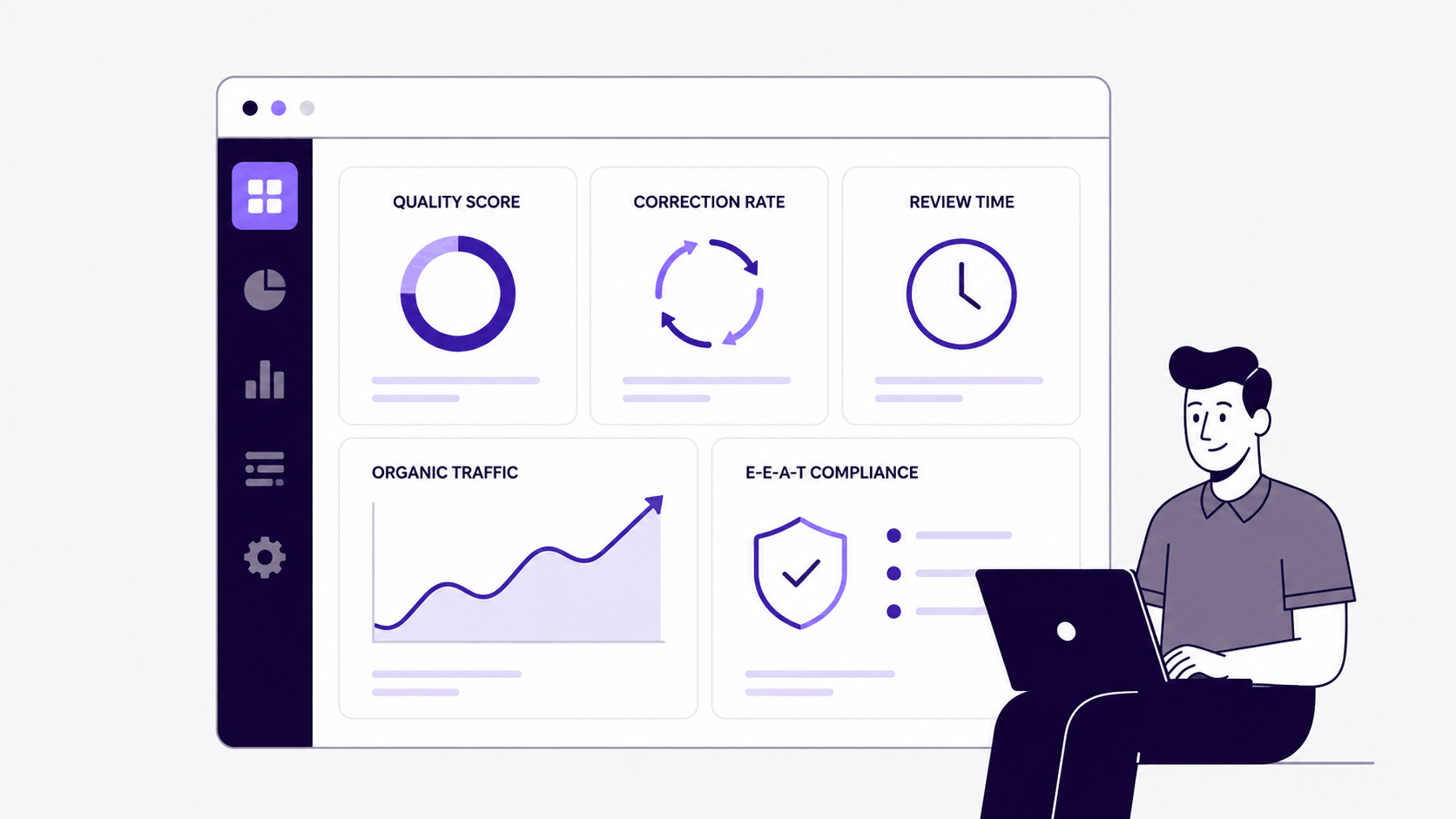
Core Metrics Categories
Content Quality Metrics measure whether reviewed content meets standards. Track: percentage of published content that required corrections post-publication (should be <2%), average readability score of published content (should meet brand standards), and fact-check pass rate (percentage of claims verified on first review). Lower correction rates and higher pass rates indicate effective review. If you’re publishing 100 articles and 8 of them need corrections after publication, something’s broken in your review process.
Review Efficiency Metrics show whether review is timely. Measure average review time per piece by content tier, average time from generation to publication, and percentage of content published on schedule. These metrics help identify bottlenecks—if editorial review consistently takes 3 hours per piece while fact-checking takes 30 minutes, your bottleneck is editorial and you might need to invest in editor training or tools. Data reveals where your process is breaking down.
SEO Performance Metrics demonstrate business impact. Track average organic traffic to reviewed content versus AI-only content, average rankings for primary keywords in published content, and click-through rate from search results. Content enhanced by human expertise typically outperforms pure AI output significantly. This is the proof that review actually matters. If reviewed content gets 3x more organic traffic than unreviewed content, you have your ROI.
E-E-A-T Indicators show whether reviewed content meets quality standards. Measure: percentage of content citing authoritative sources, average number of real examples per article, percentage of content reviewed by subject matter experts, and presence of author credentials in published content. Higher percentages indicate stronger E-E-A-T signals. You’re tracking whether your review process is actually adding the expertise signals that search engines reward.
Error Rate Tracking by error type helps prioritize training. Log each error caught during review, categorize it (hallucination, outdated info, brand voice, formatting, etc.), and track which errors reappear. If hallucinations decrease over time as reviewers improve, training is working. If a particular editor’s reviews show fewer errors than others, that person might mentor the team. You learn from errors.
Reviewer Performance Variance identifies top performers and training needs. Track quality metrics by reviewer—if one editor’s content has lower correction rates and higher SEO performance, analyze their approach and share best practices. Some variance is normal, but extreme differences suggest opportunity for improvement. You want to learn from your best reviewers and help struggling reviewers improve.
Creating a Simple Metrics Dashboard
Organizations should track these metrics monthly and review trends quarterly. A simple spreadsheet can work for small teams; larger teams benefit from dedicated analytics tools. Key dashboard items: content published (count and types), average review time per tier, correction rate post-publication, SEO metrics (traffic and rankings), and reviewer productivity. Share dashboards with team members to maintain accountability and celebrate improvements. Transparency drives better performance.

What Does a Complete Human Review Workflow Look Like in Practice?
Understanding a real-world example helps teams implement effective human review. Here’s what a complete workflow looks like for a mid-sized marketing technology company generating SEO content with AI assistance. This isn’t theoretical—it’s based on how successful teams actually work.
A Detailed Real-World Example
Day 1 Morning: Content Planning and Brief Creation
A content strategist identifies that the company needs articles on “AI content generation best practices” and “automating SEO workflows.” The strategist creates detailed briefs that specify: target audience (marketing teams at mid-market B2B companies), primary keyword (“automating SEO workflows”), secondary keywords (“SEO automation“, “content creation workflow”), article structure (introduction, 8 main sections, conclusion), tone (professional but friendly), word count (4,000-5,000 words), and specific points that must be included (company product differentiators, real case studies, actionable steps). The brief includes links to approved brand voice examples and SEO guidelines. This upfront work saves hours downstream.
Day 1 Afternoon: AI Generation and Initial Assessment
The content generation tool receives the brief and generates a draft within 10 minutes. A subject matter expert (senior marketing strategist) reads the draft and completes an assessment form: Is the structure sound? Does it answer the brief? Are there obvious factual errors or outdated information? Are there gaps? The SME notes that the draft mentions a 2023 study but newer research from 2025 exists. The draft is comprehensive but somewhat generic—it needs more specific examples. The SME marks the draft for editorial enhancement and sends it to the editor. This assessment takes about 25 minutes and identifies major issues before heavy editing.
Day 2 Morning: Editorial Refinement
The editor (experienced content writer) works through the draft systematically. For each section, the editor: reads for clarity and flow, adjusts tone to match brand voice, adds specific examples and case studies, strengthens weak sections, and catches typos. The editor spends particular attention on the opening paragraph, ensuring it directly answers the reader’s question. The editor also checks that the primary keyword appears naturally in the title, introduction, and subheadings. The editor leaves comments for the SME on the sections requiring additional expertise: “This section on SEO automation tools needs specific product examples—can you enhance this?” After 90 minutes of editing, the document moves to fact-checking. The editor has made it better, but hasn’t second-guessed the SME’s expertise.
Day 2 Afternoon: Fact-Checking and SME Enhancement
A fact-checker (who may be the original SME or a dedicated specialist) verifies every claim: they check that studies cited actually exist and are accurately represented, confirm statistics are current, verify any product claims, and ensure industry terminology is correct. The fact-checker finds that one statistic was outdated and researches the current figure. The fact-checker also reviews the editor’s comment about tool examples and adds 3-4 specific tools with brief explanations. Every claim and every link is verified. This takes 45 minutes. This is where errors get caught before publication.
Day 3 Morning: SEO Optimization Review
An SEO specialist reviews the content for optimization. They check: Is the primary keyword in the title and introduction? Are secondary keywords distributed naturally? Are headings compelling and keyword-aligned? Do internal links point to relevant pages? Is the meta description complete and compelling? The specialist might suggest rephrasing a heading to improve keyword alignment or adding internal links to product pages. The specialist completes this review in 30 minutes. At this point, you’re not changing content substantially; you’re making it more discoverable.
Day 3 Afternoon: Final Approval and Publication
The content director reads the final version. They verify it meets all standards, aligns with business strategy, and is ready for publication. The director might ask for one final adjustment (“Can we add a CTA to the webinar at the end?”), makes that change, and approves publication. The content is scheduled for publication the following week during optimal publishing times. The director’s sign-off is the final checkpoint.
Tracking This Workflow and Its Efficiency
Each stage is logged in the CMS workflow: SME assessment (30 min), Editorial (90 min), Fact-check (45 min), SEO review (30 min), Director approval (20 min). Total review time: about 3.5 hours for a 4,500-word article. This might seem long, but it’s much faster than writing the article from scratch (which would take 8-12 hours) and produces higher-quality content than AI-only output. You’re getting a 50-75% time savings while improving quality.
If this company publishes 20 articles per month through this process, they’re investing roughly 70 hours monthly in human review—significant but sustainable. As team members become more efficient and tools improve, review time typically decreases to 2-3 hours per article while quality improves. Experience plus tools equals efficiency.
The key insight here is that multiple checkpoints don’t slow everything down if they’re designed right. Each checkpoint catches specific issues; the next checkpoint doesn’t waste time re-checking what was already verified. It’s assembly line quality control, not bureaucratic redundancy.
Human review of AI-generated content is now a core competency for organizations producing content at scale in 2026. The practices outlined throughout this guide—structured review workflows, detailed QA checklists, appropriate team roles, E-E-A-T verification, and integration with your CMS—collectively ensure that AI speed combines with human judgment to produce content that ranks well, builds trust, and serves your audience effectively.
The most successful organizations don’t choose between AI efficiency and human quality; they design workflows where both reinforce each other. Your reviewers become more efficient because AI handles initial drafting, while AI output improves because human expertise guides it. It’s not a choice between one or the other—it’s about building a system where they work together.
Start with a clearly tiered review approach—high-risk content receives thorough review, volume content receives efficient review. Invest in training so reviewers understand AI capabilities and limitations. Measure results through quality metrics and search performance. The organizations that master this balance gain competitive advantage through faster, higher-quality content production that search engines reward. If you’re considering AI-generated content, implement these practices from day one. The competitive advantage of ethical, human-reviewed AI-generated content is significant in 2026 and beyond.
Ready to scale your content production without sacrificing quality? Start implementing these best practices today. Whether you’re building your review workflow from scratch or optimizing an existing process, the principles in this guide apply. Document your workflow, build your QA checklist, train your team, and track your metrics. The organizations that excel at human-reviewed AI-generated content will dominate search results and build stronger audience trust. Your journey to high-quality, efficient content production starts now.
Frequently Asked Questions
Why is human review essential if AI can generate content automatically?
AI excels at speed and pattern matching, but it cannot replicate human judgment, verify facts, or understand current industry context. Human review ensures accuracy, brand alignment, compliance, and expertise signals that search engines reward. Without human oversight, AI-generated content may contain hallucinations, outdated information, or tonal inconsistencies that damage credibility.
What are the five core stages of an effective review workflow?
The five stages are: Pre-Generation Setup (creating detailed briefs and criteria), AI Output Assessment (evaluating against the brief), Editorial Refinement (correcting grammar and flow), Compliance Verification (applying legal and industry standards), and Final Publication Approval (senior stakeholder sign-off).
How long does it typically take to review AI-generated content?
Review time depends on content tier: Tier 1 (high-risk) takes 2-4 hours, Tier 2 (strategic) takes 1-2 hours, and Tier 3 (volume) takes 30-45 minutes. For a 4,500-word article, typical total review time is 3-3.5 hours, which is still much faster than writing from scratch while producing higher-quality content.
What are the most common errors in AI-generated content?
Common errors include: hallucinations (fabricated facts and citations), outdated information, generic tone, inconsistent brand voice, redundancy, weak internal linking, and formatting issues. Experienced reviewers learn to spot these patterns quickly and address them systematically.
How do you ensure E-E-A-T compliance in AI-generated content?
Ensure expertise signals through subject matter expert review, add experiential knowledge with real examples and case studies, demonstrate authoritativeness by citing established sources, and show trustworthiness by disclosing limitations and conflicts of interest. Human enhancement is critical for meeting E-E-A-T standards.
What tools should I use for human-in-the-loop content review?
Key tool categories include: AI platforms with built-in review dashboards, collaborative editing tools (Google Docs, Contentful), compliance automation systems, and content quality metrics platforms. Look for tools with version control, annotation capabilities, approval workflows, CMS integration, and audit logging.
How do you structure teams for efficient review at scale?
Use a tiered model with parallel workflows: High-risk content receives thorough expert review, strategic content receives editorial review with fact-checking, and volume content receives efficient editorial review with spot-checks. Assign reviewers by specialty (subject matter experts, editors, compliance specialists, SEO specialists) working in parallel.
What metrics indicate whether your review process is working?
Track: post-publication correction rates (should be <2%), average review time by tier, SEO performance of reviewed content, E-E-A-T indicators (authoritative sources, real examples), and error rates by type. Compare reviewed content performance against AI-only content to show ROI of human review investment.
